A thread through time
Machines & Materials
Did new technology free workers or bind them more tightly?
The water frame, the power loom, the sewing machine, electric drive, nylon, polyester, and the 3D knitter: each invention reorganized work, place, and power.
26 stories across 14 chapters
Before 1600 · Before the Loom
InnovationCotton on the Mesa
Ancestral Pueblo and Hopi weavers, and a fiber grown in the desert for centuries before Europeans arrived.
Read the story →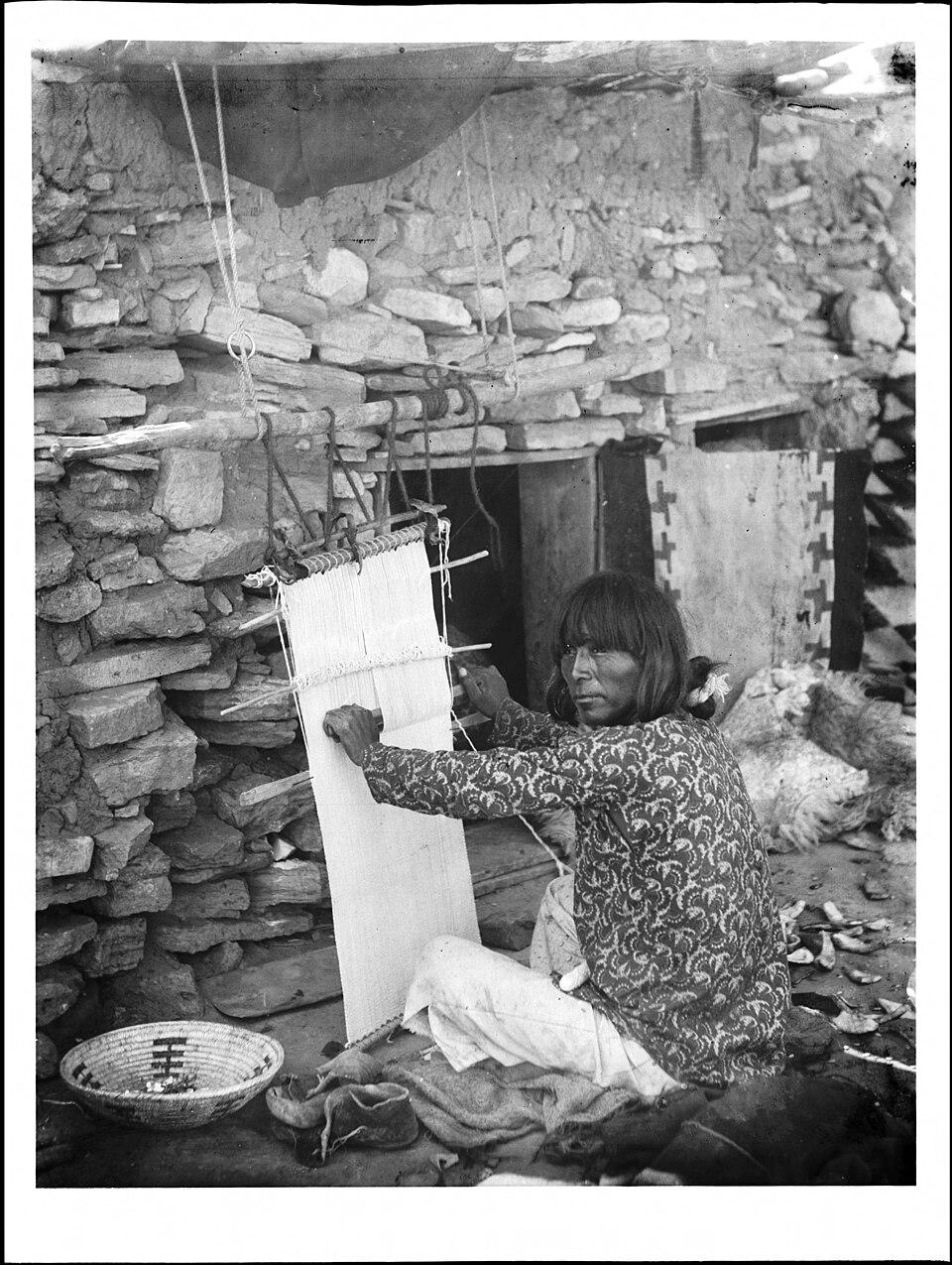
George Wharton James, "Male Hopi weaver at Moenkopi, Arizona," c. 1898. California Historical Society Collection, USC Digital Library (CHS-4619). Public domain. - Innovation
The Diné Loom
How the Diné made the Pueblo upright loom and Spanish sheep into one of the world's great weaving traditions.
Read the story →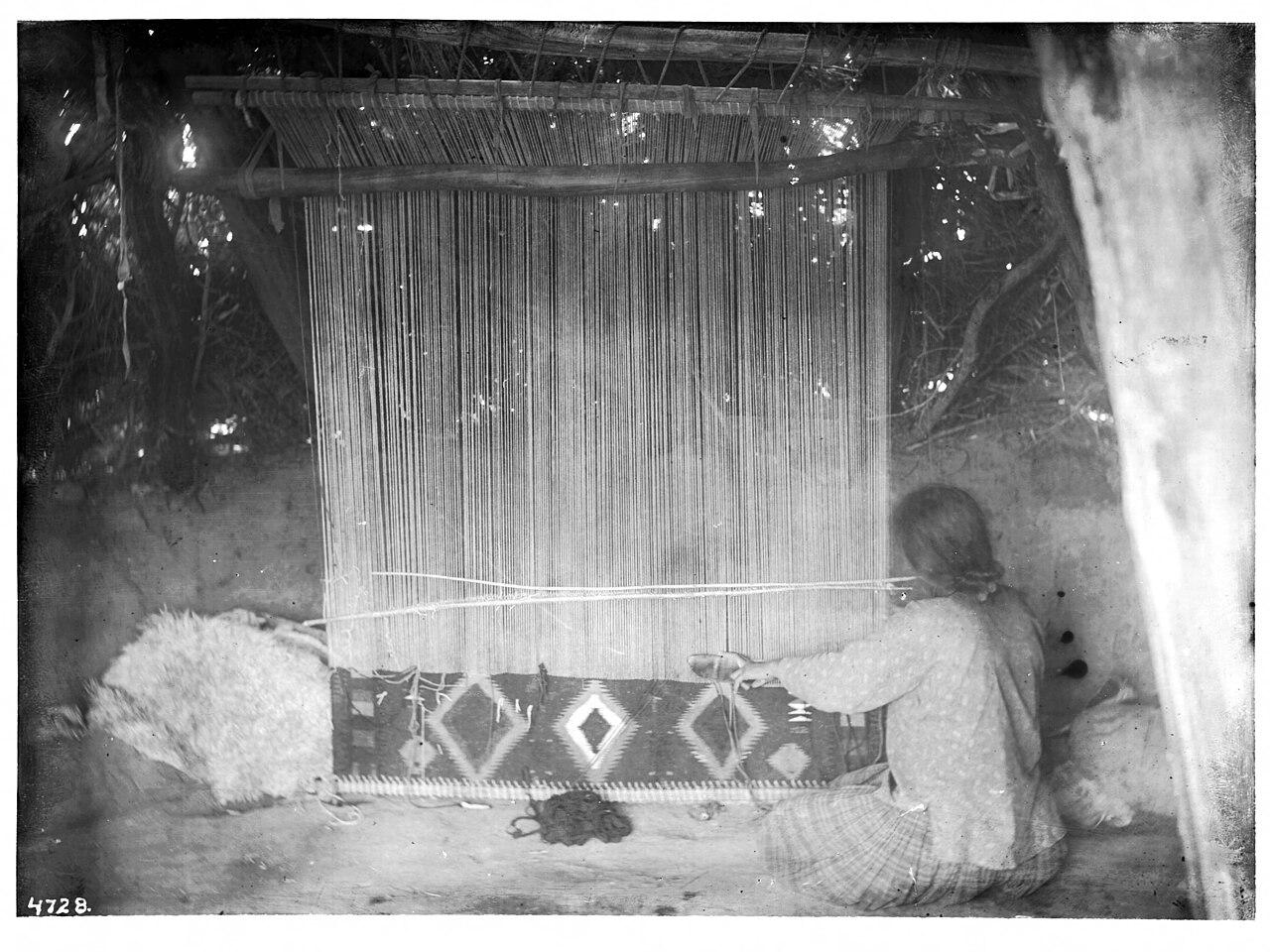
George Wharton James, "Navajo woman at her loom weaving a blanket," c. 1900. California Historical Society Collection, USC Digital Library (CHS-4728). Public domain. - Material Culture
Bark, Nettle, Feather, and Shell
Eastern Woodlands finger-weaving, the lace of Spiro, and why wampum is not cloth money.
Read the story →
Herb Roe, "Spiro Craig Mound" (2011). Wikimedia Commons, CC BY-SA 3.0. 1600–1760 · The Colonial Hearth
Material CultureThe Agony of Flax
The long, many-stage process that turned a blue-flowered plant into a linen shirt.
Read the story →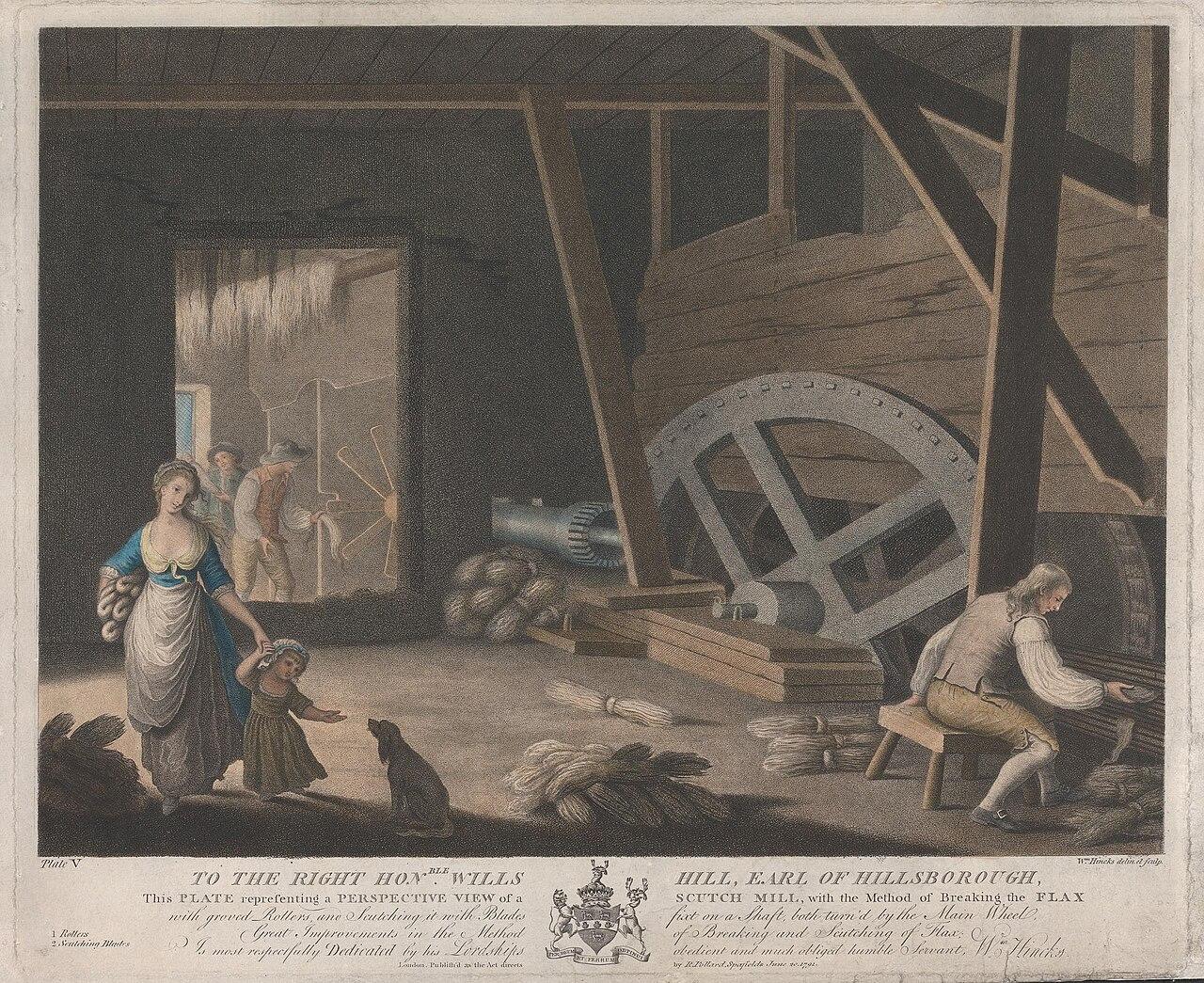
William Hincks, "A Perspective View of a Scutch Mill, with the Method of Breaking the Flax with Grooved Rollers," Plate V of his Irish linen industry series, 1791. Yale Center for British Art, Paul Mellon Collection (B1978.43.251). CC0. - Innovation
Two Wheels, Two Worlds
How the great wheel and the flax wheel divided the colonial household.
Read the story →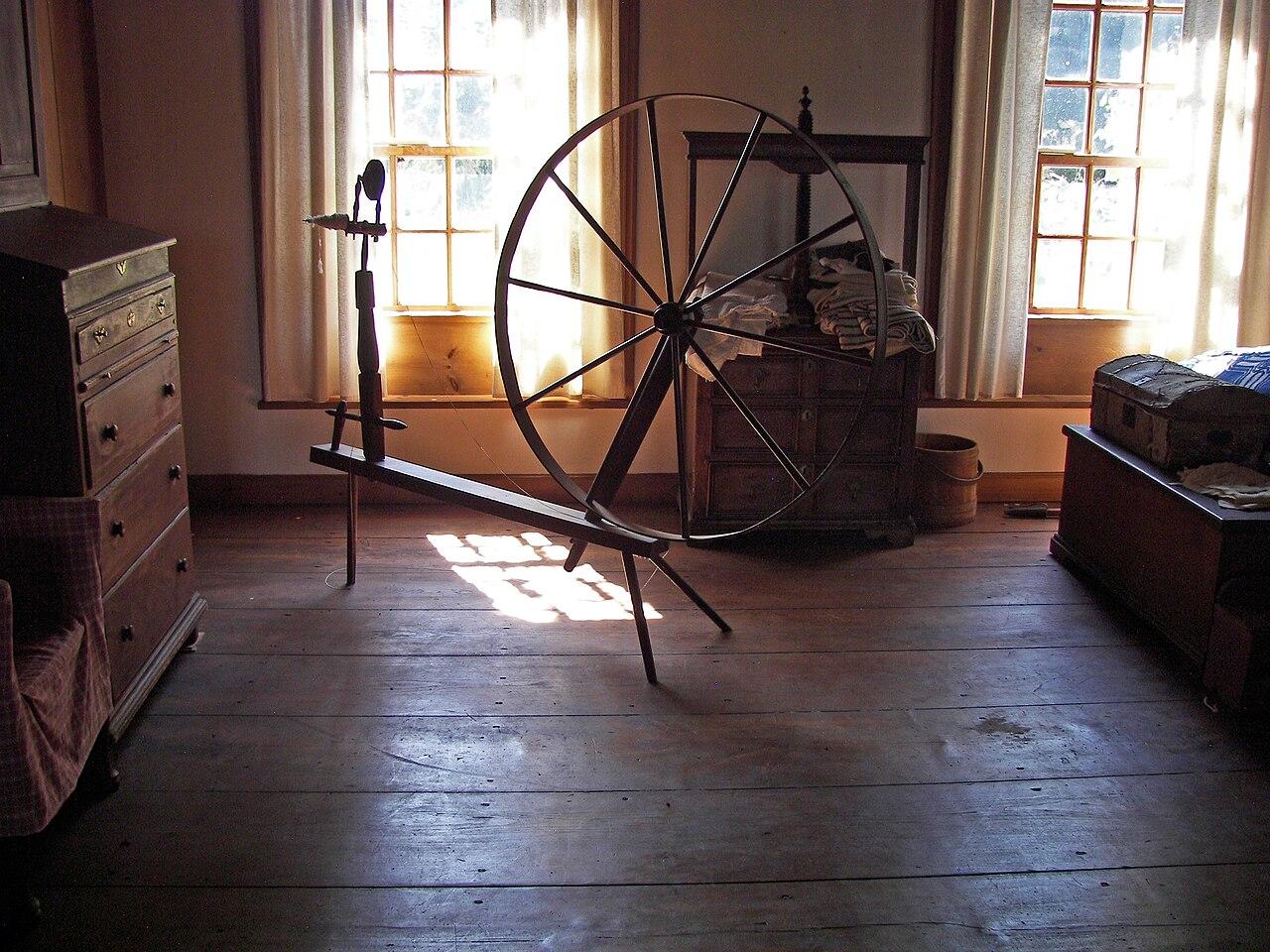
Wknight94, "Herkimer House spinning wheel 2" (2009). Wikimedia Commons, CC BY-SA 3.0. 1790–1810 · The Industrial Spy
BiographySlater the Memoryman
How an apprentice carried an empire's secret across an ocean in his head—and what he needed help to rebuild.
Read the story →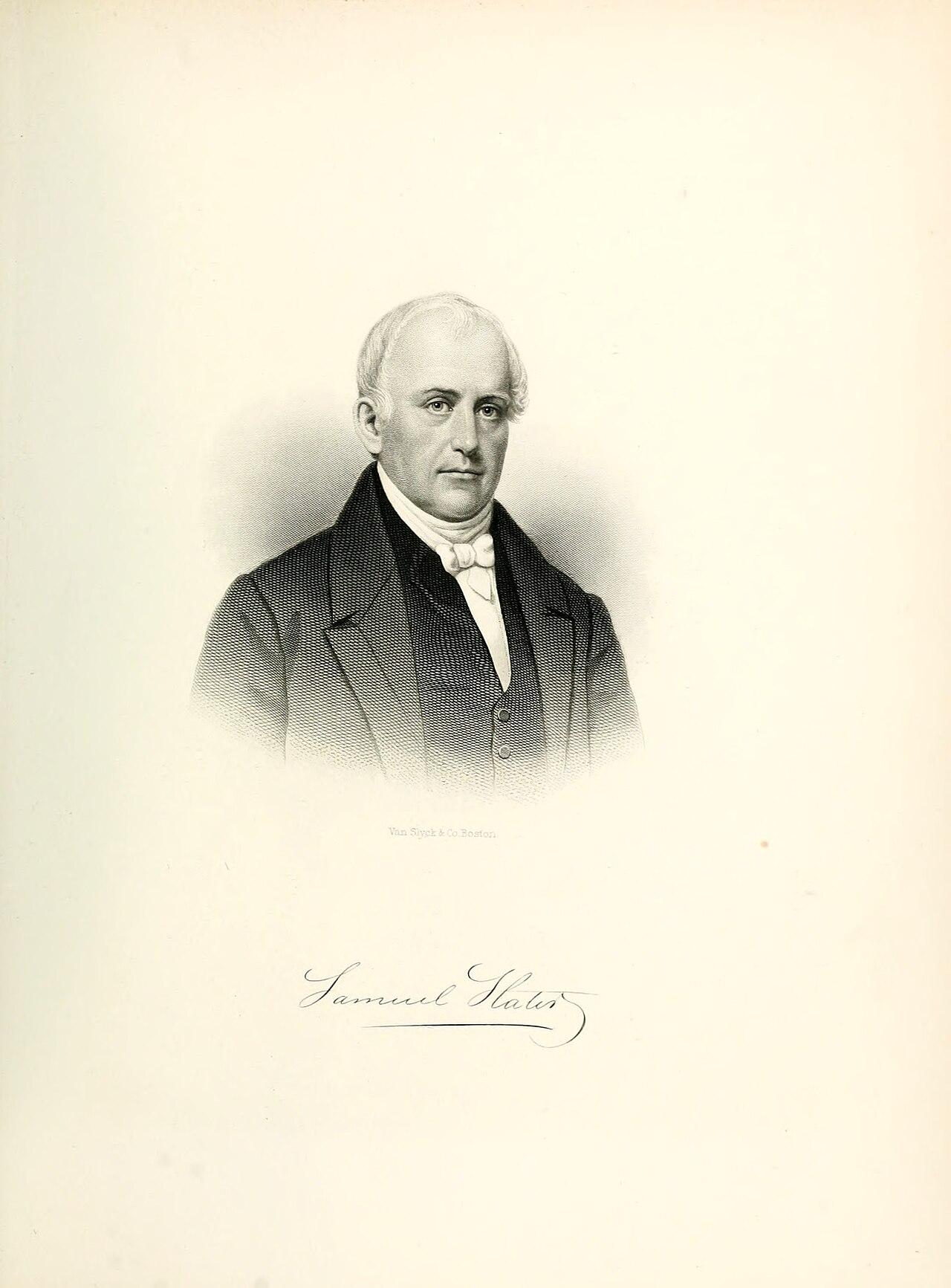
Engraved portrait of Samuel Slater from "The Biographical Cyclopedia of Representative Men of Rhode Island" (Providence: National Biographical Publishing Co., 1881). Internet Archive, via Wikimedia Commons. Public domain. 1793–1850 · The Cotton Kingdom
BiographyEli Whitney's Patent Trap
The inventor of the gin made little from it.
Read the story →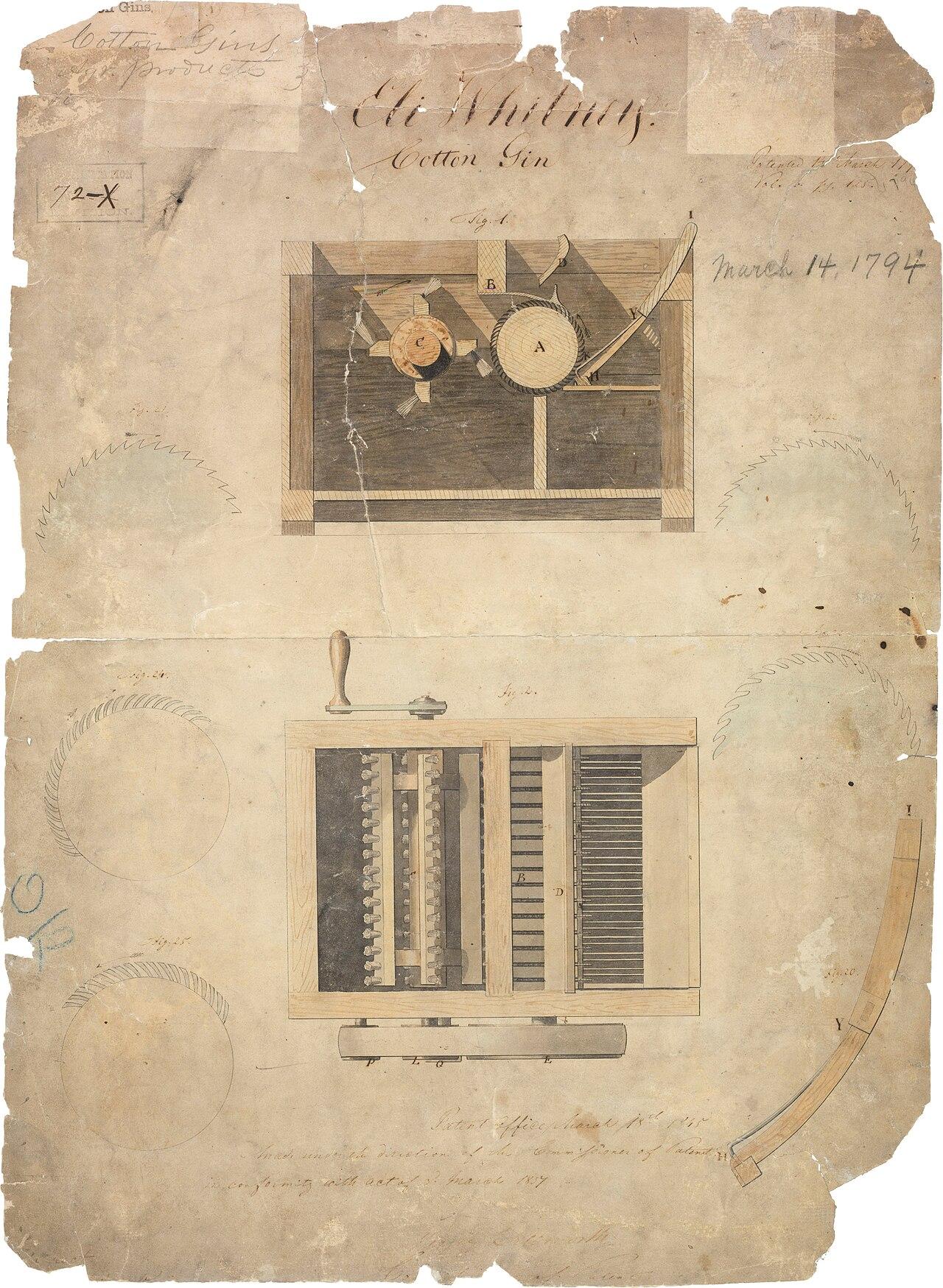
Eli Whitney, patent drawing for the cotton gin, March 14, 1794. Records of the Patent and Trademark Office (Record Group 241), U.S. National Archives. Public domain. 1840–1920 · The Silk City
ImpactThe Multiple-Loom System
The speed-up that triggered an industrial uprising.
Read the story →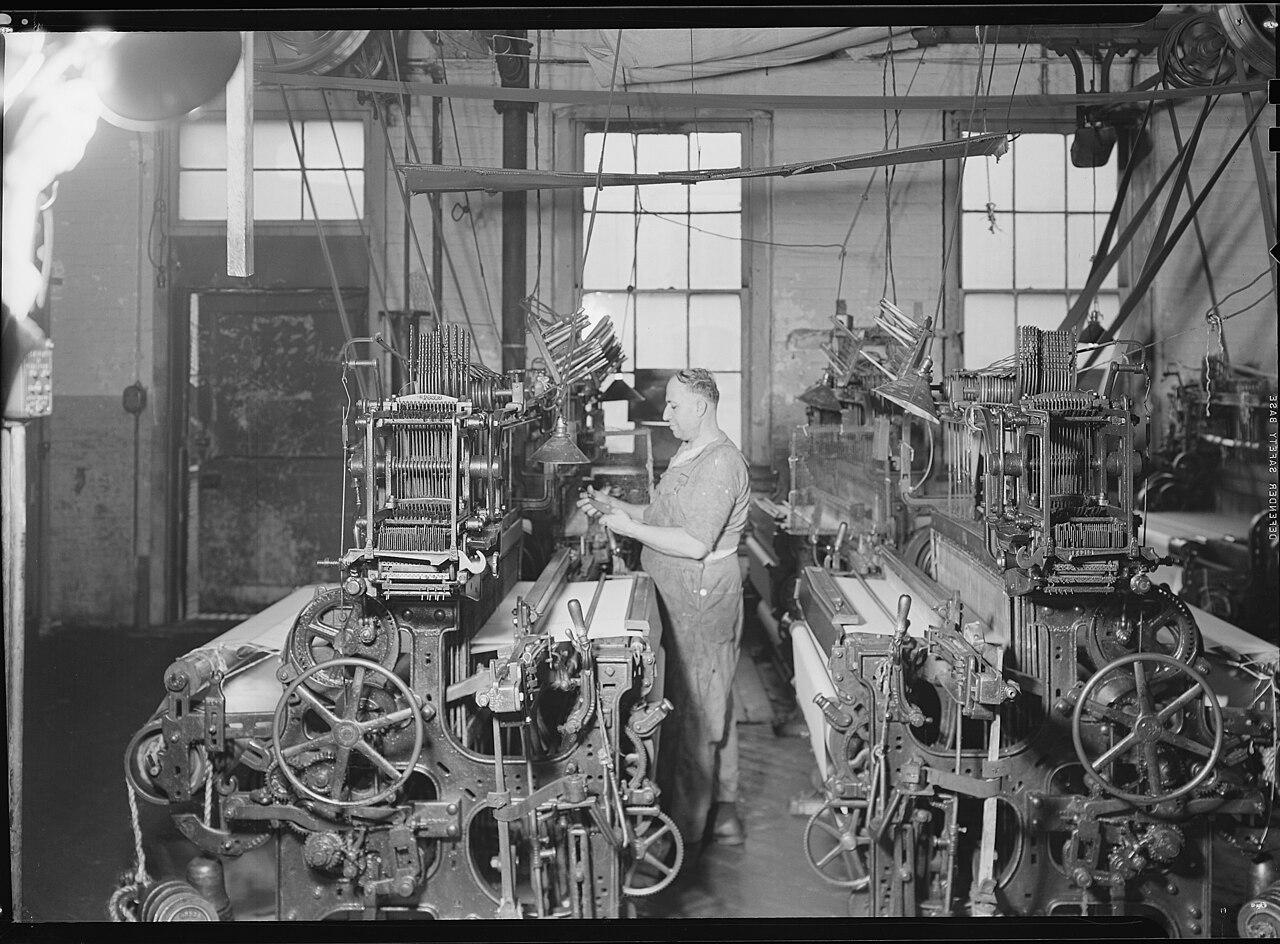
Lewis Wickes Hine, "Paterson, New Jersey-Textiles. Weaver operating four-loom system," 1936-1937. Works Progress Administration National Research Project, U.S. National Archives and Records Administration (NAID 518541). Public domain. 1846–1860 · The Sewing Revolution
InnovationThe Sewing Machine Combination
The first patent pool in U.S. history, born of years of lawsuits.
Read the story →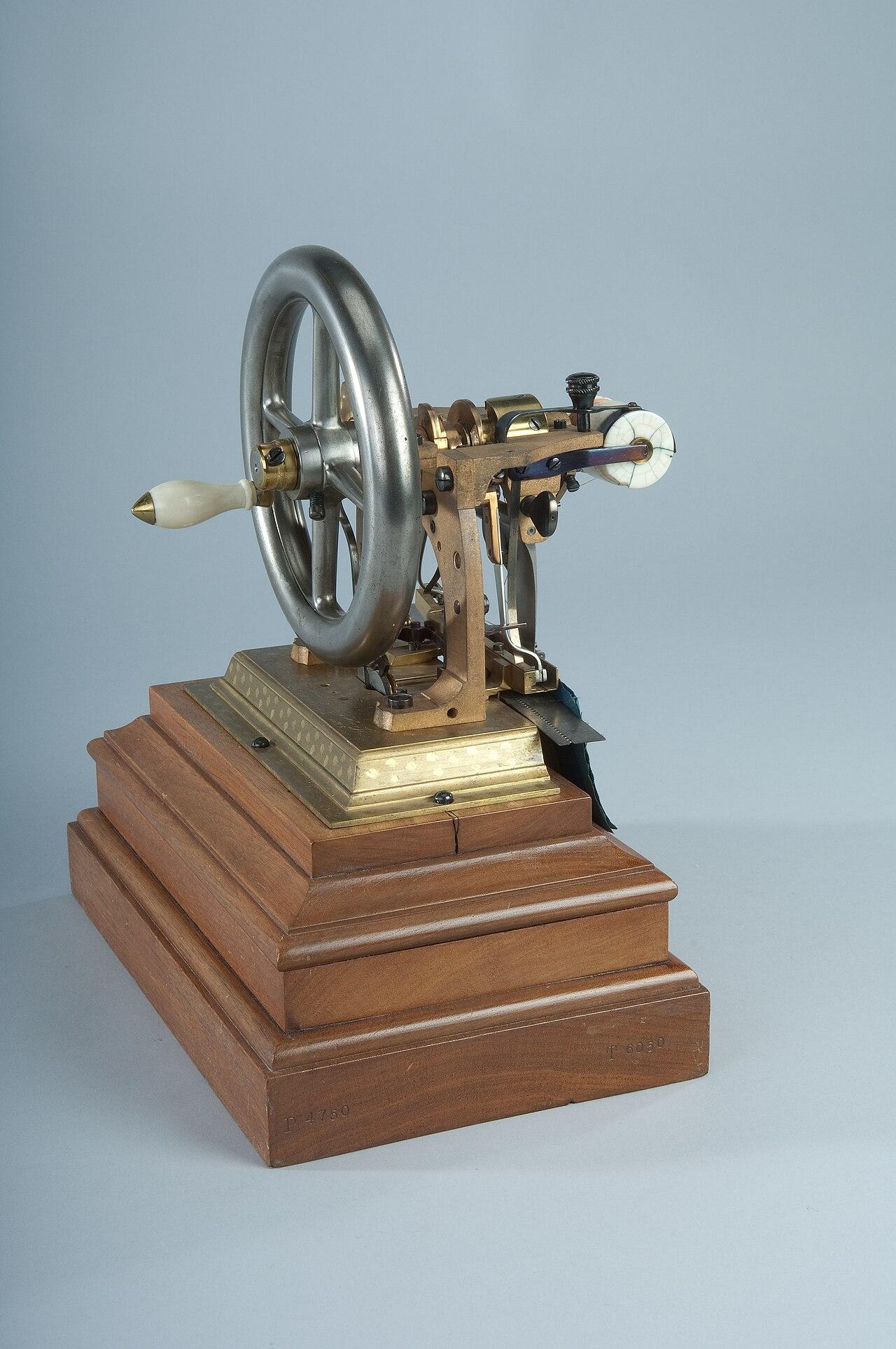
Elias Howe Jr., sewing machine patent model, 1846 (U.S. Patent 4,750). National Museum of American History, Smithsonian Institution. Public domain. - Innovation
Singer's Installment Plan
A turning point in American consumer credit.
Read the story →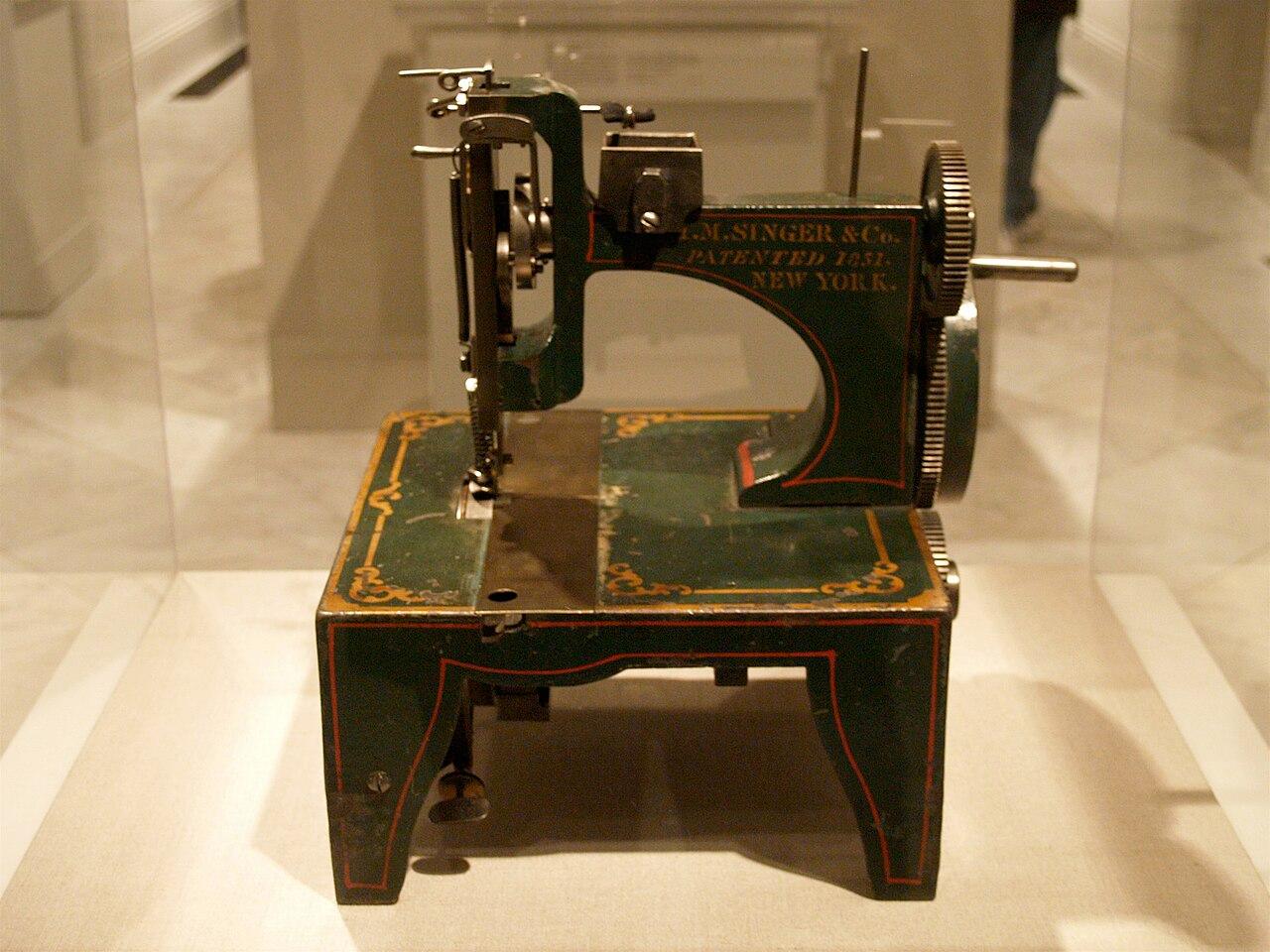
takomabibelot, "Isaac Singer's 1854 Patent Model For Improvements To His Sewing Machine," photographed at the National Portrait Gallery, Smithsonian Institution (2007). Flickr, CC BY 2.0, via Wikimedia Commons. - Impact
The Seamstress and the Machine
An economic cost rarely written into the history of the machine.
Read the story →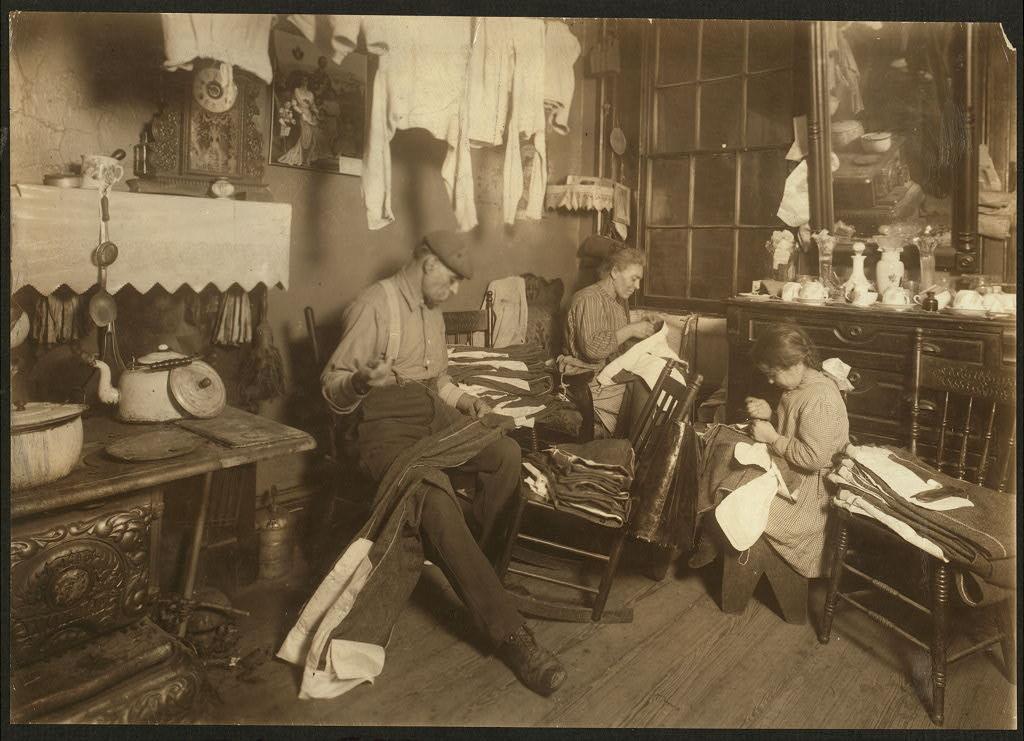
Lewis Wickes Hine for the National Child Labor Committee, "11:30 A.M. Jennie Rizzandi, 9 year old girl, helping mother and father finish garments in a dilapidated tenement," New York City, January 1913. Public domain. 1861–1865 · Uniforms of Conflict
TragedyThe Spread of 'Shoddy'
War profiteering, recycled rags, and a word that entered everyday speech.
Read the story →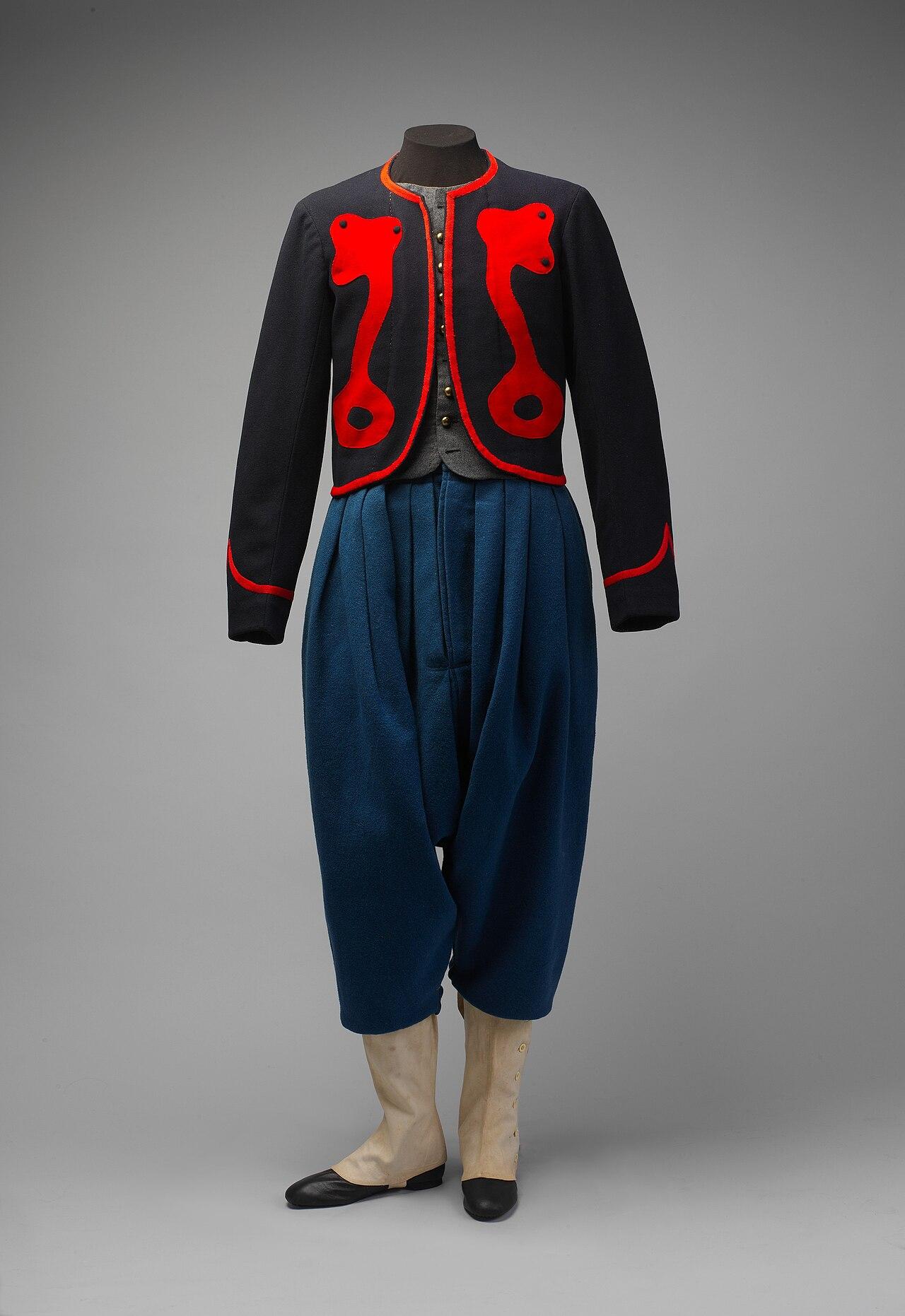
Uniform of the Keystone Zouaves, manufactured at the Schuylkill Arsenal, Philadelphia, 1863-1866. The Metropolitan Museum of Art, Open Access. CC0. - Innovation
Measuring the Union Army
How wartime measurement shaped ready-made sizing—and what the myth of 'S, M, L' gets wrong.
Read the story →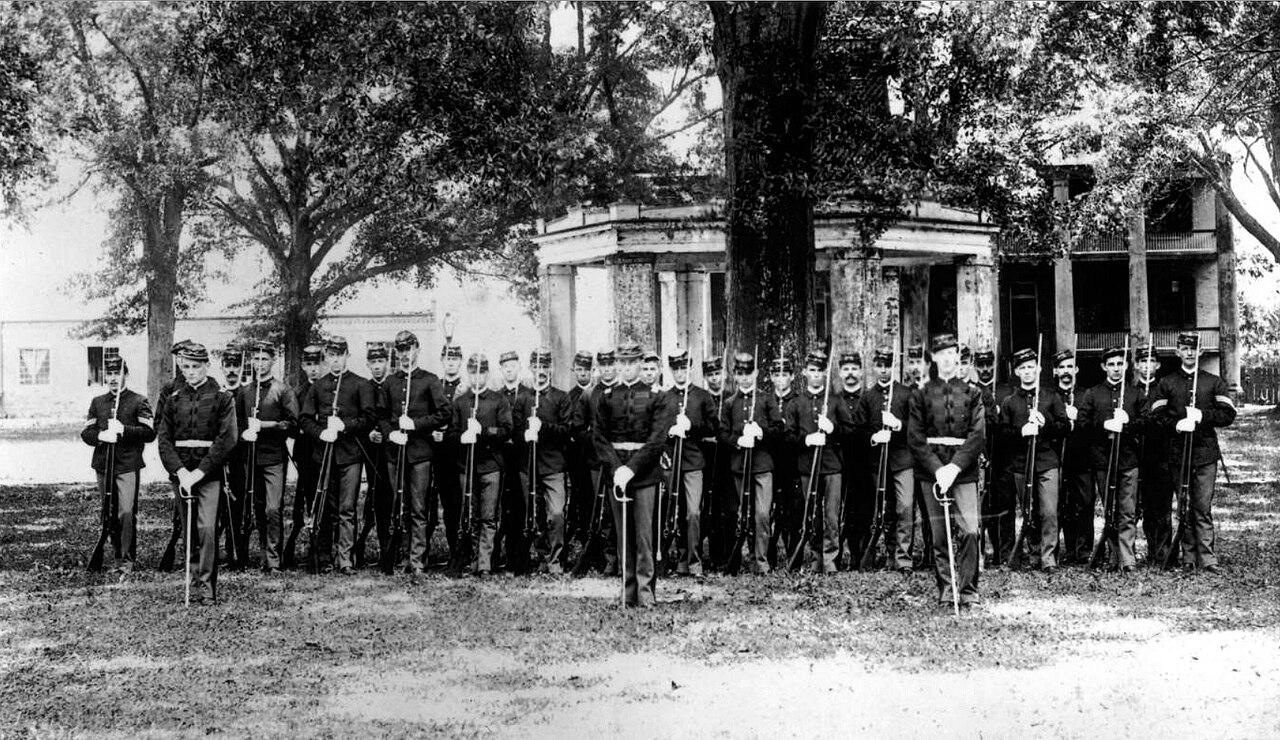
Andrew D. Lytle, Union soldiers in formation, Baton Rouge, Louisiana. Andrew D. Lytle Collection, Louisiana State University Libraries Special Collections. Public domain. 1880–1920 · The Gilded Age of Wool
InnovationThe Wood Worsted Behemoth
The 'eighth wonder of the world' on the Merrimack.
Read the story →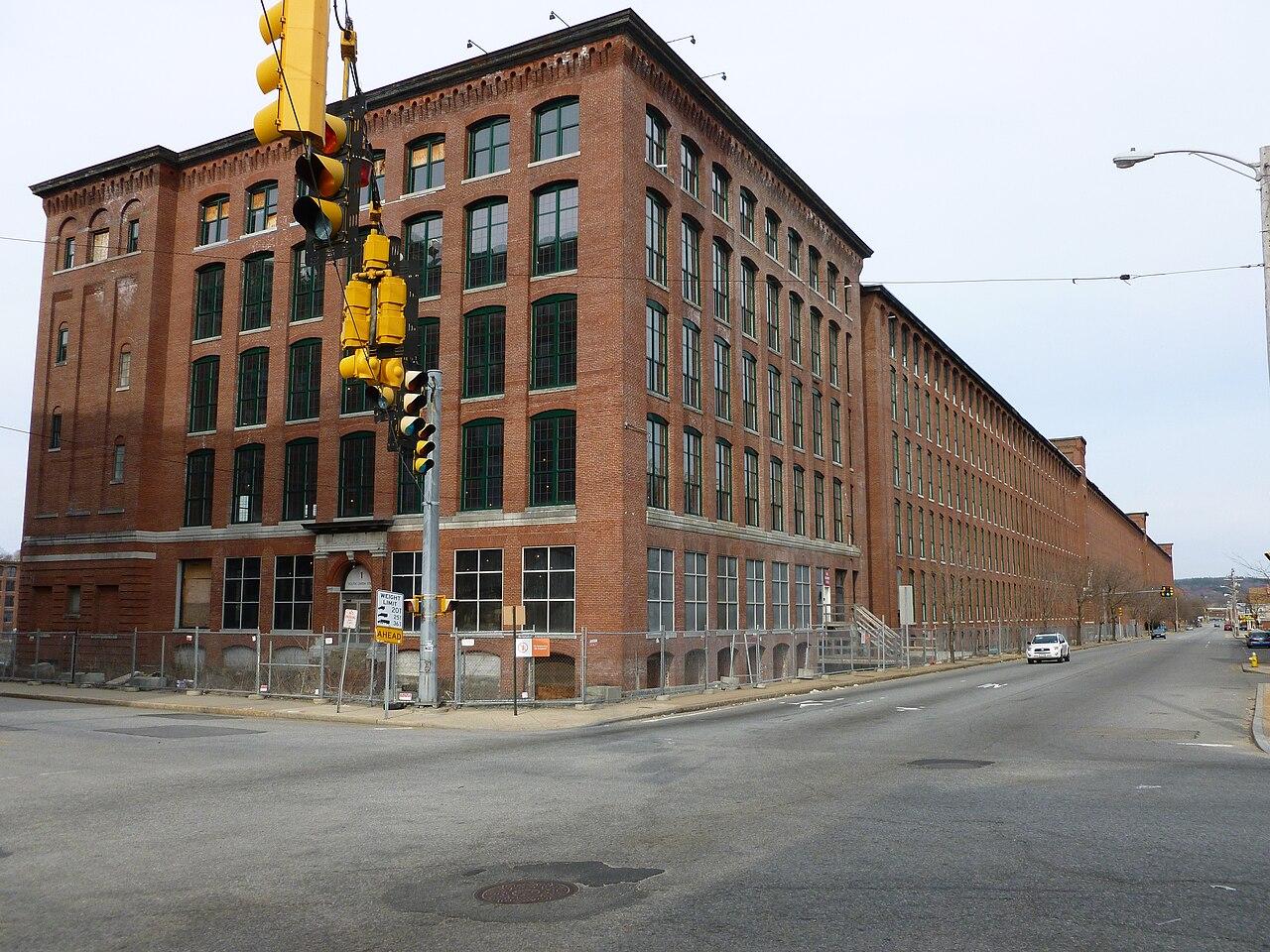
Emw, "Wood Worsted Mills; west and south sides; Lawrence, MA" (2011). Wikimedia Commons, CC BY-SA 3.0. 1920–1930 · The Electric Loom
InnovationThe Death of the Shaft
How the electric motor ended a century of belts and line shafts.
Read the story →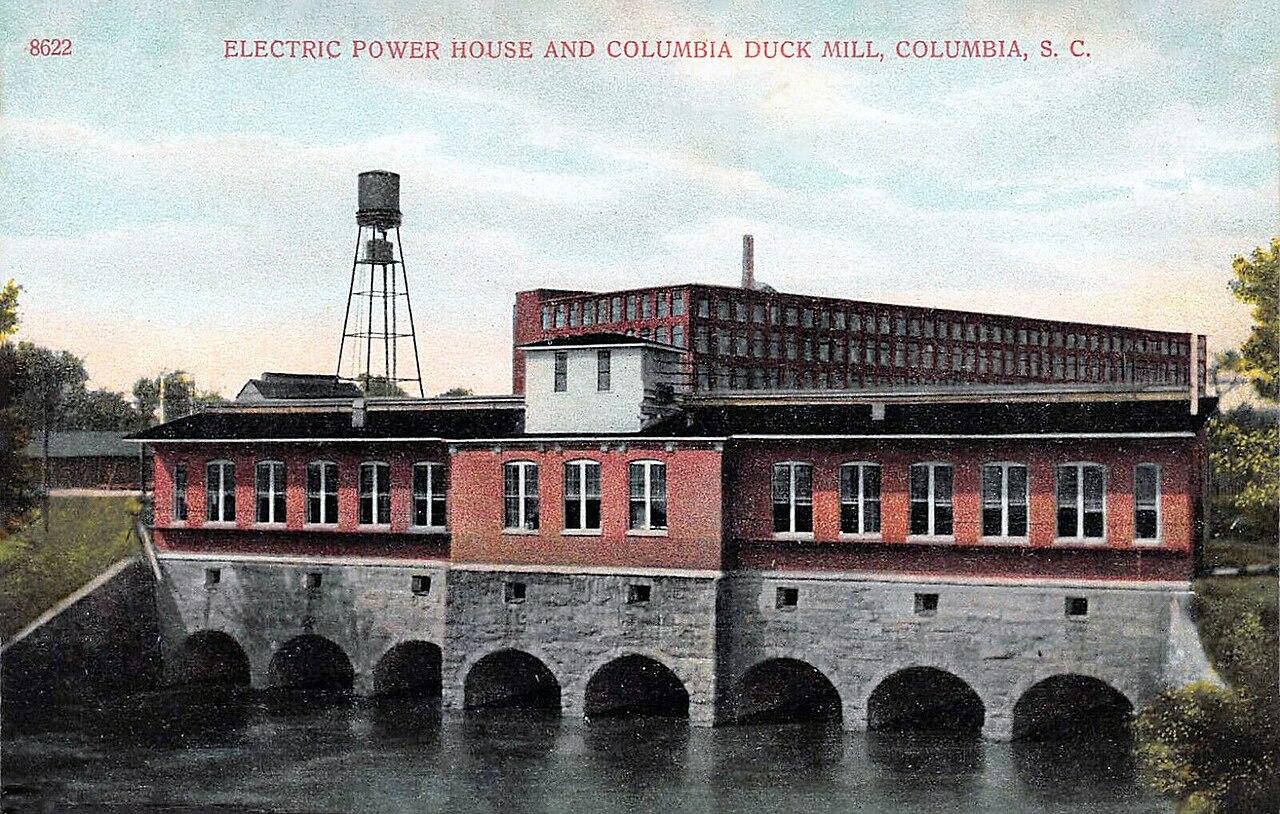
A. C. Bosselman & Co. (publisher), "Electric Power House and Columbia Duck Mill, Columbia, S.C.," postcard, c. 1910. Public domain, via Wikimedia Commons. - Innovation
Rayon: The First Manufactured Fiber
Trees, chemistry, and the beginning of the artificial-fiber age.
Read the story →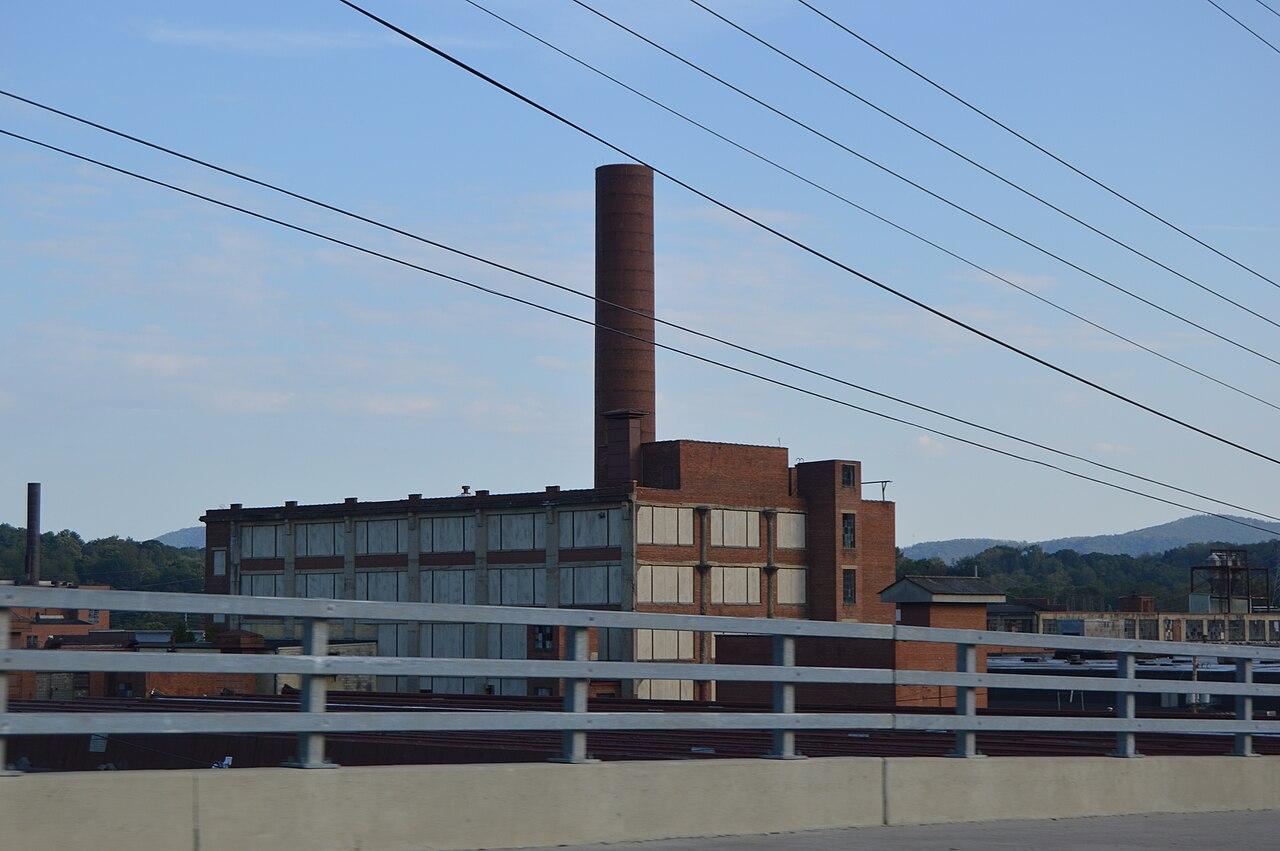
Nyttend, "American Viscose Plant from Ninth Street bridge," Marcus Hook, Pennsylvania (2019). Released into the public domain by the photographer, via Wikimedia Commons. - Impact
The Great Piedmont Migration
How electricity and cheap labor moved an industry south.
Read the story →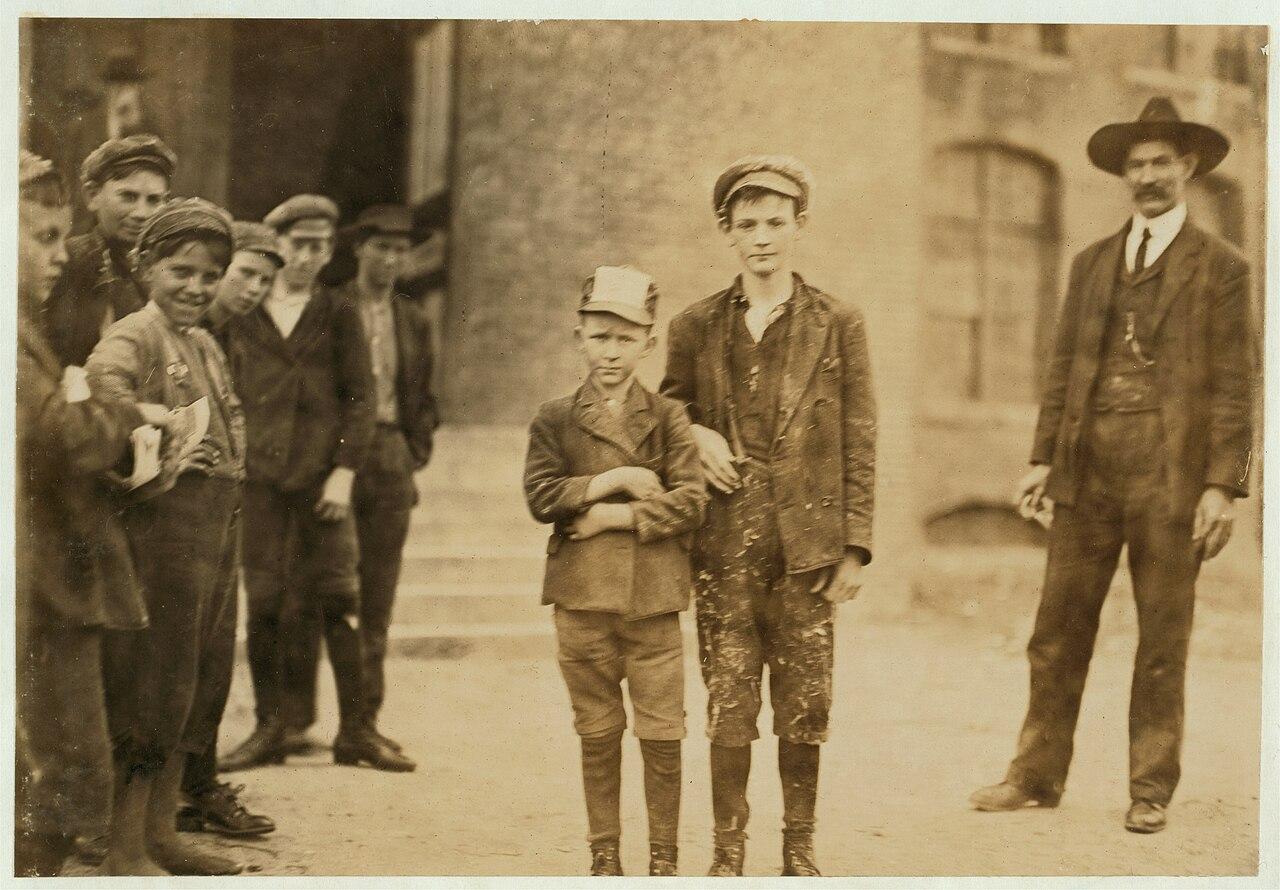
Lewis Wickes Hine, "Closing hour Loray Mill, Gastonia, N.C. November 7, 1908." Library of Congress, National Child Labor Committee Collection (nclc.01352). Public domain. 1934 · The Great Textile Strike
ImpactThe Stretch-Out
The speed-up that detonated the 1934 strike.
Read the story →Lewis Wickes Hine, "Paterson, New Jersey-Textiles. Weaver operating four-loom system," 1936-1937. Works Progress Administration National Research Project, U.S. National Archives and Records Administration (NAID 518541). Public domain. 1940–1950 · Synthetic Warfare
Material CultureThe Nylon Riots
When stockings were worth standing in line all day.
Read the story →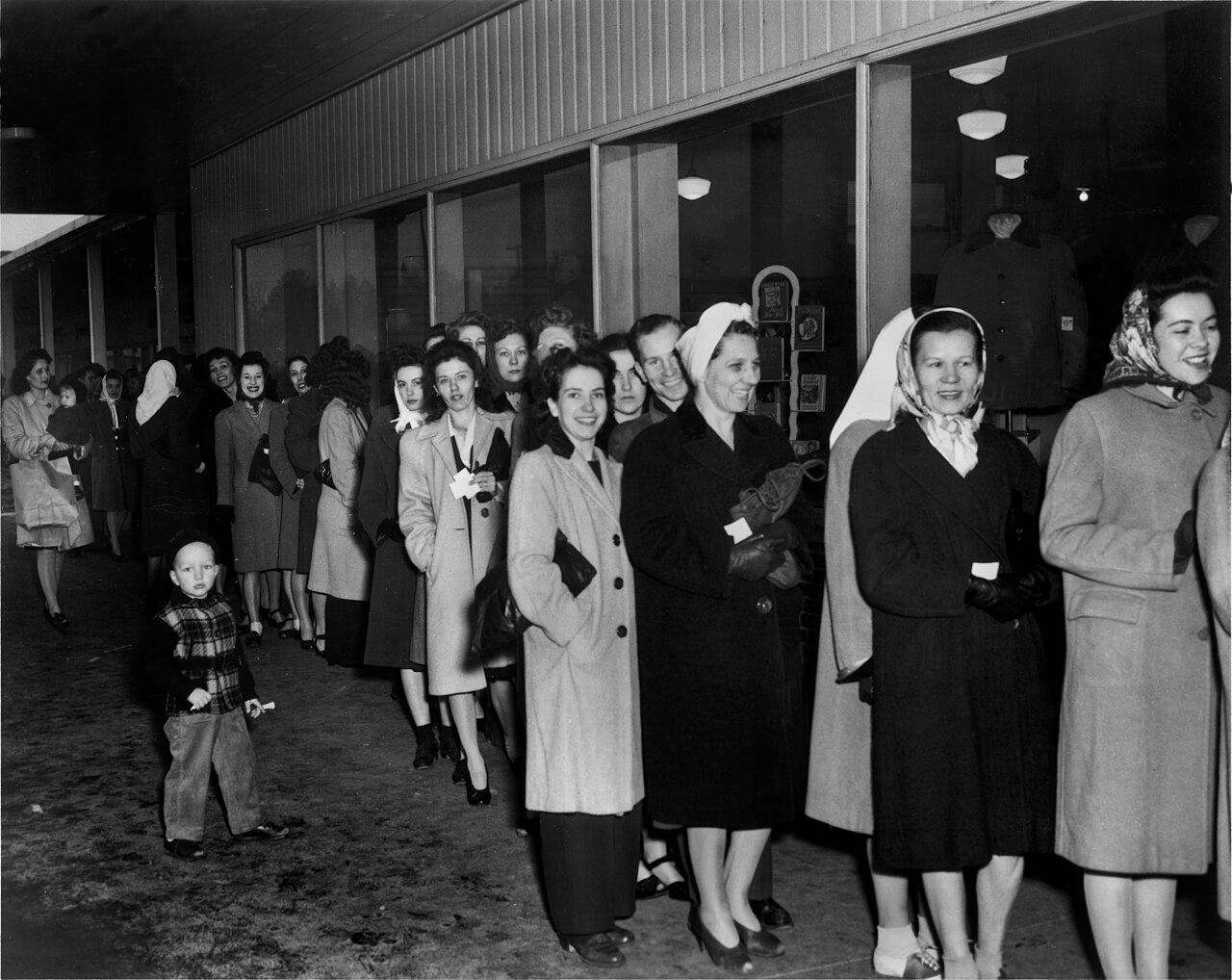
Ed Westcott, U.S. Department of Energy, "Standing in line for nylon stockings at Miller's Department Store, Oak Ridge, Tennessee," January 4, 1946. Public domain (U.S. government work). - Biography
Wallace Carothers, Inventor of Nylon
The brilliant chemist who did not live to see his invention reach the public.
Read the story →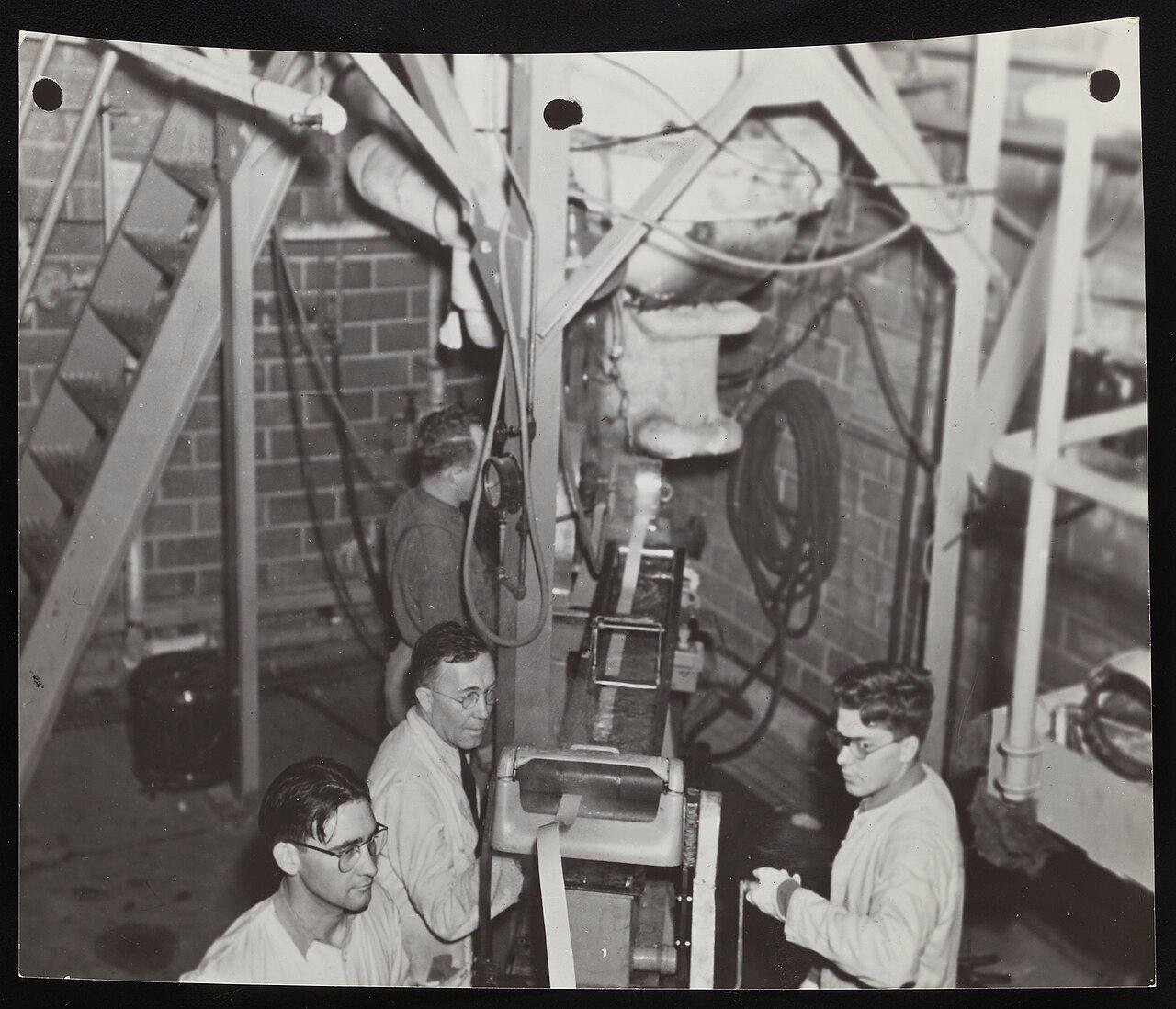
DuPont technicians casting polymer from a 250-pound autoclave, DuPont Experimental Station, Wilmington, Delaware. Science History Institute, via Wikimedia Commons. No known copyright restrictions. 1950–1980 · The Polyester Dream
ImpactThe Cost of 'Miracle' Fibers
How synthetic clothing became a source of microplastic pollution.
Read the story →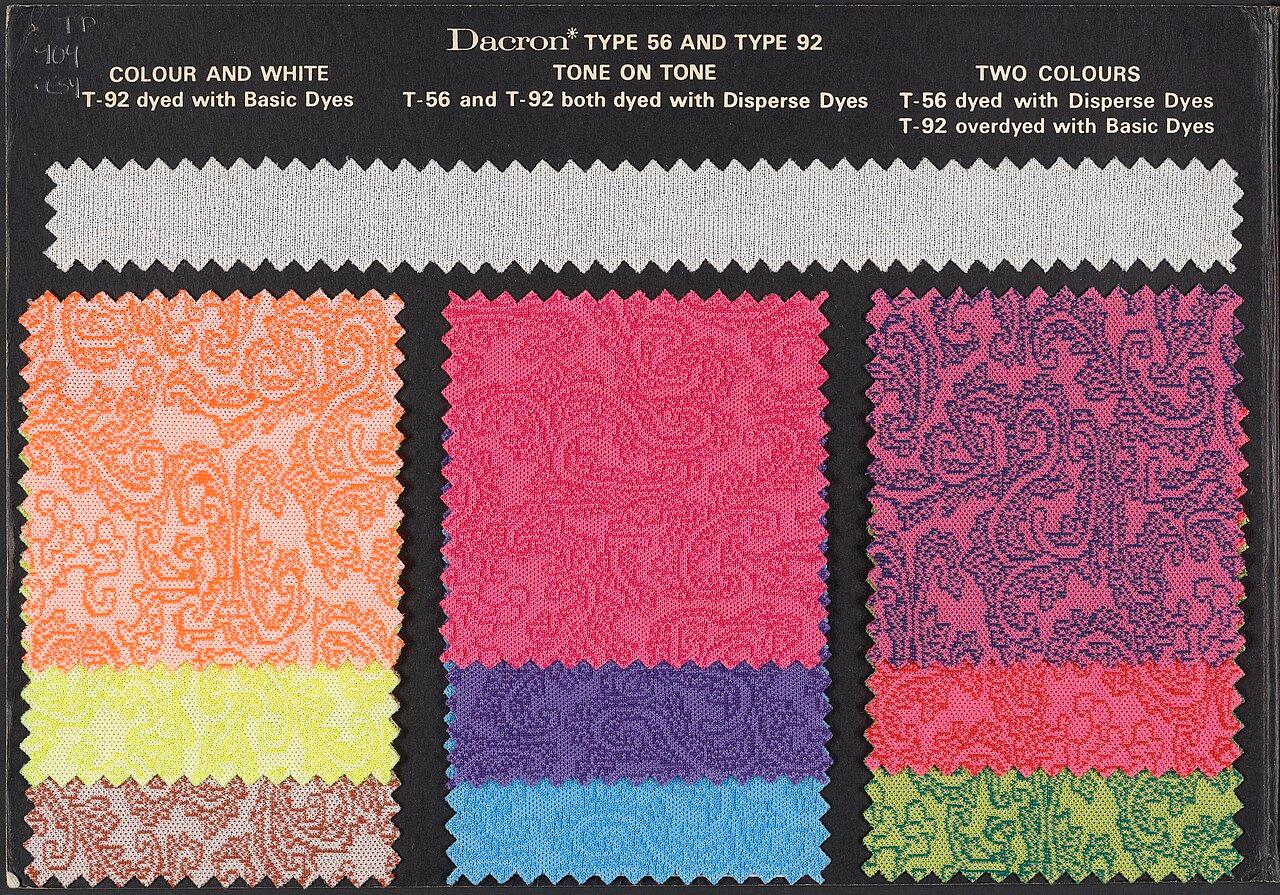
E. I. du Pont de Nemours & Company, "Dacron & Antron Colour Story," fabric sample booklet. Science History Institute, via Wikimedia Commons. No known copyright restrictions. - Innovation
The Wash-and-Wear Revolution
The shirt that promised to retire the iron.
Read the story →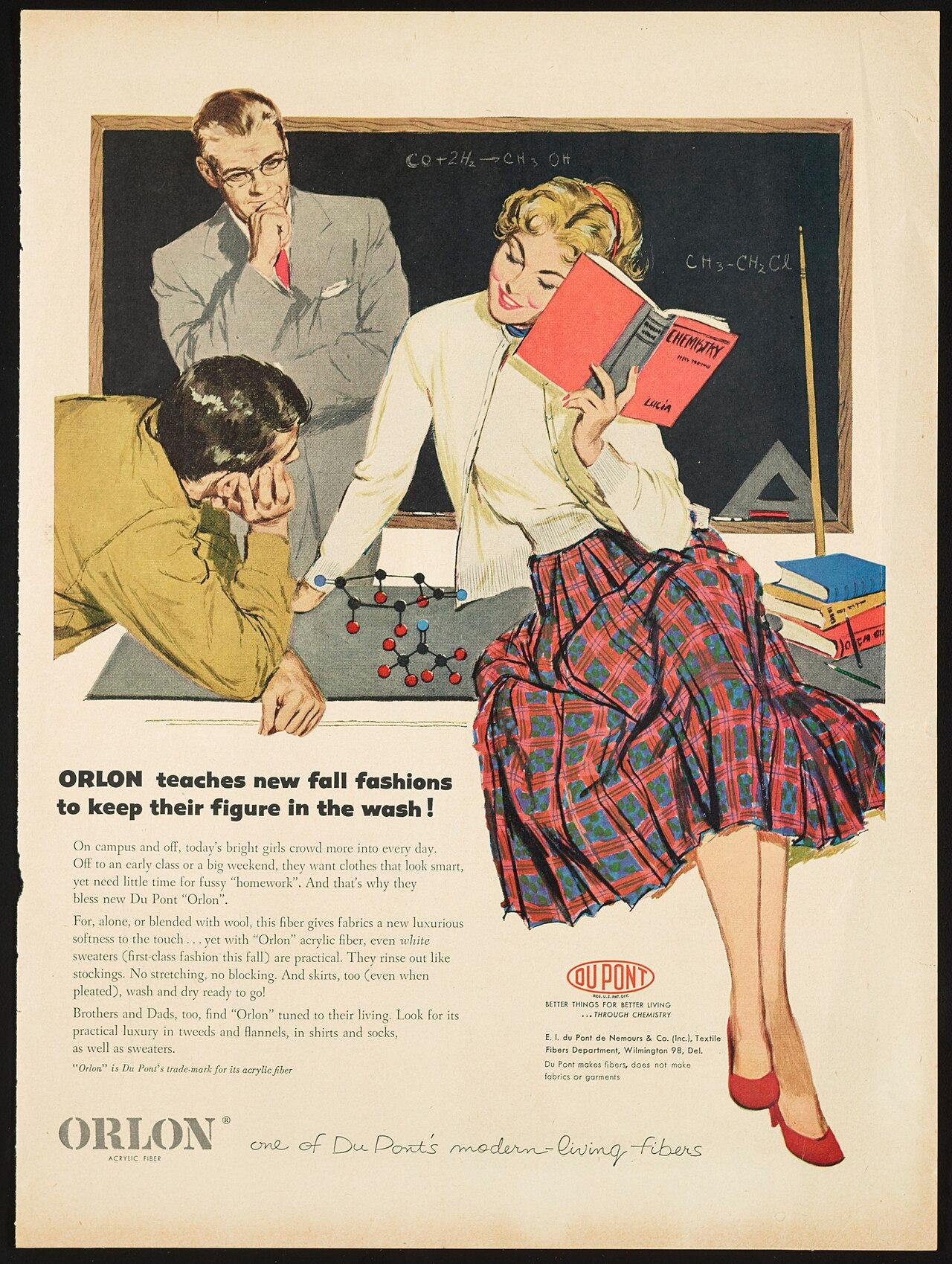
E. I. du Pont de Nemours & Company, "ORLON teaches new fall fashions to keep their figure in the wash!" magazine advertisement, 1950s. Science History Institute, via Wikimedia Commons. Public domain. - Material Culture
The Leisure Suit Phenomenon
How polyester became the most-mocked fabric in American fashion.
Read the story →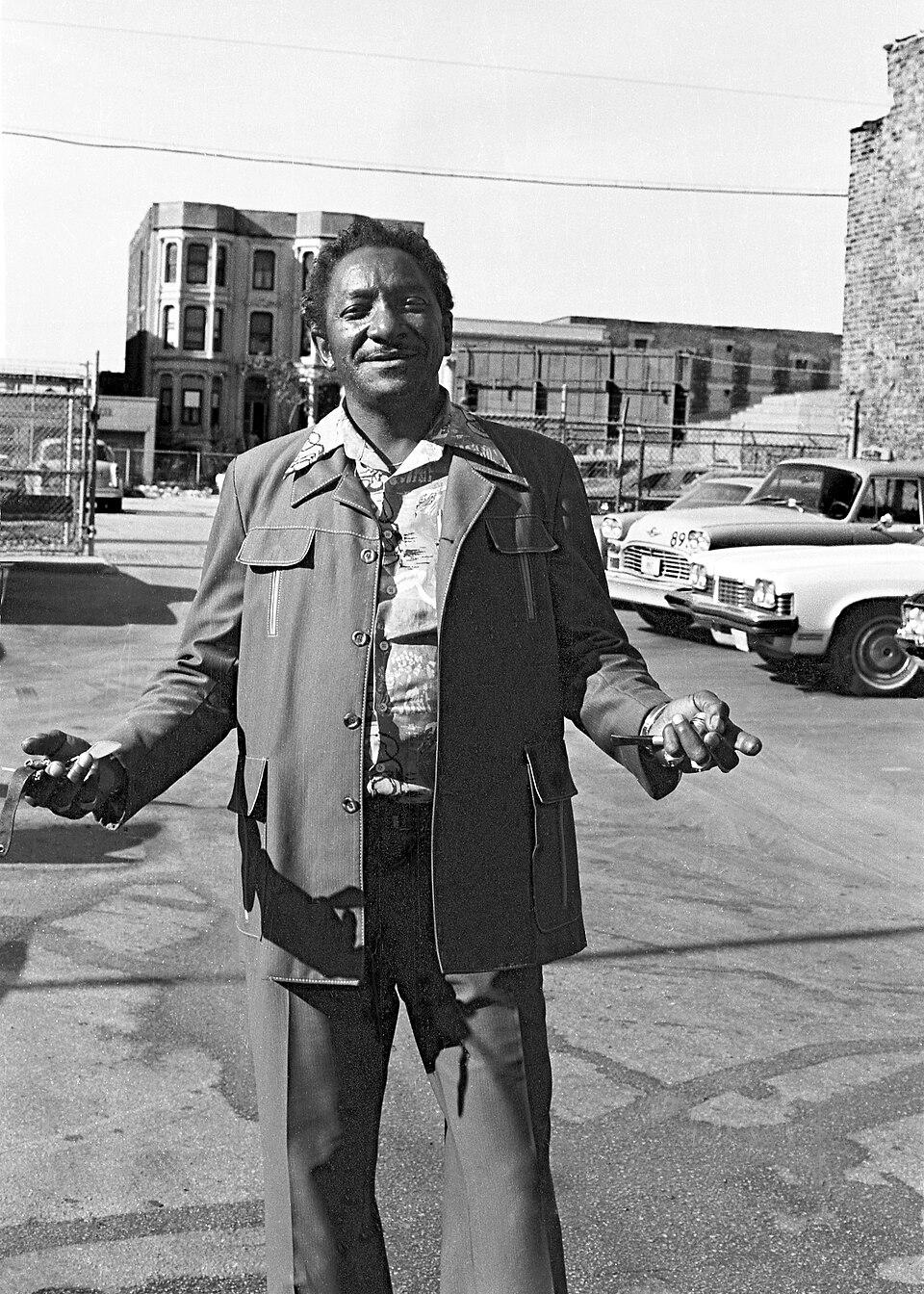
Downtowngal, "Man in leisure suit in parking lot, Chicago" (November 7, 1978). Wikimedia Commons, CC BY-SA 4.0. 2010–2020 · The Reshoring Frontier
InnovationThe Automated Factory
Robotics, digital knitting, and the limits of the 'factory of the future.'
Read the story →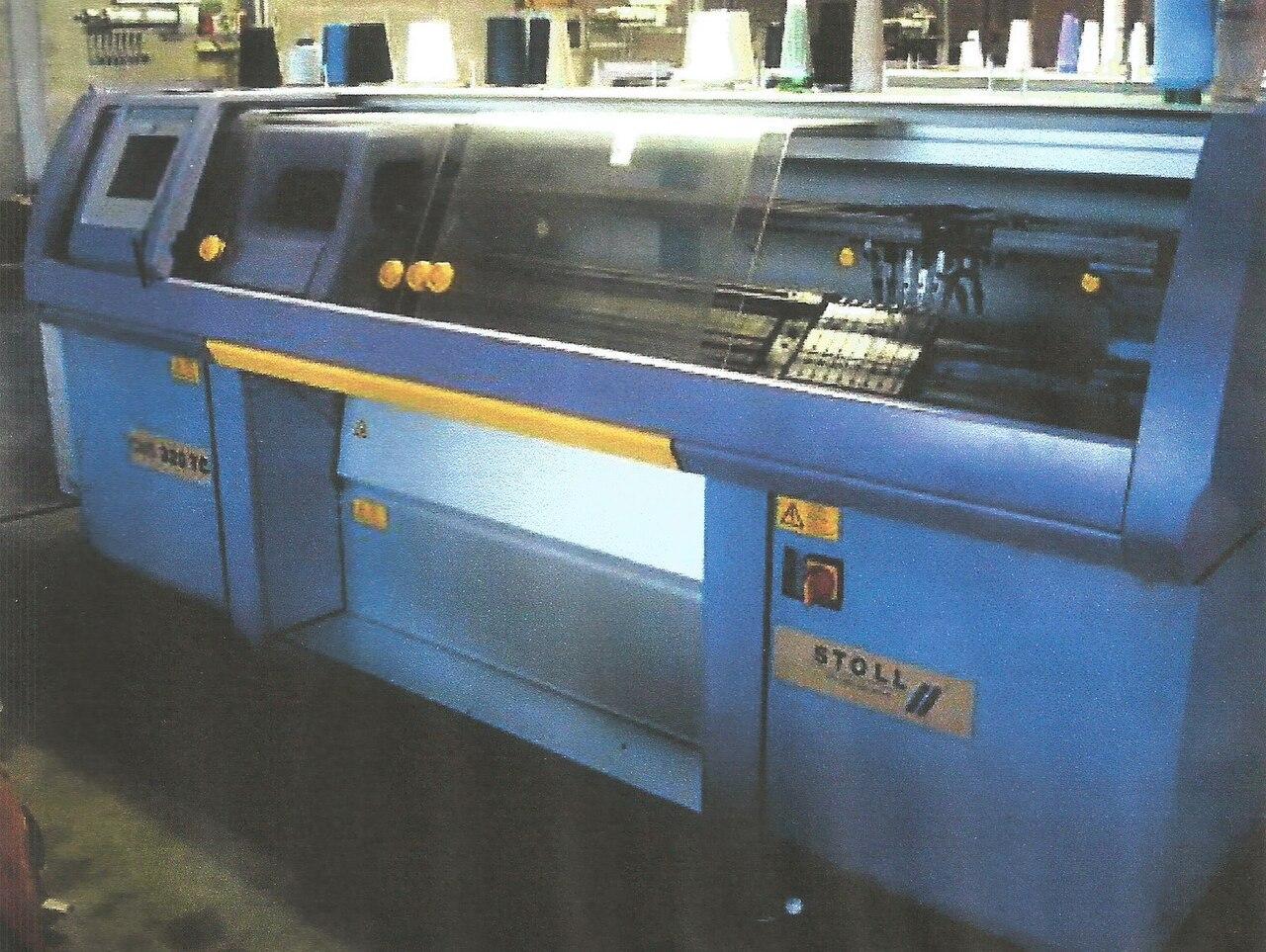
Elkágyé, "Contemporary flat knitting machine" (2018). Wikimedia Commons, CC BY-SA 4.0. - Biography
The Direct-to-Consumer Revolution
How the internet opened a niche for small American-made apparel brands.
Read the story →Elkágyé, "Contemporary flat knitting machine" (2018). Wikimedia Commons, CC BY-SA 4.0. 2020–Present · The Circular Reckoning
InnovationMycelium, Brewed Protein, and the Next Fiber
Early attempts at cloth grown in trays and tanks rather than fields.
Read the story →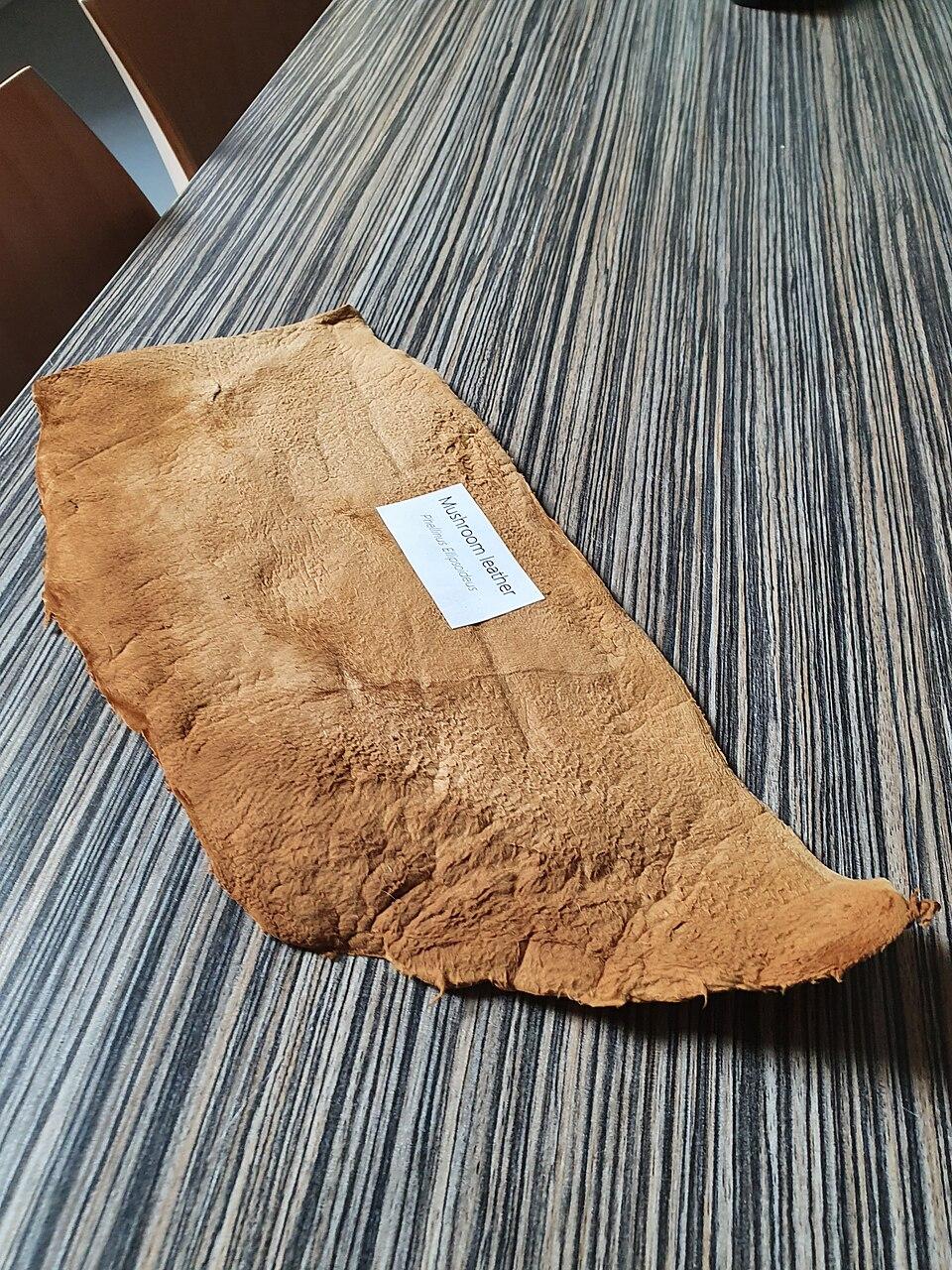
ThamaraGroenleer, "Mushroom leather" (2022). Wikimedia Commons, CC BY-SA 3.0.
Other threads
- Labor & OrganizingWho did the work, and what did it take for them to be heard?
- Slavery & RaceHow did race shape who grew the fiber, who ran the mills, and who was kept out?
- Women at WorkWhy was the textile industry so often built on the labor of women and girls?
- ImmigrationHow did the mills remake who Americans were?
- ChildhoodWhat did it mean to grow up in a mill?
- Health & SafetyWhat did it cost in lives before workplaces were made safe?
- Law & PolicyHow did government decide whose side to take?
- Global TradeWhere does your shirt come from, and who decides?
- Land & EnvironmentWhat did the industry take from the land and water?