Material Culture · Chapter 01, Before 1600
Bark, Nettle, Feather, and Shell
Eastern Woodlands finger-weaving, the lace of Spiro, and why wampum is not cloth money.
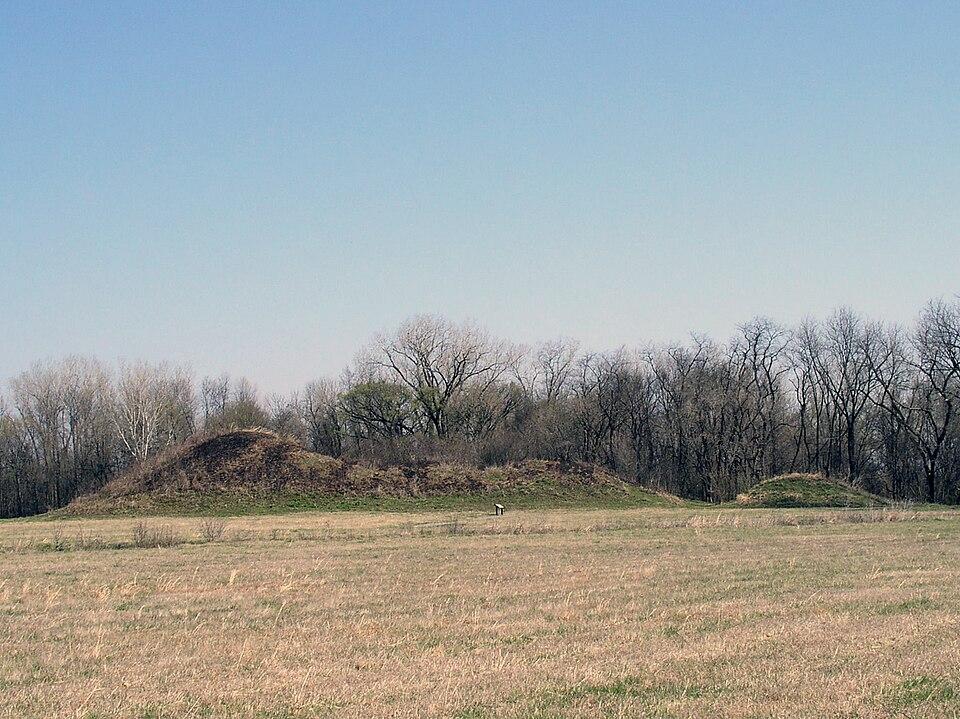
East of the Mississippi, most cloth was made without a heddle loom. Weavers drew fiber from the land: the inner bark of basswood and slippery elm, and the stalks of dogbane (which Europeans called Indian hemp), stinging nettle, and milkweed, retted in water, stripped, and twisted into cord. With these they twined bags and mats and finger-wove sashes and straps in a balanced oblique interlace, in which each warp turns at the edge to become a weft. A seventeenth-century Dutch visitor to New Netherland judged the native 'hemp' stronger than his own. At Spiro, a civic-ceremonial center in present-day eastern Oklahoma occupied from about 900 to 1400 CE by ancestors of Caddoan-speaking peoples, the sealed interior of Craig Mound preserved twined and interlaced fabrics, bobbin-lace-like openwork, and cloaks covered in dyed down from wild turkeys, Canada geese, and swans, nearly all of it made by finger manipulation rather than on a loom. Commercial diggers calling themselves the Pocola Mining Company looted the mound between 1933 and 1935, tossing textiles aside as worthless. Wampum belongs beside this story but is often mistold. The purple and white beads, drilled from quahog and whelk shell and woven on fiber cords into strings and belts, served the Haudenosaunee as records, credentials of office, and the binding memory of agreements. Its use as currency was largely a colonial development, accelerated by Dutch traders.
Sources
- ScholarshipJenna Tedrick Kuttruff. Techniques and Production Complexity of Mississippian Period Textiles from Spiro, Oklahoma. Textile Society of America Symposium Proceedings.
- ScholarshipIdentification of Feathers in Textiles from the Craig Mound at Spiro, Oklahoma. Smithsonian Research Online.
- ScholarshipSpiro Mounds. Oklahoma Historical Society, The Encyclopedia of Oklahoma History and Culture.
- Primary sourceWampum. Haudenosaunee Confederacy.