Impact · Chapter 14, 1934
The Stretch-Out
The speed-up that detonated the 1934 strike.
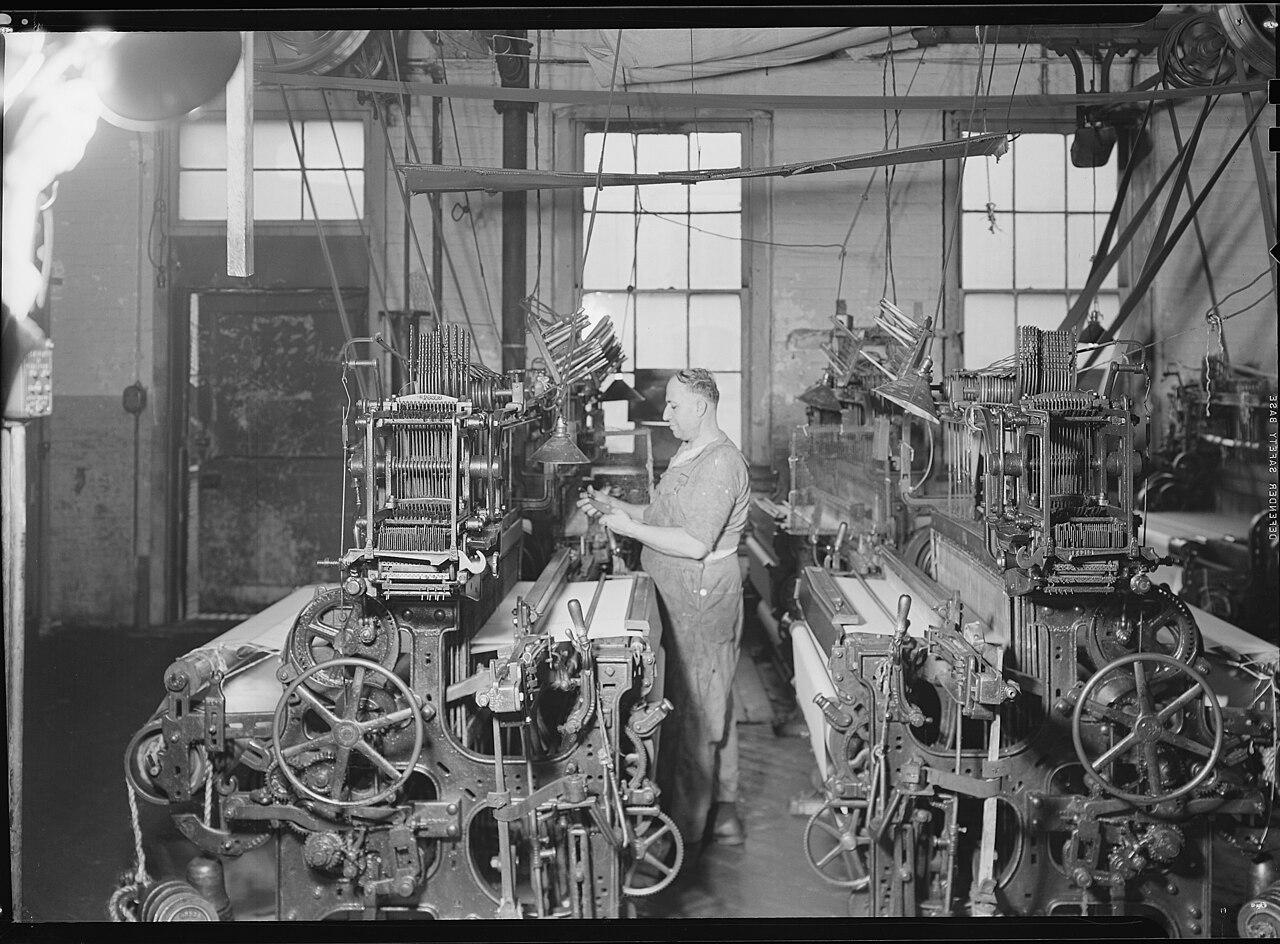
Beginning in the late 1920s and intensifying in the Depression, mill owners responded to falling prices by hiring efficiency engineers and assigning each worker more machines, often at faster speeds, for the same or lower pay. Weavers, spinners, and loom fixers saw their workloads multiply, with exhaustion, injuries, and the erosion of the family wage that had been the implicit bargain of the mill village. The stretch-out was a central grievance at Gastonia and Marion in 1929. When the 1933 cotton textile code under the National Industrial Recovery Act promised shorter hours and a federal hearing for workload complaints, workers believed federal law was on their side. When owners evaded the code and the government's enforcement board proved toothless, the region's pent-up grievance exploded in the strike of 1934.
Sources
- ScholarshipJacquelyn Dowd Hall, James Leloudis, Robert Korstad, et al. Like a Family: The Making of a Southern Cotton Mill World. University of North Carolina Press, 1987.
- ScholarshipGeneral Textile Strike (1934). South Carolina Encyclopedia.
- ScholarshipLoray Mill (Firestone Mill). Clio.