A thread through time
Land & Environment
What did the industry take from the land and water?
Dammed rivers, exhausted cotton soils, dye-stained mill races, and microplastic fibers: the material history behind the cloth.
6 stories across 4 chapters
Before 1600 · Before the Loom
InnovationCotton on the Mesa
Ancestral Pueblo and Hopi weavers, and a fiber grown in the desert for centuries before Europeans arrived.
Read the story →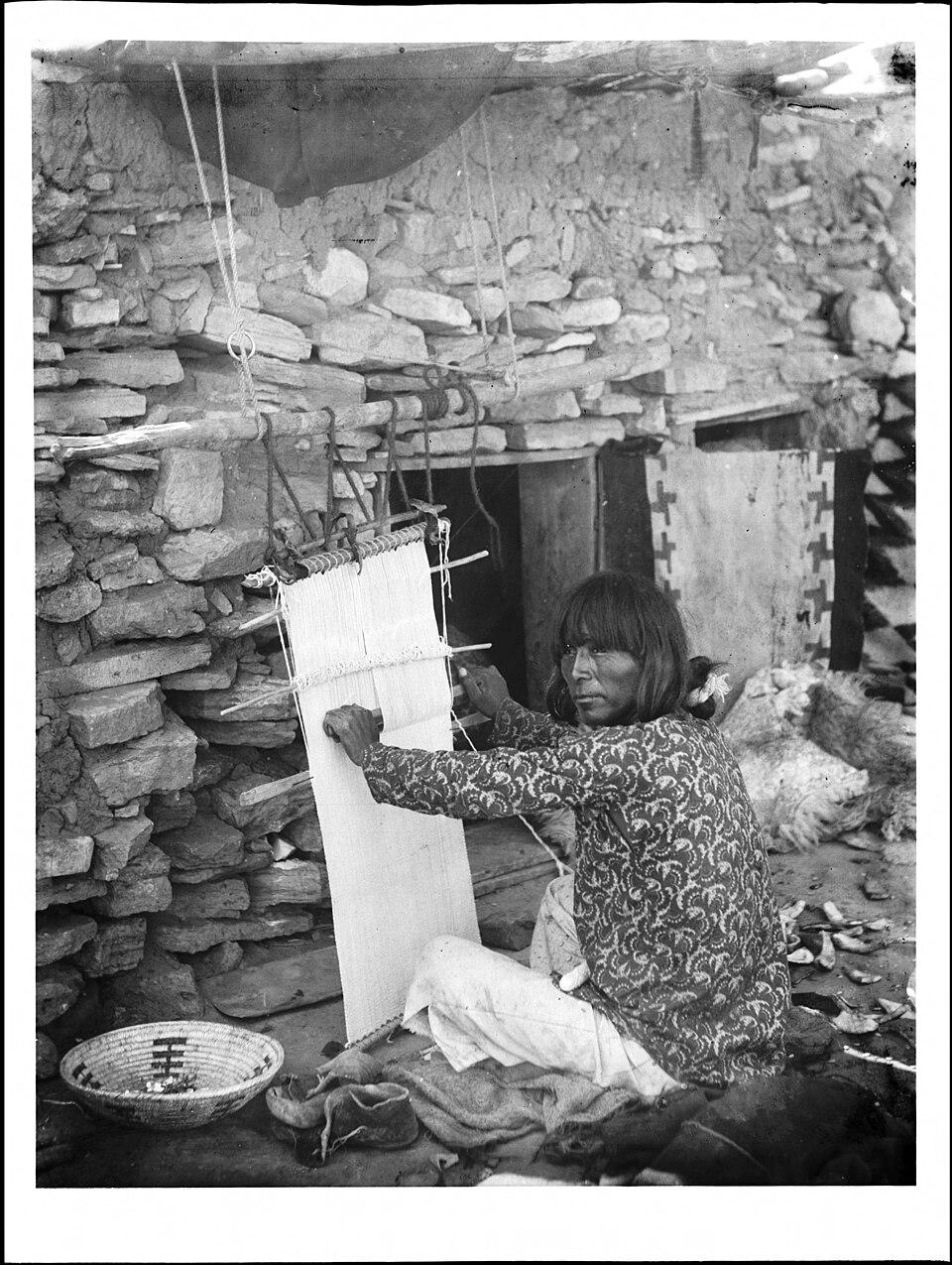
George Wharton James, "Male Hopi weaver at Moenkopi, Arizona," c. 1898. California Historical Society Collection, USC Digital Library (CHS-4619). Public domain. - Tragedy
The Long Walk and the Trading Post
1863 to the 1930s: how conquest, confinement, and federal policy reshaped Diné weaving.
Read the story →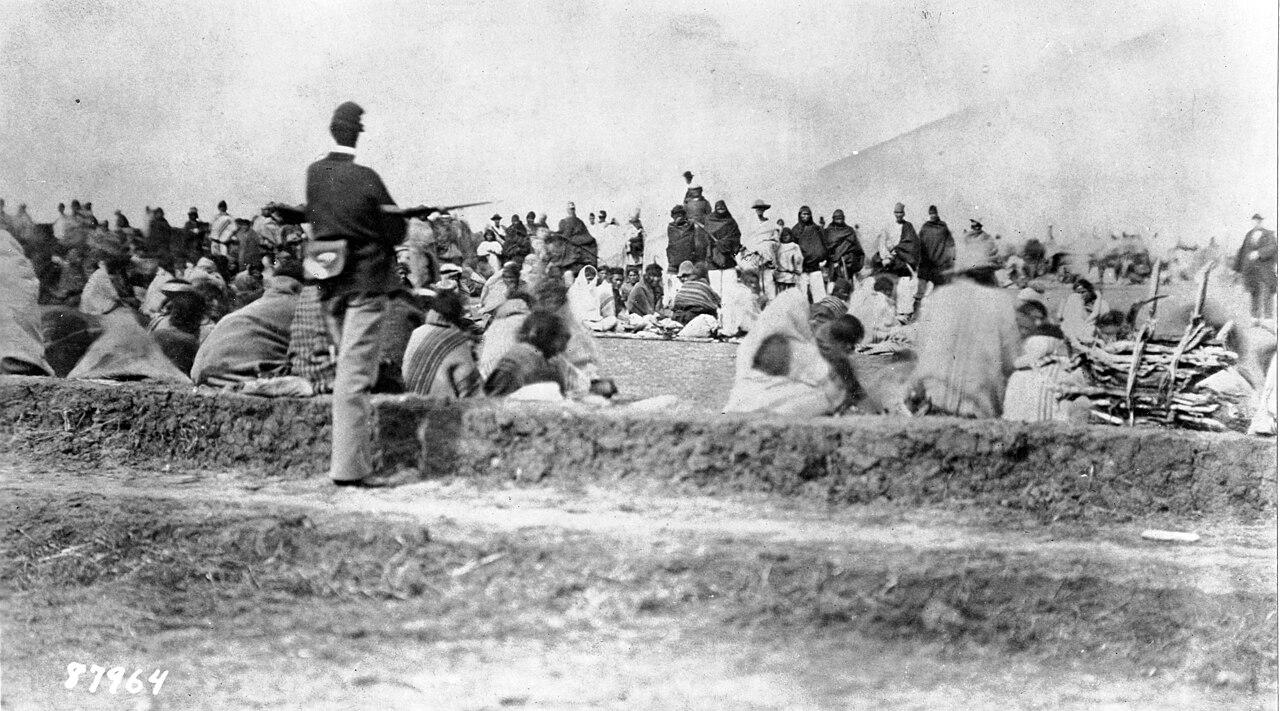
U.S. Army Signal Corps, "Navajo Indian captives under guard, Fort Sumner, New Mexico," c. 1864-1868. Palace of the Governors Photo Archives (NMHM/DCA 028534); U.S. National Archives (NAID 148727588). Public domain. 1950–1980 · The Polyester Dream
ImpactThe Cost of 'Miracle' Fibers
How synthetic clothing became a source of microplastic pollution.
Read the story →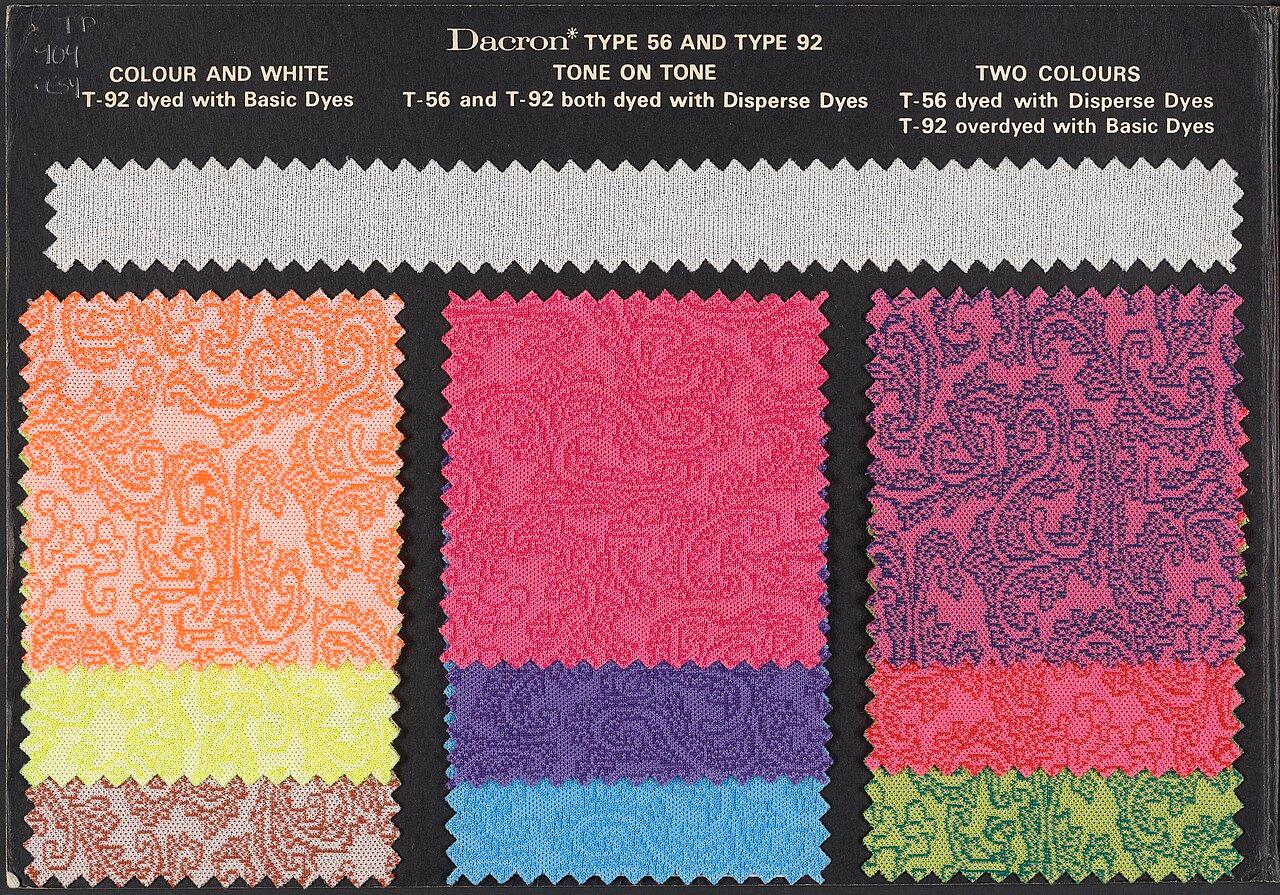
E. I. du Pont de Nemours & Company, "Dacron & Antron Colour Story," fabric sample booklet. Science History Institute, via Wikimedia Commons. No known copyright restrictions. 1980–2005 · The Great De-Industrialization
Material CultureGhosts of the Mill Town
What remains in the buildings the looms left behind.
Read the story →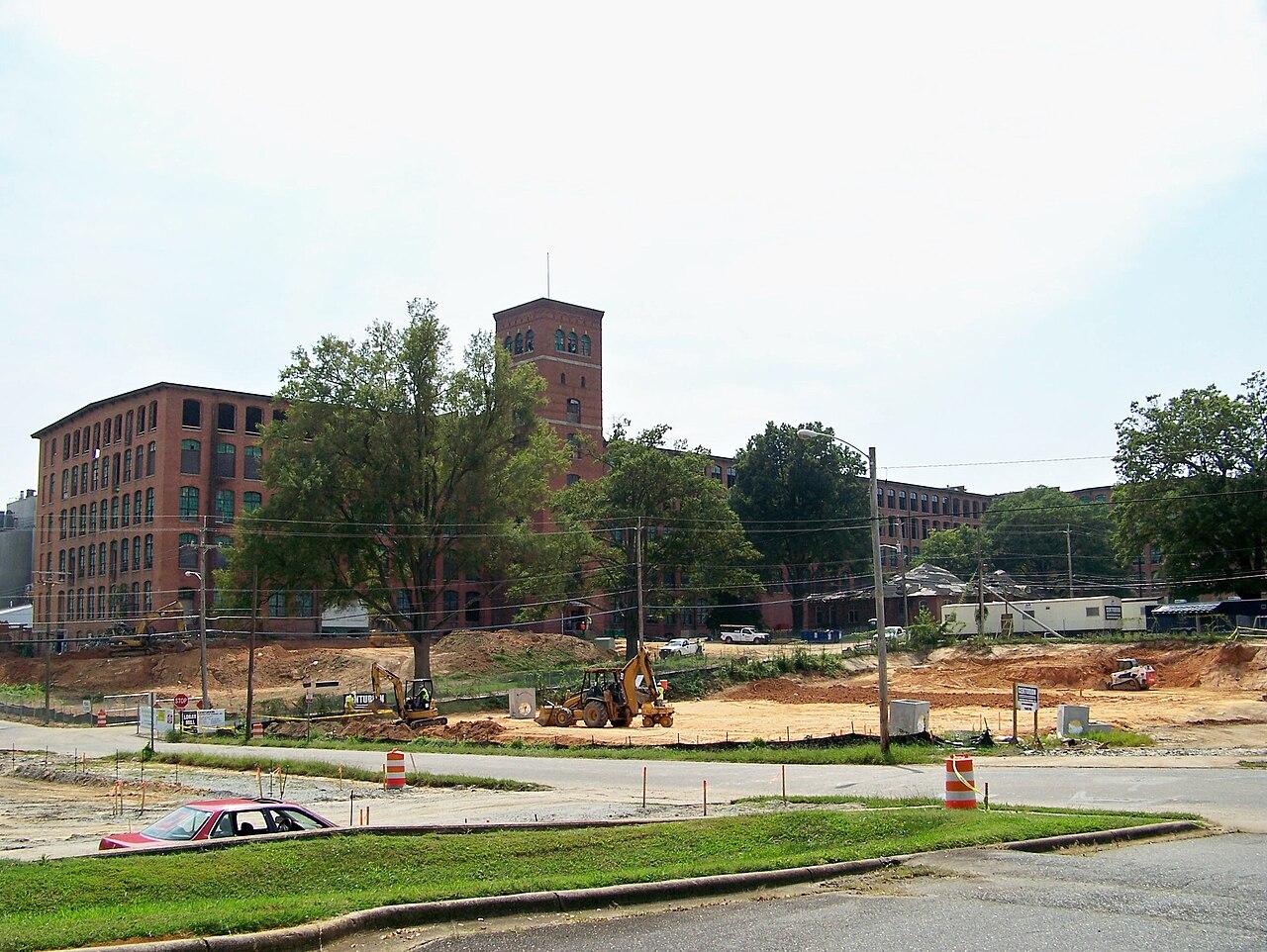
Upstateherd, "Loray Mill, Gastonia, NC" (2013). Wikimedia Commons, CC BY-SA 3.0. 2020–Present · The Circular Reckoning
ImpactThe New York Fashion Act
A major U.S. attempt to legislate apparel supply chains—still unpassed.
Read the story →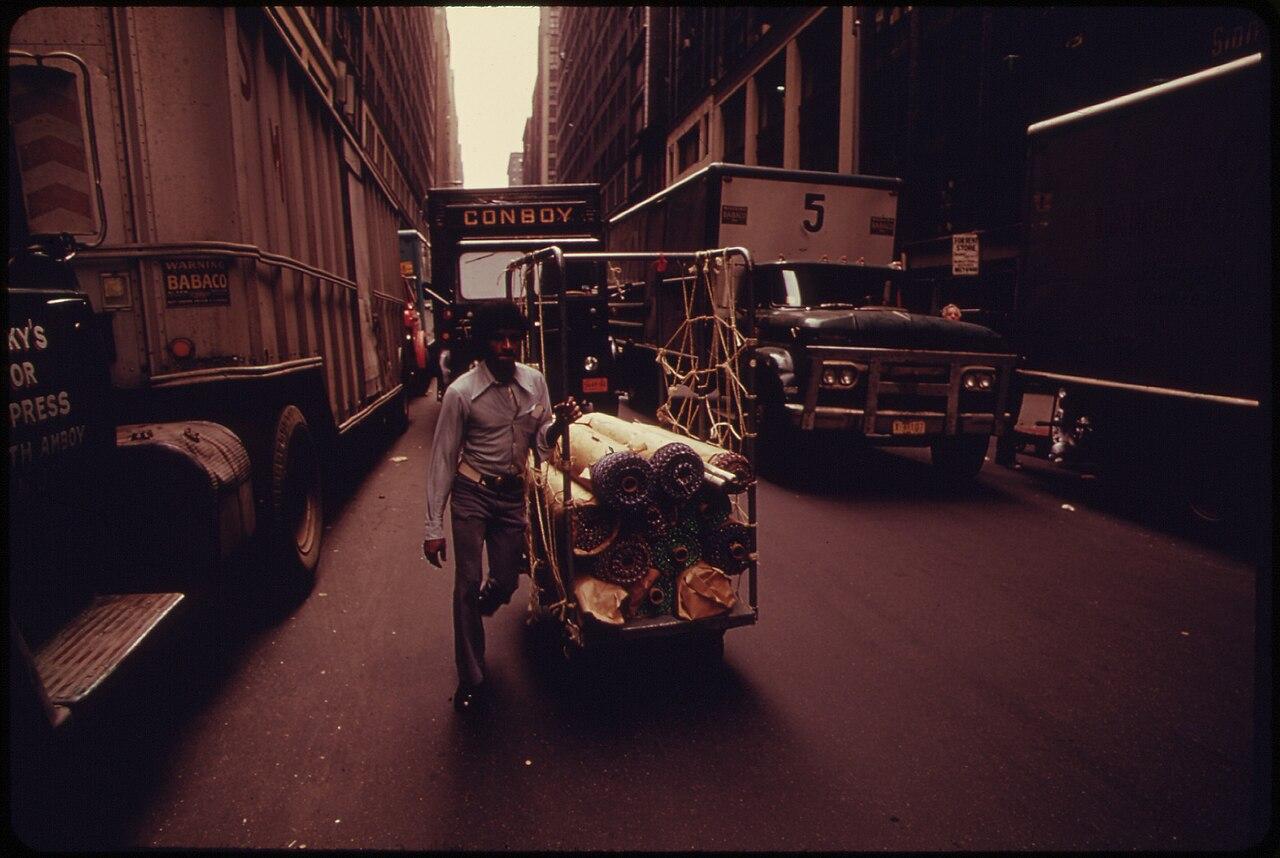
Dan McCoy, "A frequent sight in midtown Manhattan's famous Garment District (between Broadway and Eighth Avenue)," April 1973. U.S. National Archives and Records Administration (NAID 549867). Public domain. - Innovation
Mycelium, Brewed Protein, and the Next Fiber
Early attempts at cloth grown in trays and tanks rather than fields.
Read the story →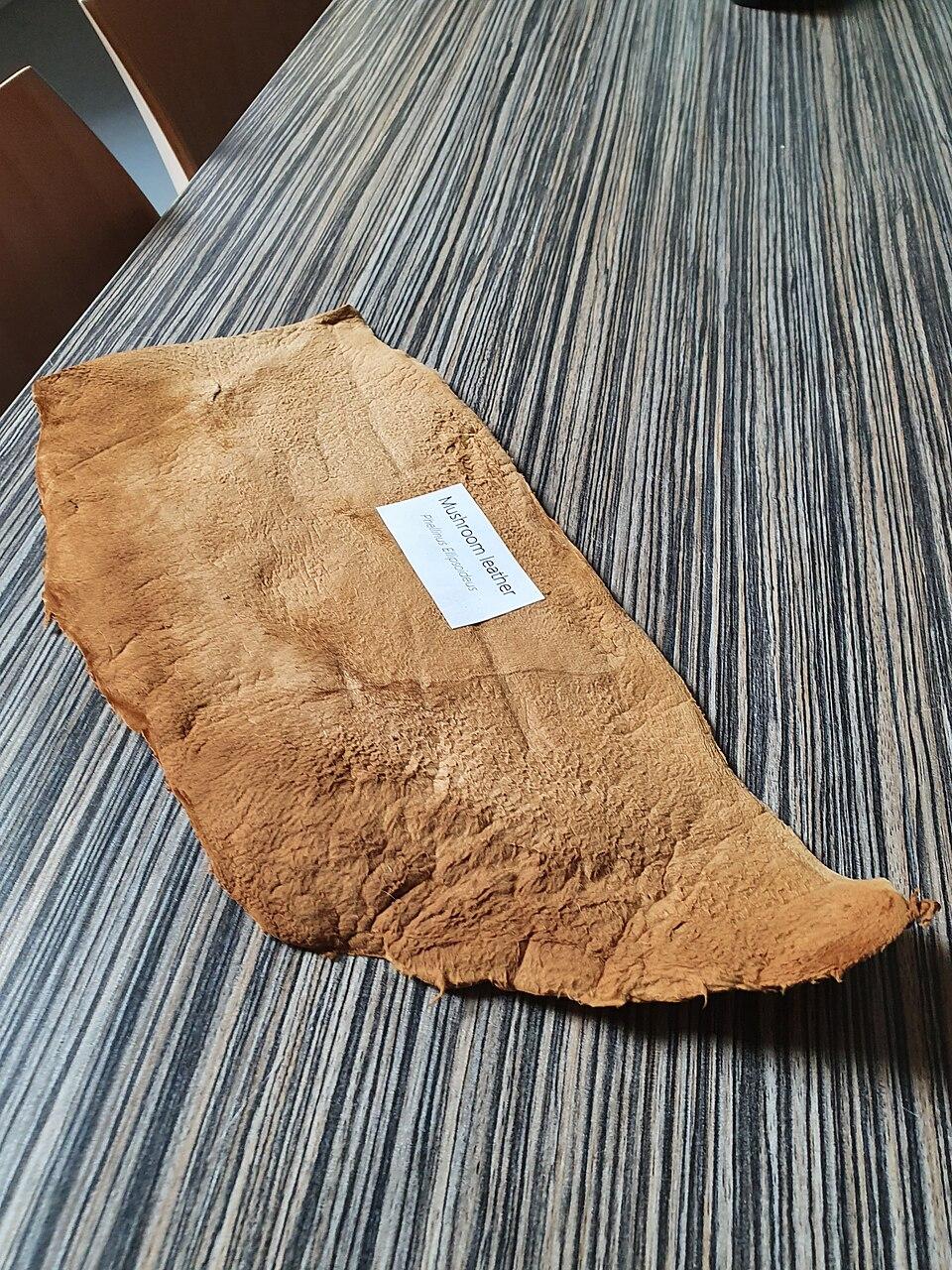
ThamaraGroenleer, "Mushroom leather" (2022). Wikimedia Commons, CC BY-SA 3.0.
Other threads
- Labor & OrganizingWho did the work, and what did it take for them to be heard?
- Slavery & RaceHow did race shape who grew the fiber, who ran the mills, and who was kept out?
- Women at WorkWhy was the textile industry so often built on the labor of women and girls?
- ImmigrationHow did the mills remake who Americans were?
- ChildhoodWhat did it mean to grow up in a mill?
- Machines & MaterialsDid new technology free workers or bind them more tightly?
- Health & SafetyWhat did it cost in lives before workplaces were made safe?
- Law & PolicyHow did government decide whose side to take?
- Global TradeWhere does your shirt come from, and who decides?