A thread through time
Women at Work
Why was the textile industry so often built on the labor of women and girls?
Spinning bees, mill girls, shirtwaist strikers, and mill mothers: the industry was the first place many American women earned wages, and the first place they organized.
26 stories across 15 chapters
Before 1600 · Before the Loom
InnovationThe Diné Loom
How the Diné made the Pueblo upright loom and Spanish sheep into one of the world's great weaving traditions.
Read the story →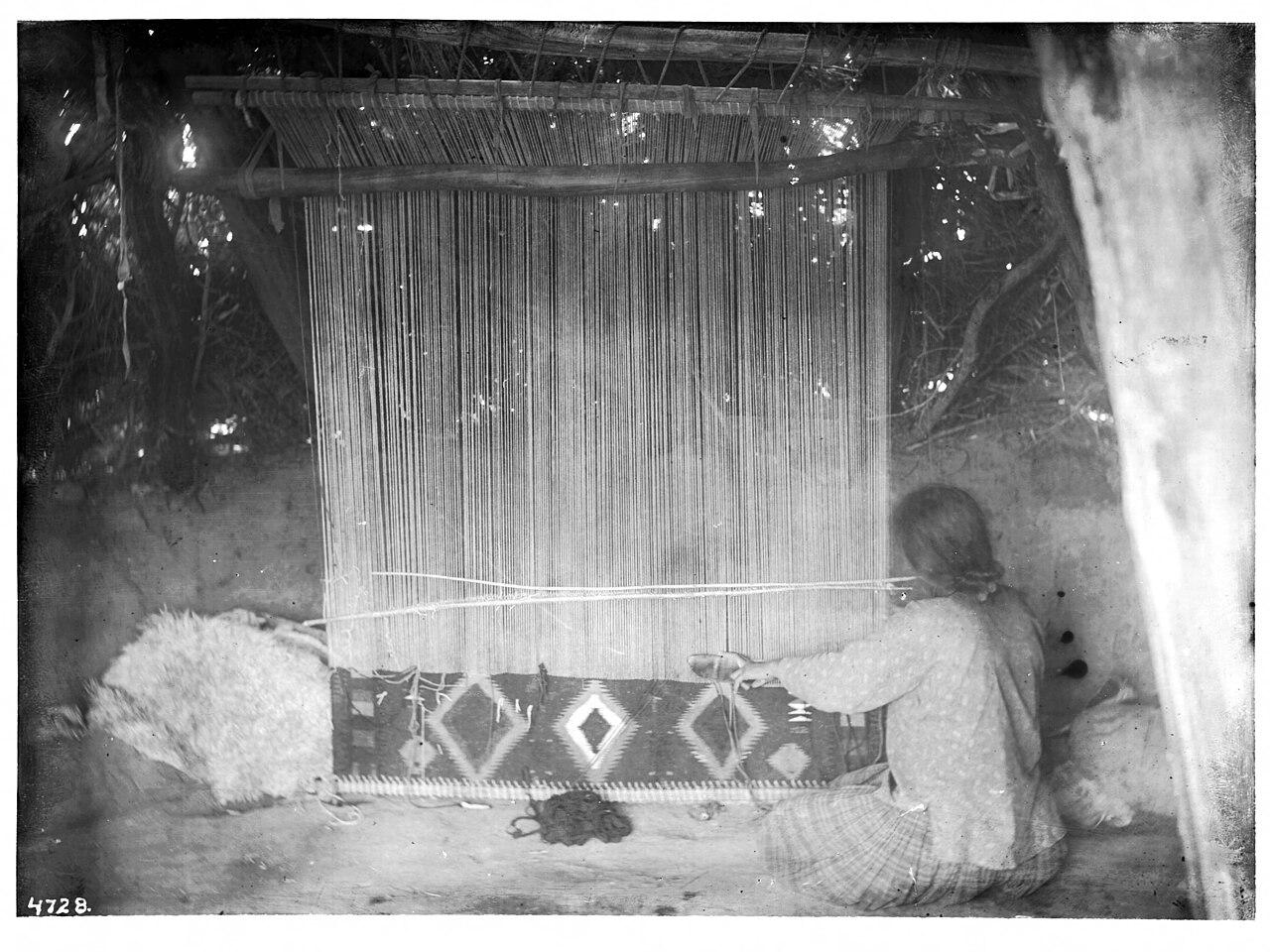
George Wharton James, "Navajo woman at her loom weaving a blanket," c. 1900. California Historical Society Collection, USC Digital Library (CHS-4728). Public domain. - Tragedy
The Long Walk and the Trading Post
1863 to the 1930s: how conquest, confinement, and federal policy reshaped Diné weaving.
Read the story →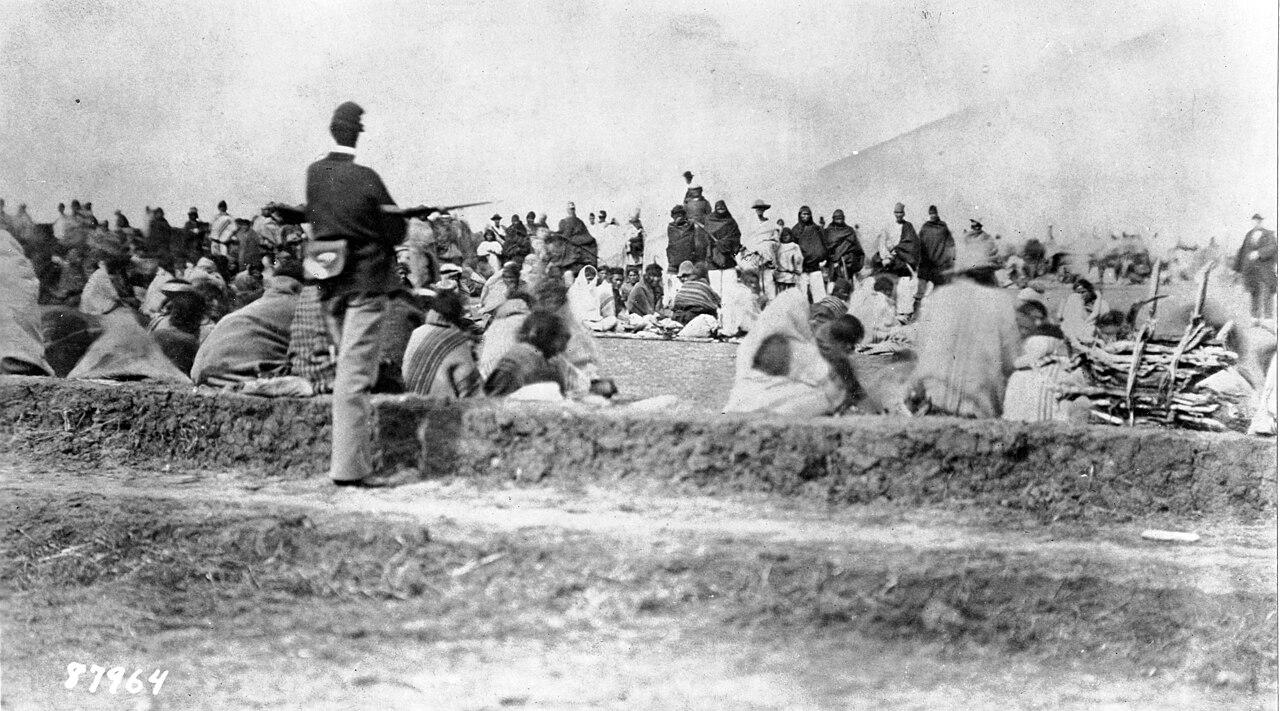
U.S. Army Signal Corps, "Navajo Indian captives under guard, Fort Sumner, New Mexico," c. 1864-1868. Palace of the Governors Photo Archives (NMHM/DCA 028534); U.S. National Archives (NAID 148727588). Public domain. 1600–1760 · The Colonial Hearth
Material CultureThe Agony of Flax
The long, many-stage process that turned a blue-flowered plant into a linen shirt.
Read the story →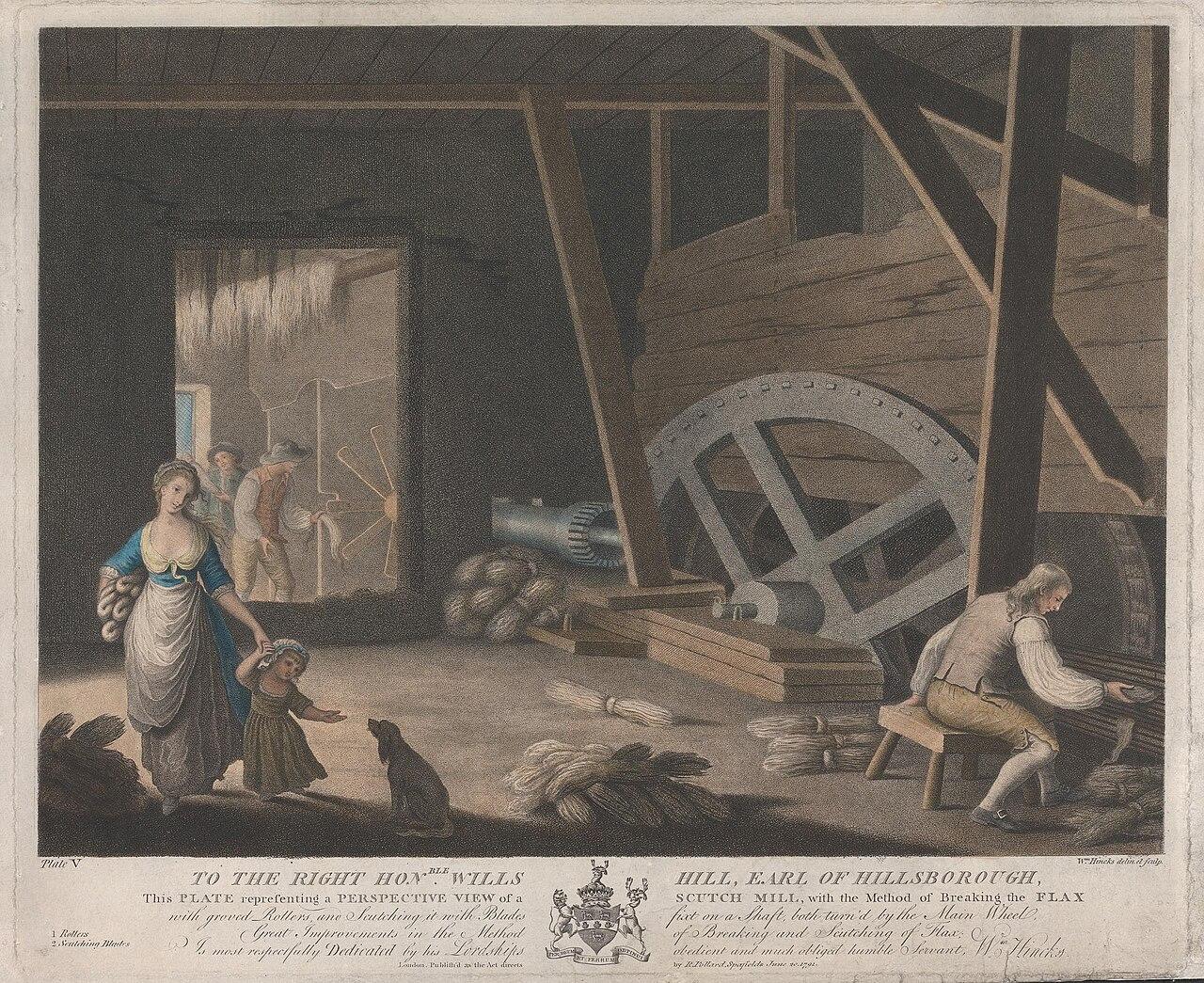
William Hincks, "A Perspective View of a Scutch Mill, with the Method of Breaking the Flax with Grooved Rollers," Plate V of his Irish linen industry series, 1791. Yale Center for British Art, Paul Mellon Collection (B1978.43.251). CC0. - Innovation
Two Wheels, Two Worlds
How the great wheel and the flax wheel divided the colonial household.
Read the story →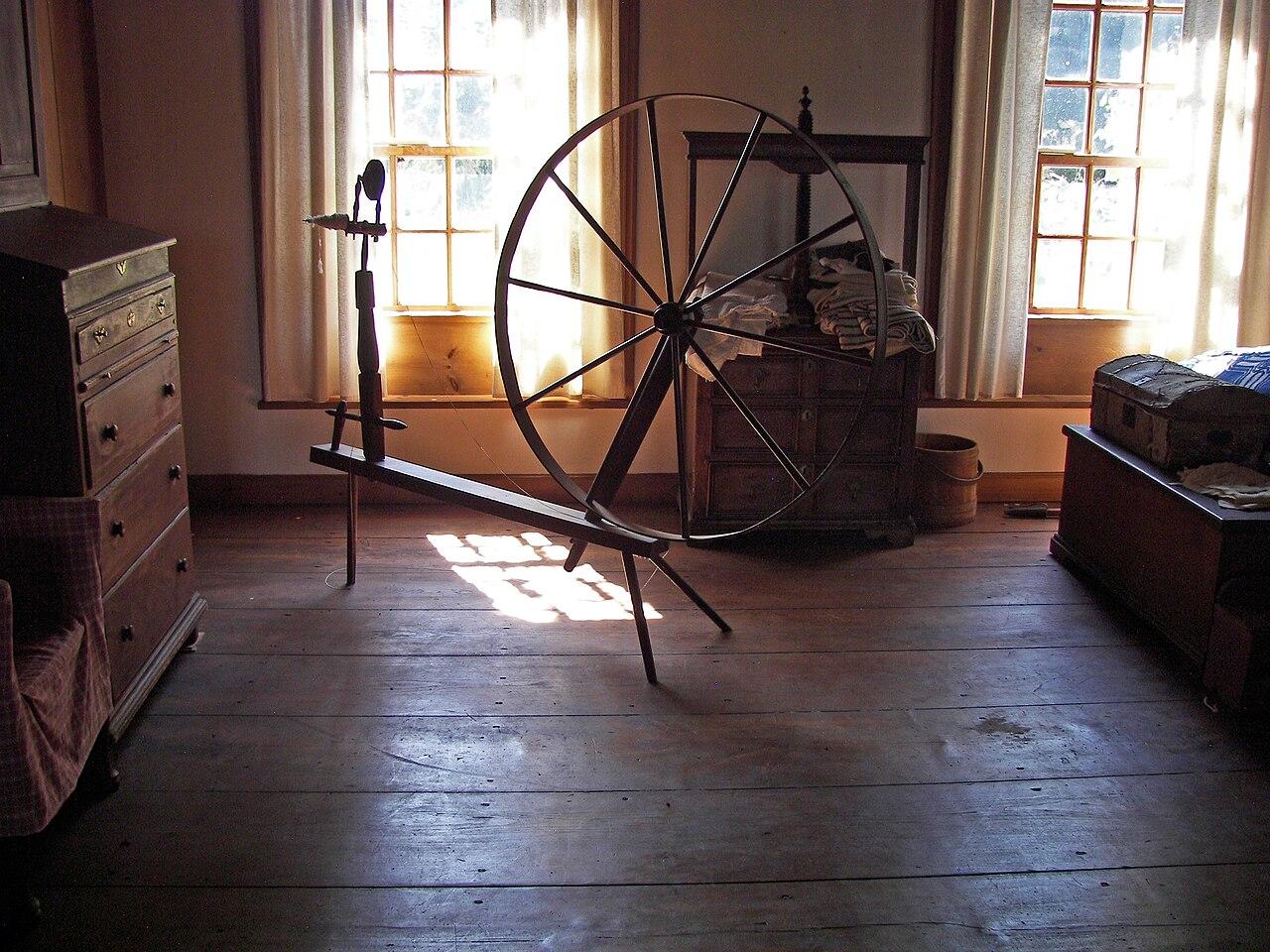
Wknight94, "Herkimer House spinning wheel 2" (2009). Wikimedia Commons, CC BY-SA 3.0. - Impact
Sheep, Statutes, and Survival
How colonial law conscripted the household into a textile economy.
Read the story →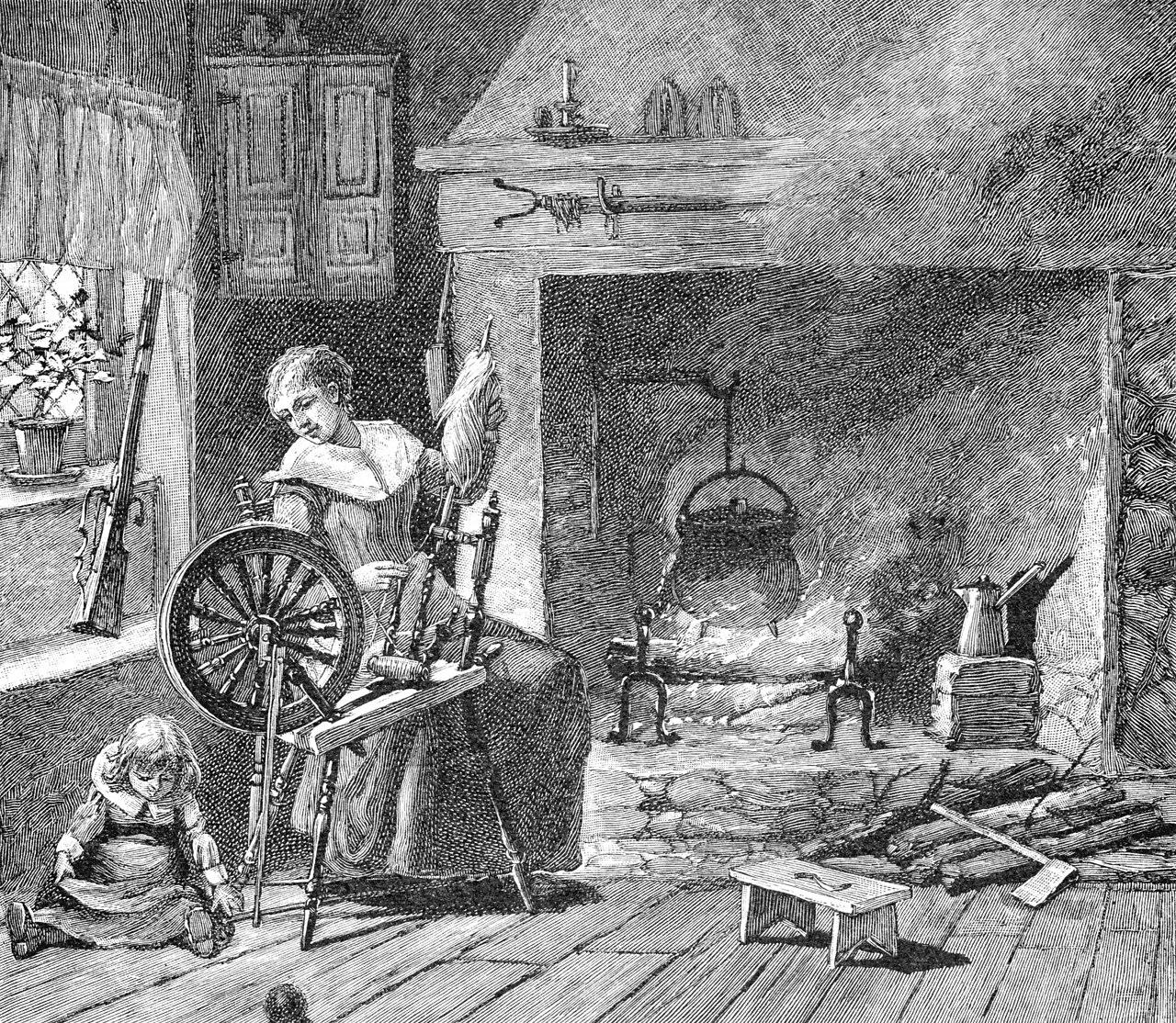
Engraving from Joel Dorman Steele and Esther Baker Steele, "A Brief History of the United States" (1885). Public domain, via Wikimedia Commons. 1760–1789 · The Revolutionary Loom
LaborThe Daughters of Liberty
Women as the economic engine of colonial resistance.
Read the story →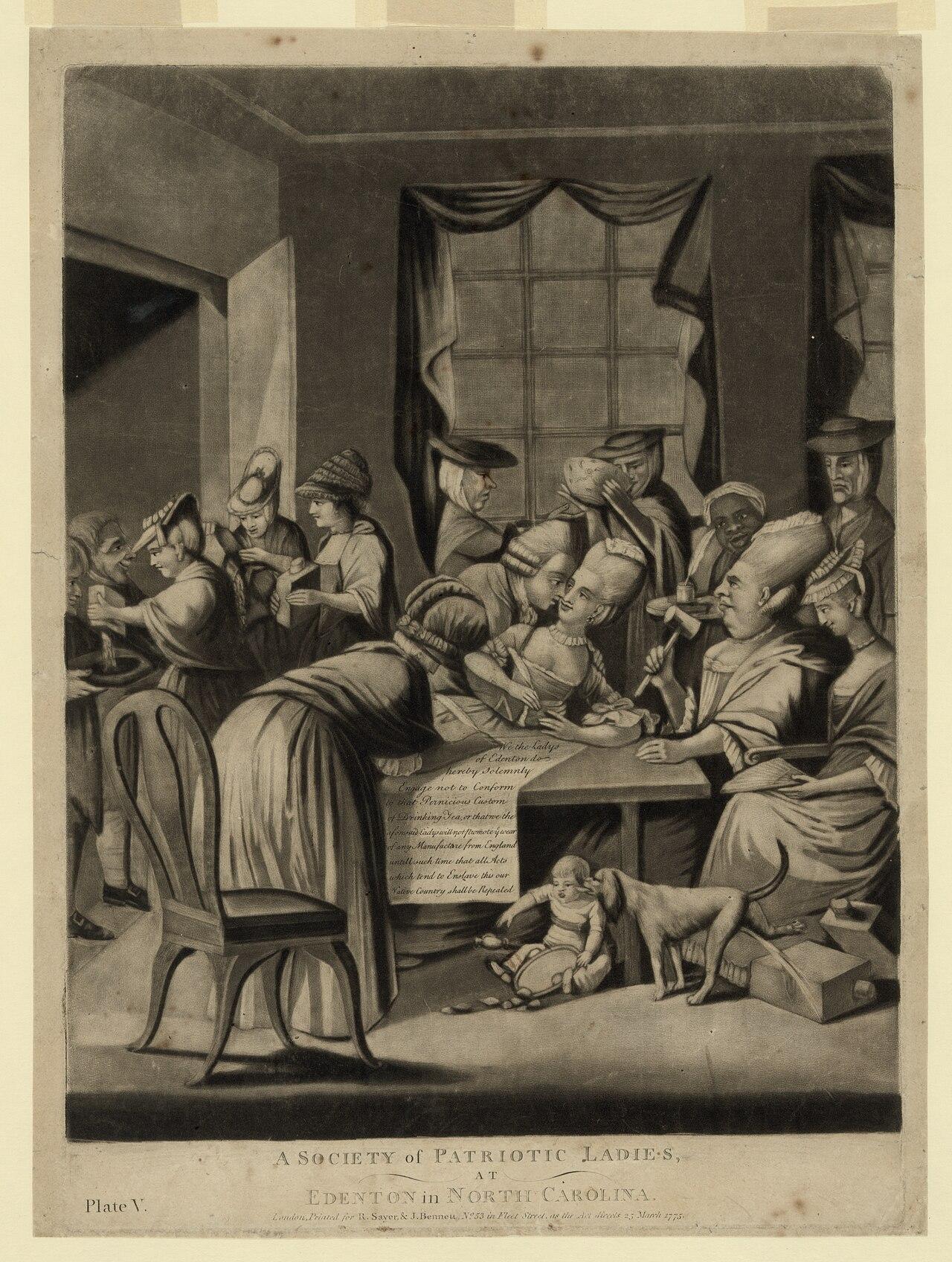
Attributed to Philip Dawe, "A Society of Patriotic Ladies, at Edenton in North Carolina," mezzotint published by R. Sayer and J. Bennett, London, March 25, 1775. Library of Congress Prints and Photographs Division. Public domain. - Material Culture
The Spinning Bee as Political Theater
A domestic chore staged as a public act.
Read the story →Attributed to Philip Dawe, "A Society of Patriotic Ladies, at Edenton in North Carolina," mezzotint published by R. Sayer and J. Bennett, London, March 25, 1775. Library of Congress Prints and Photographs Division. Public domain. 1820–1845 · The Lowell Mill Girls
Material CultureBoarding House Life
Corporate supervision of the worker's whole life.
Read the story →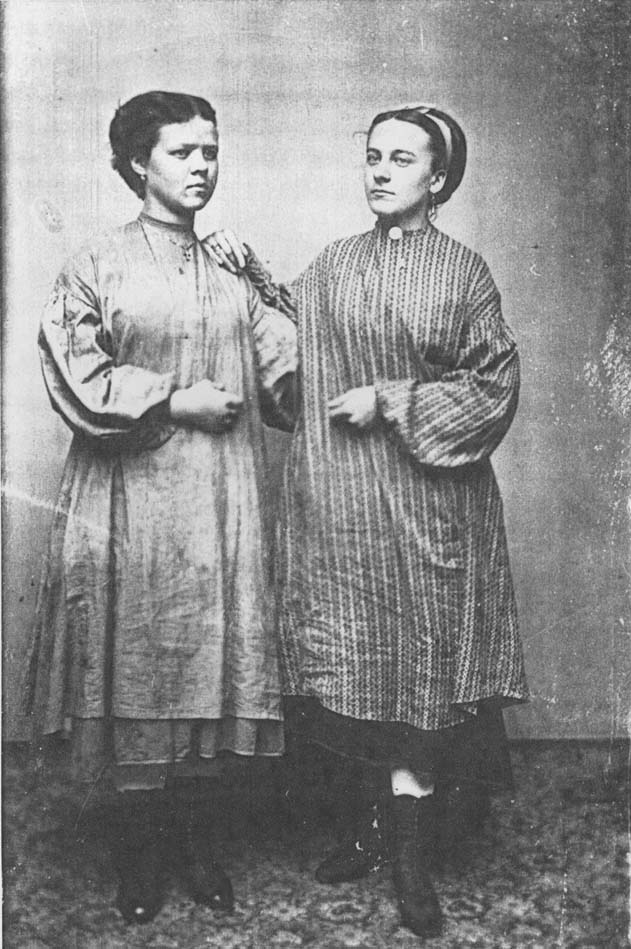
Unidentified photographer, two Lowell mill women, tintype, c. 1870. Center for Lowell History, University of Massachusetts Lowell Libraries. Public domain. - Material Culture
The Lowell Offering
A literary magazine written by mill workers.
Read the story →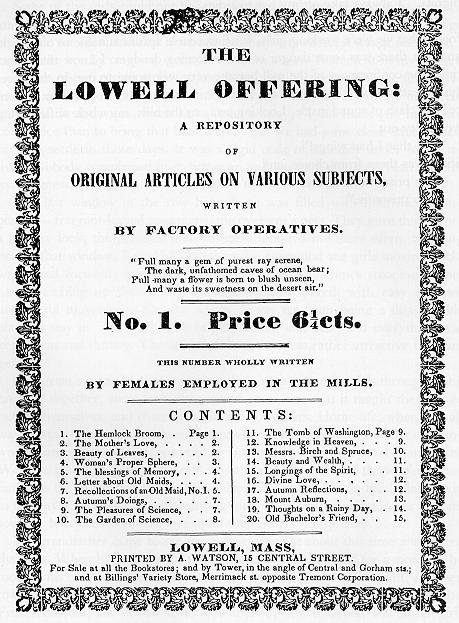
Front page of The Lowell Offering, No. 1, 1840. Merrimack Valley Textile Museum. Public domain. - Biography
Sarah Bagley: A Labor Voice in Print
A weaver who became the public voice of industrial reform.
Read the story →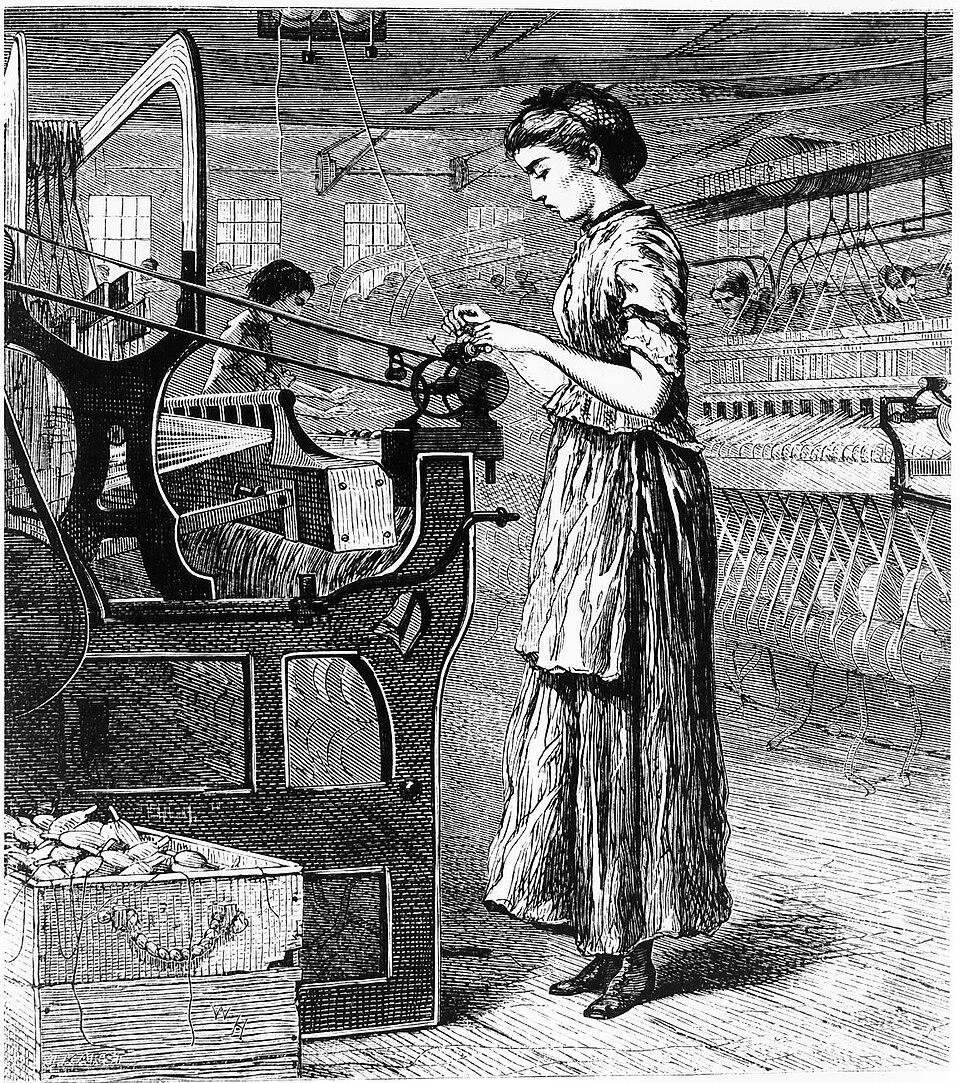
After Winslow Homer, "The Bobbin Girl," wood engraving, c. 1871. National Park Service (NPGallery). Public domain. 1840–1920 · The Silk City
BiographyHannah Silverman, Strike Captain
A teenager who led the women's picket lines.
Read the story →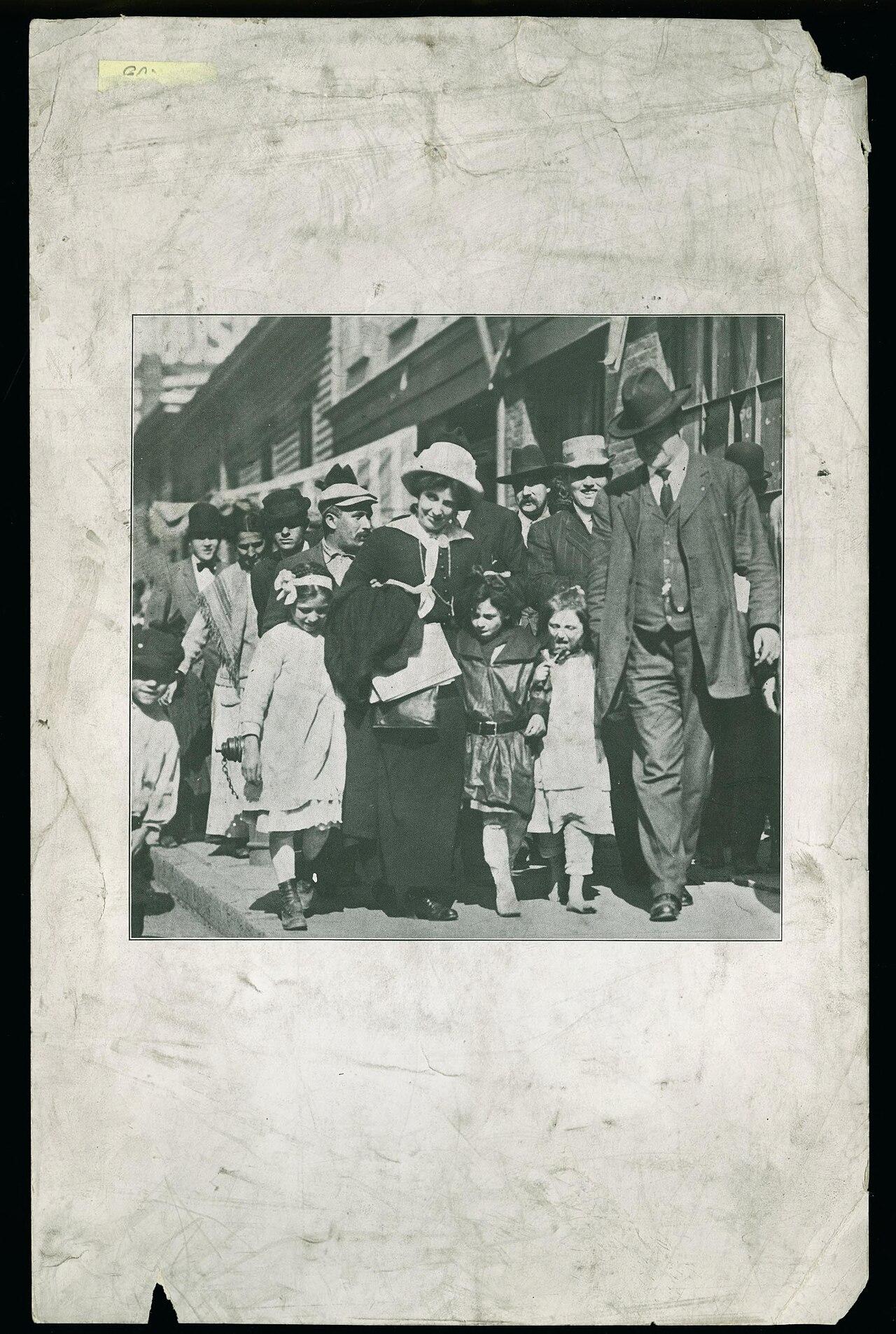
Unidentified photographer, "Paterson Strike, Elizabeth Gurley Flynn, etc.," 1913. Internet Archive (mms_kerr_bx_2_fl_29_05). Public domain. 1846–1860 · The Sewing Revolution
InnovationSinger's Installment Plan
A turning point in American consumer credit.
Read the story →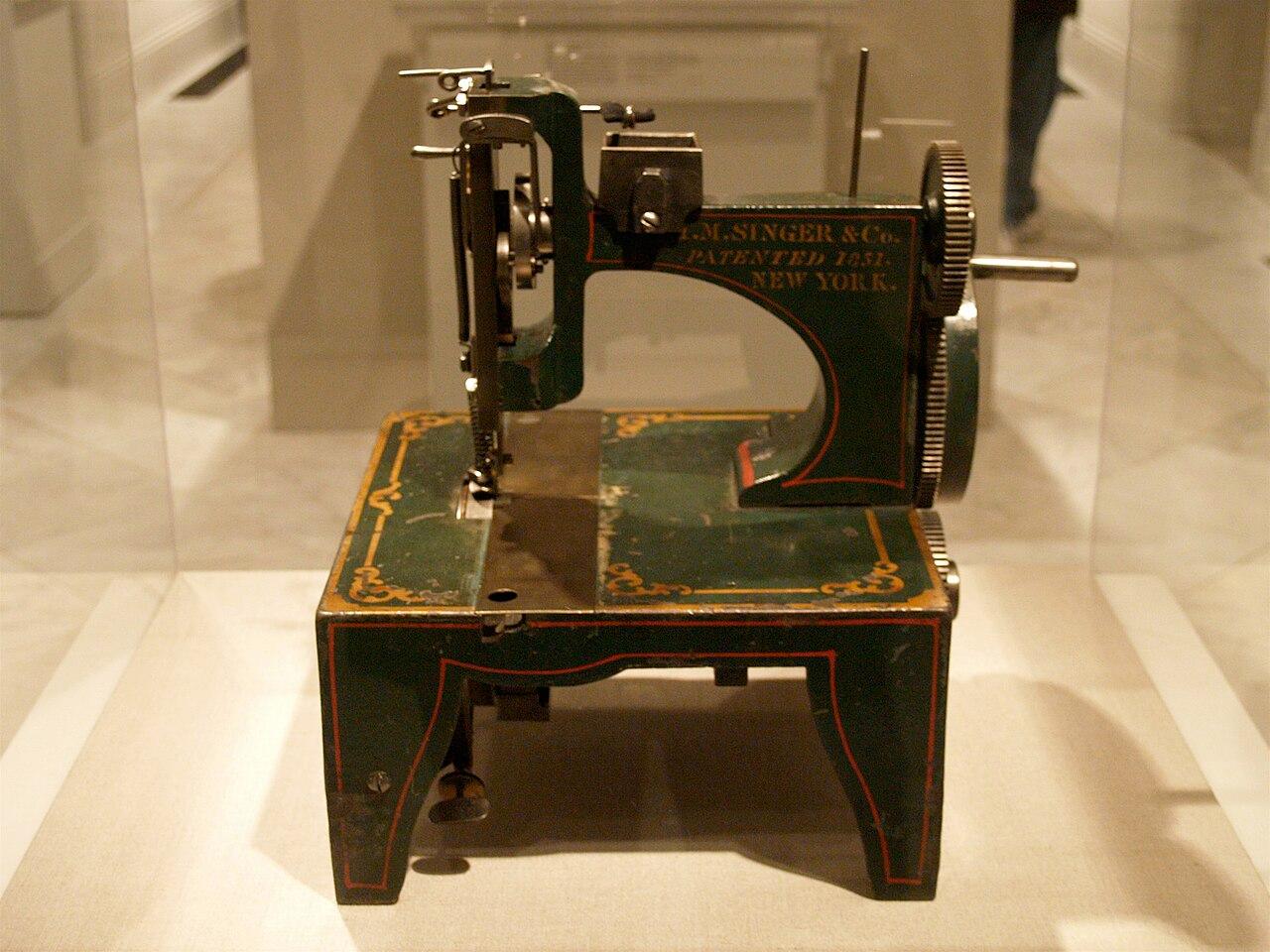
takomabibelot, "Isaac Singer's 1854 Patent Model For Improvements To His Sewing Machine," photographed at the National Portrait Gallery, Smithsonian Institution (2007). Flickr, CC BY 2.0, via Wikimedia Commons. - Impact
The Seamstress and the Machine
An economic cost rarely written into the history of the machine.
Read the story →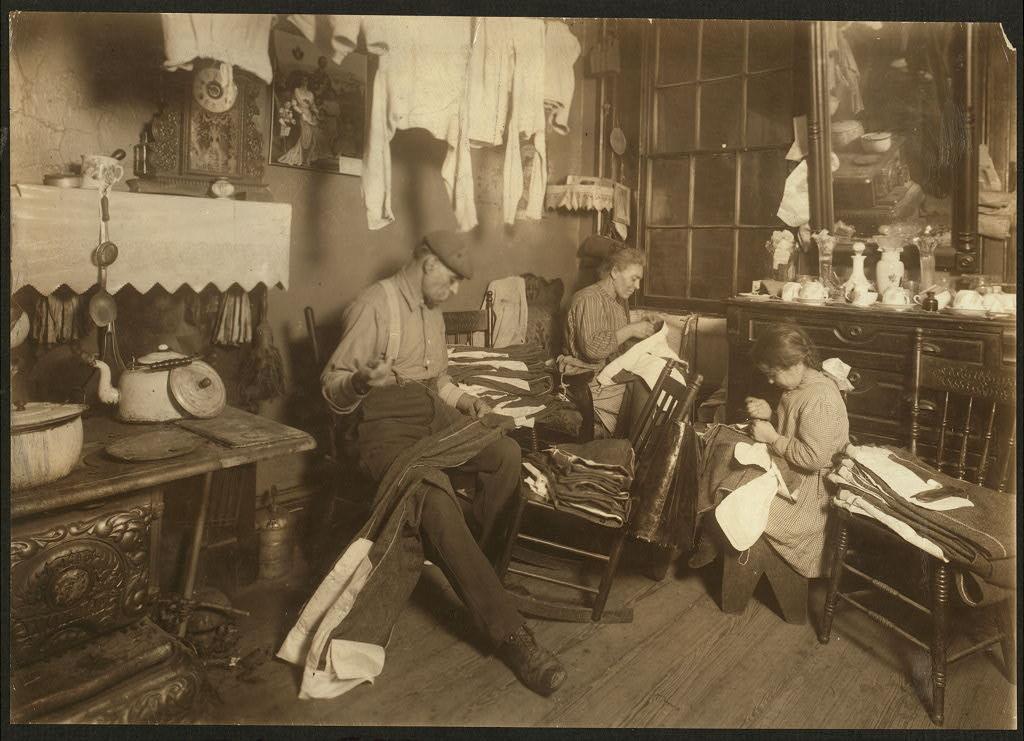
Lewis Wickes Hine for the National Child Labor Committee, "11:30 A.M. Jennie Rizzandi, 9 year old girl, helping mother and father finish garments in a dilapidated tenement," New York City, January 1913. Public domain. 1870–1910 · The Garment District
BiographyThe Uprising of the 20,000
The strike that built the ILGWU—and set the stage for Triangle.
Read the story →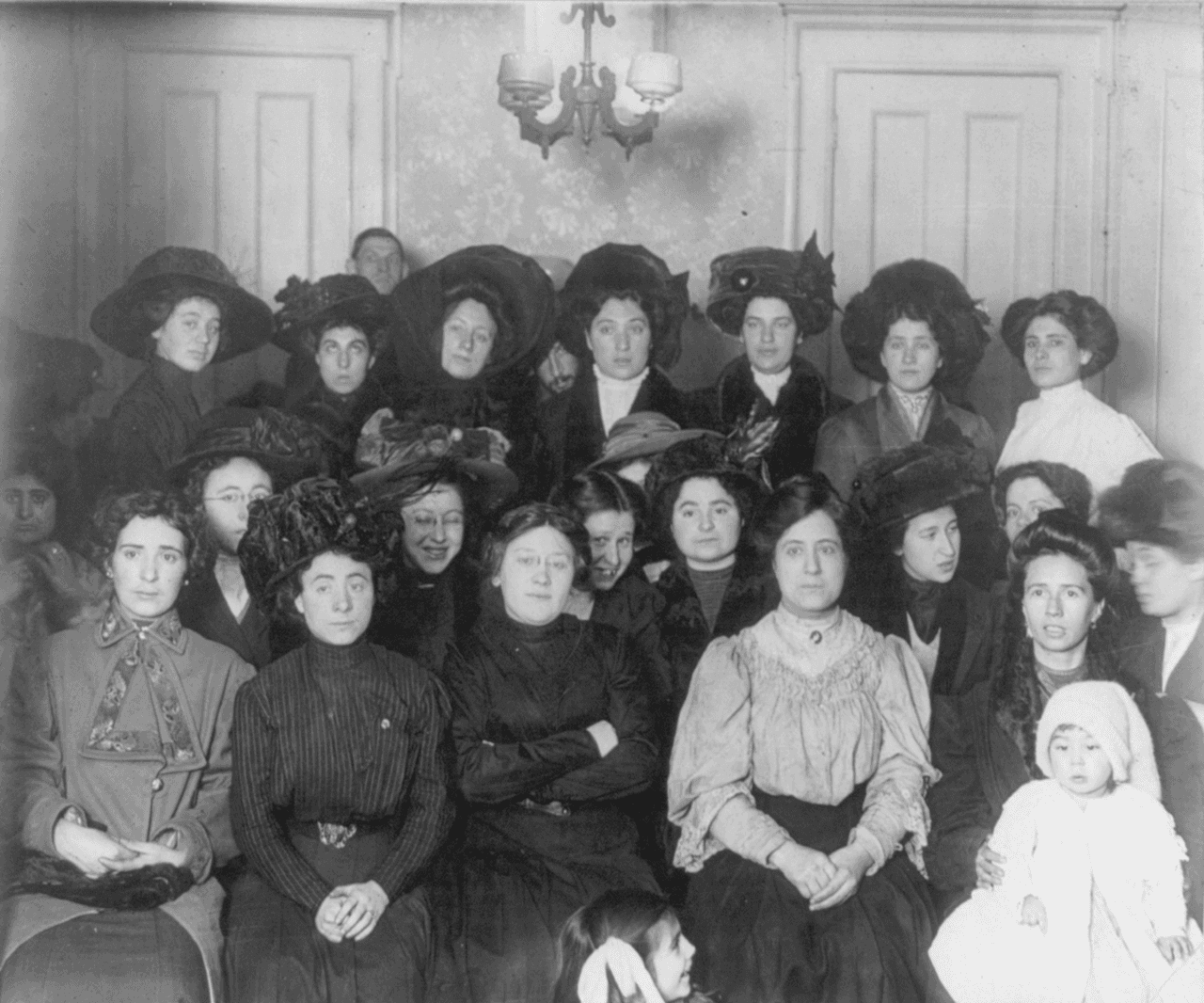
Bain News Service, "Group of mainly female shirtwaist workers on strike, in a room, New York," January 1910. Library of Congress, George Grantham Bain Collection (cph.3a51055). Public domain. 1880–1920 · The Gilded Age of Wool
LaborBread and Roses
The 1912 Lawrence strike that united dozens of nationalities.
Read the story →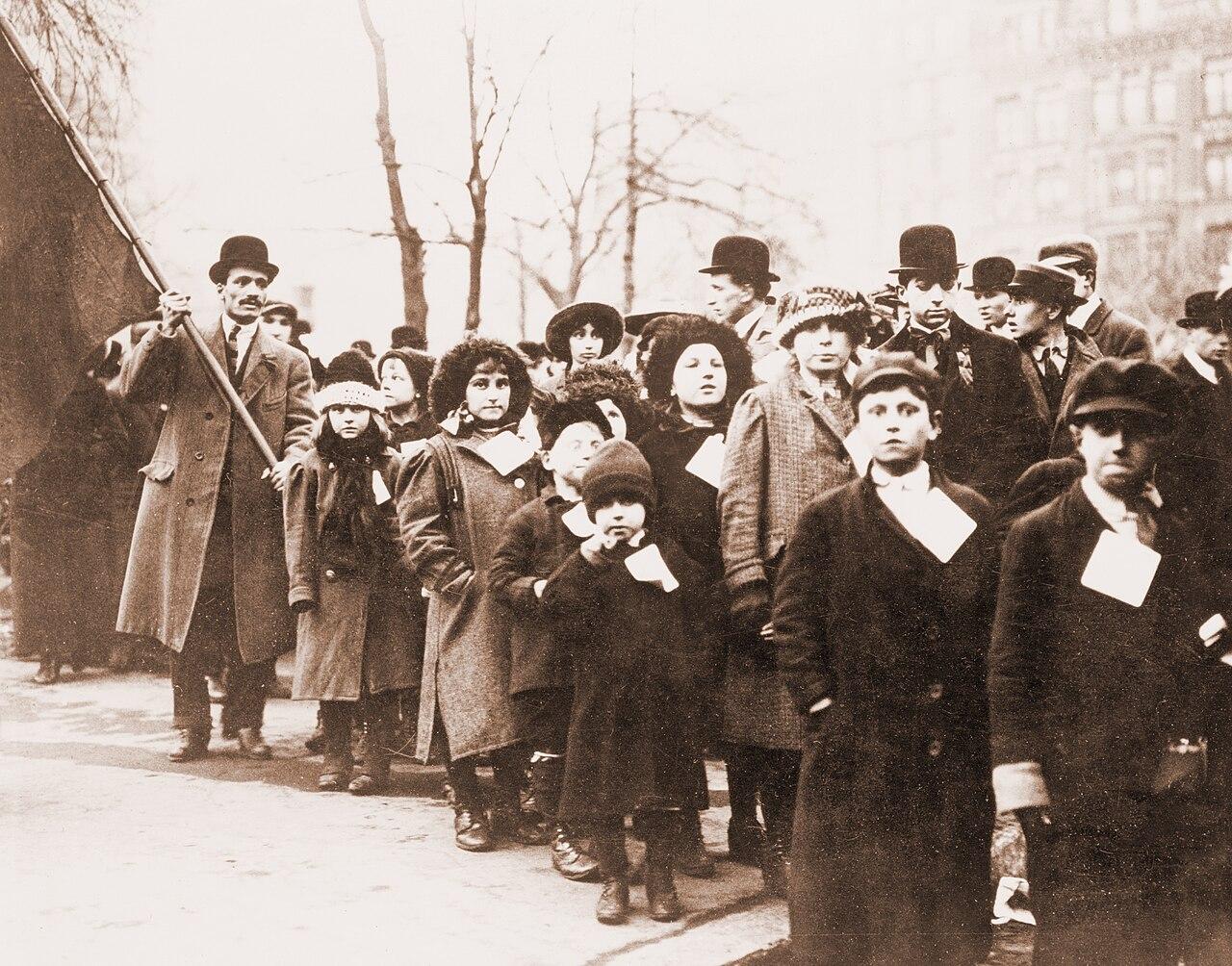
Bain News Service, children of Lawrence strikers sent to sympathizers in New York City, 1912. Library of Congress, George Grantham Bain Collection. Public domain. - Tragedy
The Pemberton Mill Collapse
Lawrence's first industrial catastrophe—the disaster that haunted the city for a century.
Read the story →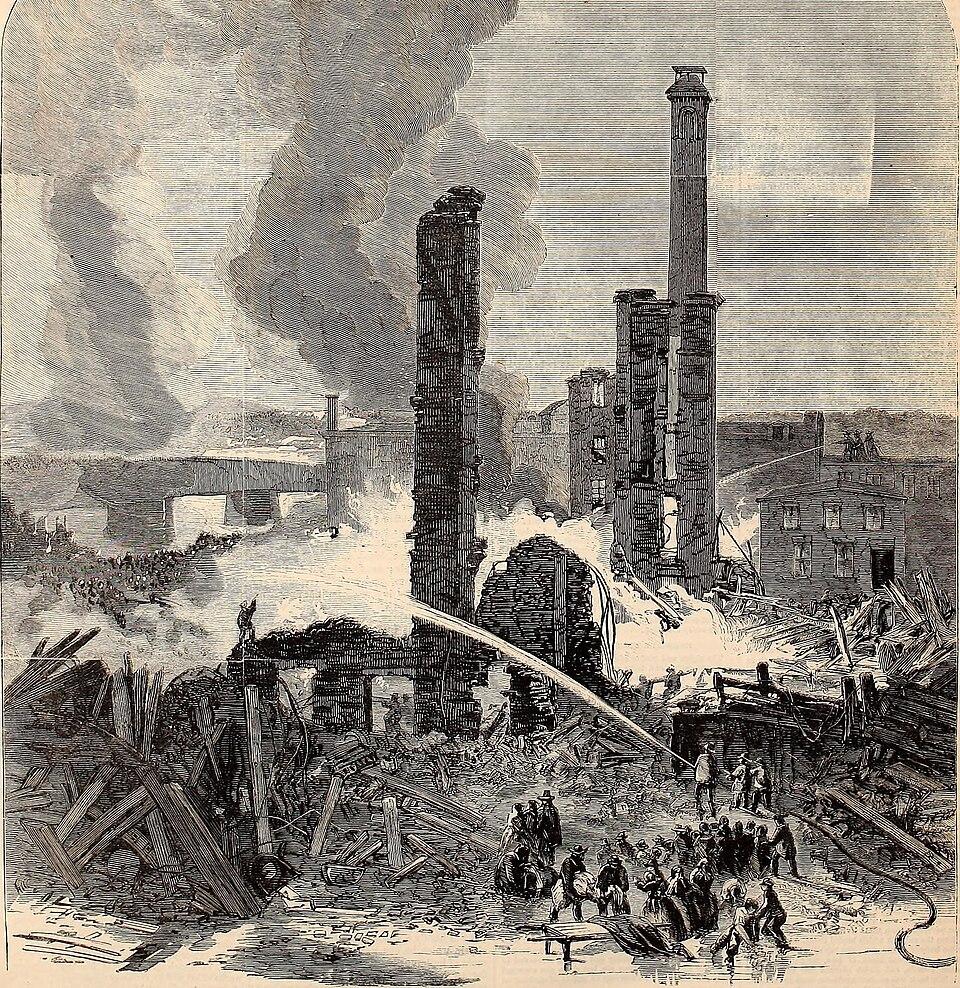
"Ruins of the Pemberton Mills, Lawrence, Massachusetts, the morning after the fall," wood engraving from a photograph by Whipple, Boston. Harper's Weekly, January 21, 1860. Internet Archive Book Images, via Wikimedia Commons. Public domain. 1911 · The Ashes of New York
BiographyFrances Perkins: The Witness Who Built the New Deal
A young reformer watched the fire and helped remake American government.
Read the story →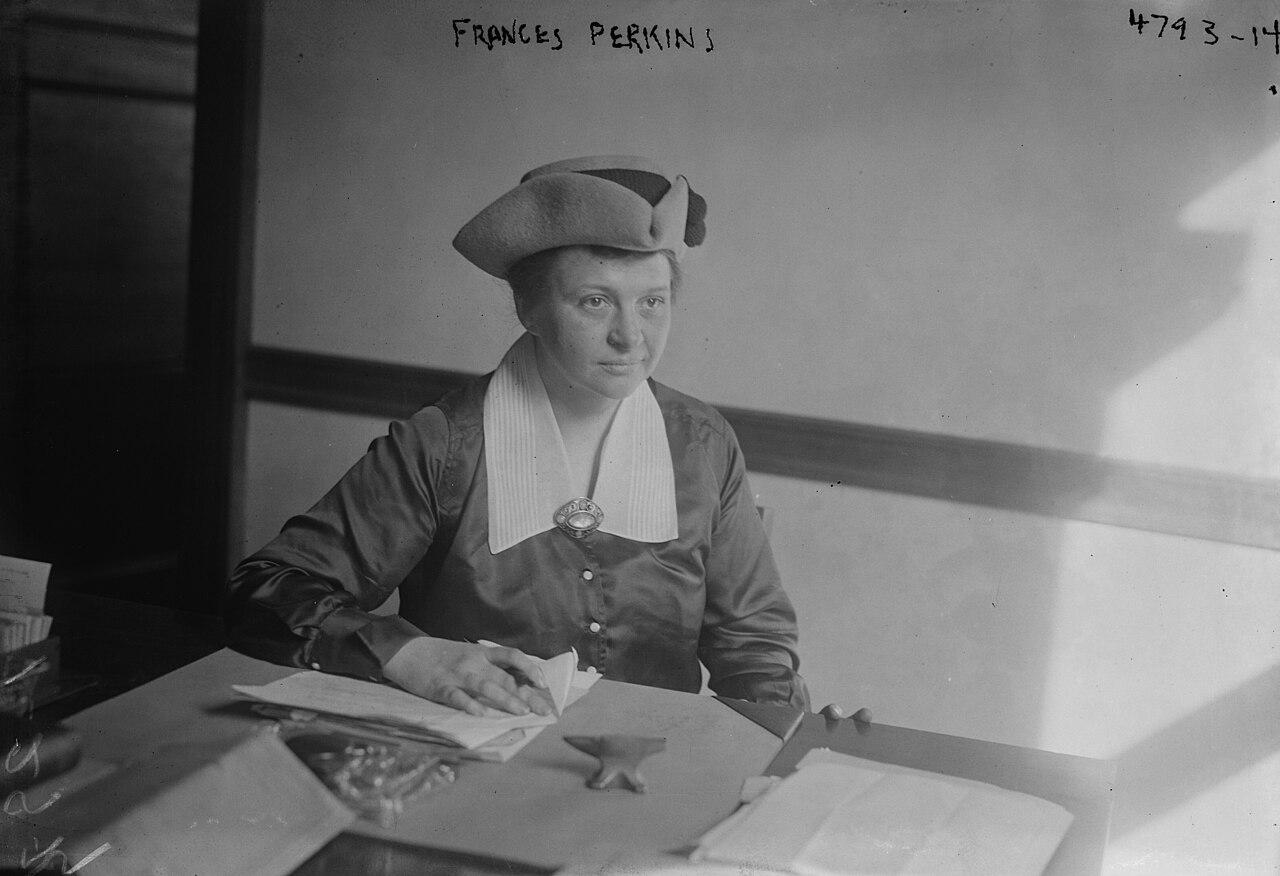
Bain News Service, "Frances Perkins." Library of Congress, George Grantham Bain Collection (LCCN 2014708218). Public domain. - Biography
Clara Lemlich, Two Years Earlier
The warning the industry refused to hear.
Read the story →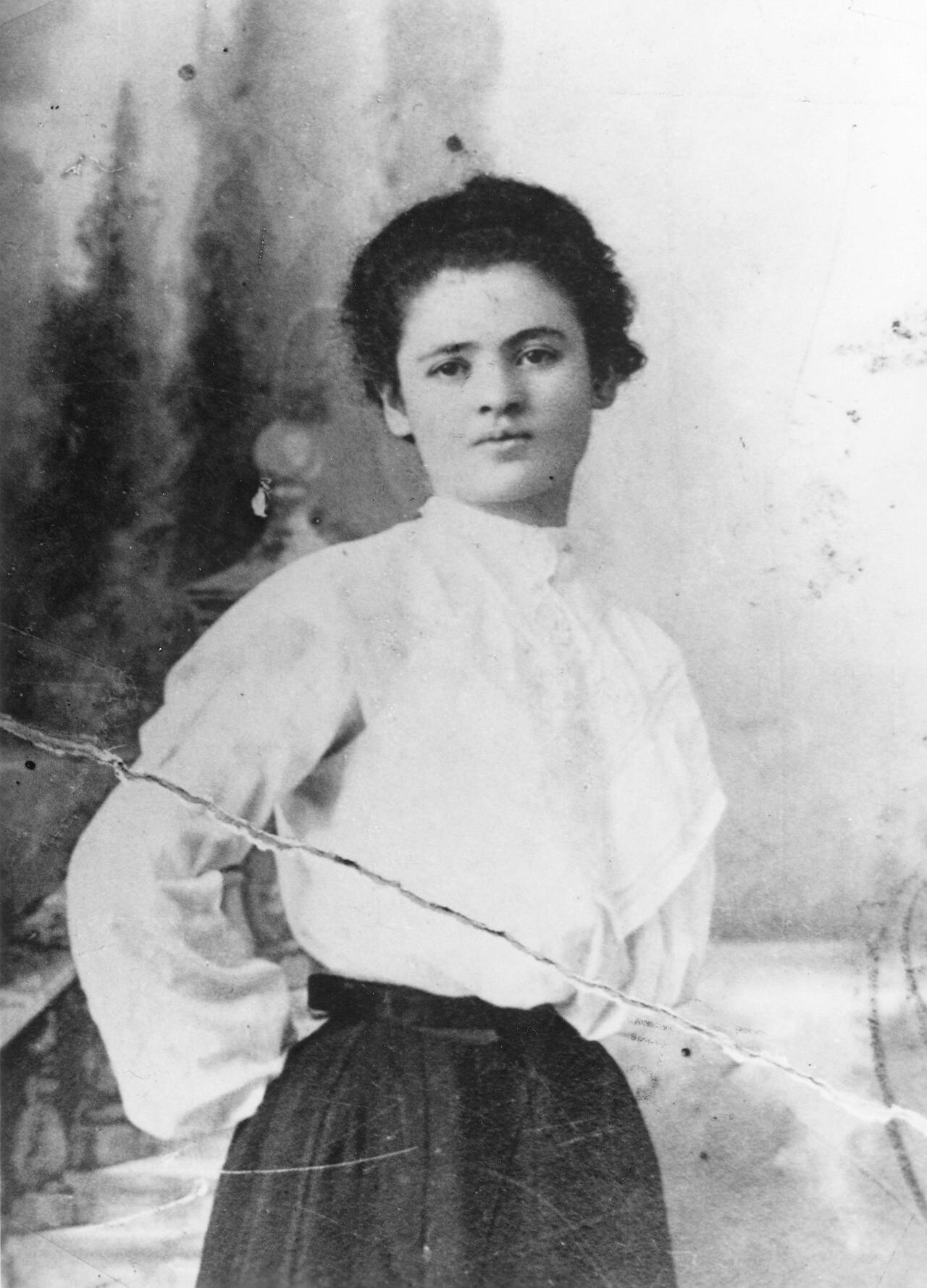
Portrait of Clara Lemlich, c. 1910. ILGWU Archives, Kheel Center for Labor-Management Documentation and Archives, Cornell University. Public domain. 1920–1930 · The Electric Loom
BiographyElla May Wiggins: The Singer of Gastonia
A mill mother shot dead on the road to a union rally in 1929.
Read the story →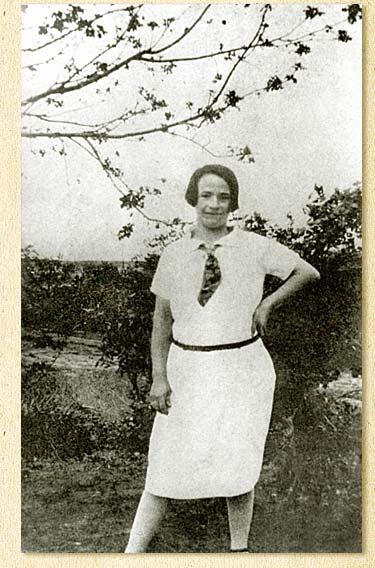
Unidentified photographer, Ella May Wiggins. Public domain in the United States, via English Wikipedia. 1940–1950 · Synthetic Warfare
Material CultureThe Nylon Riots
When stockings were worth standing in line all day.
Read the story →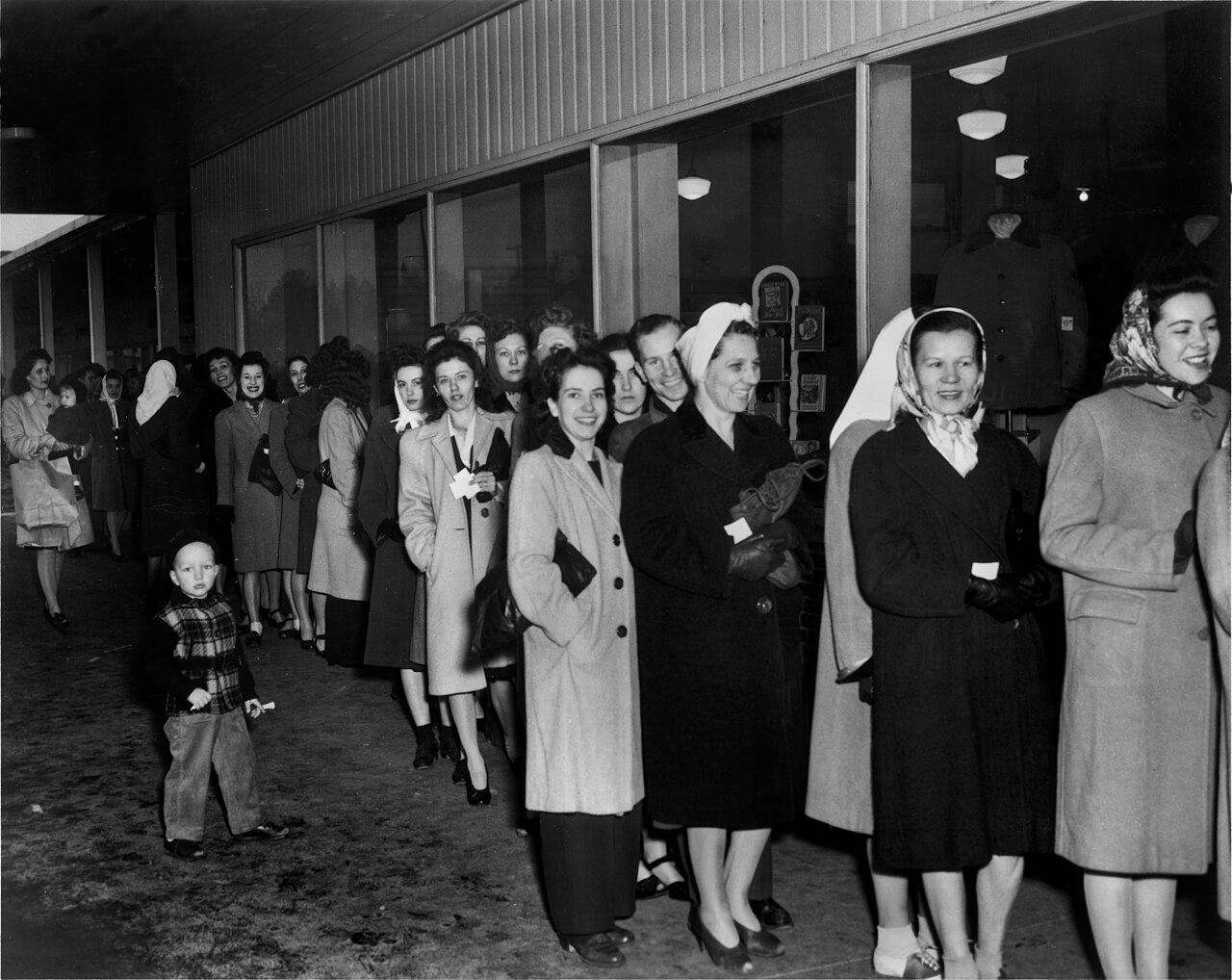
Ed Westcott, U.S. Department of Energy, "Standing in line for nylon stockings at Miller's Department Store, Oak Ridge, Tennessee," January 4, 1946. Public domain (U.S. government work). - Material Culture
Rosie's Coveralls and the Cotton Duck Mills
American mills as a logistical front in the war.
Read the story →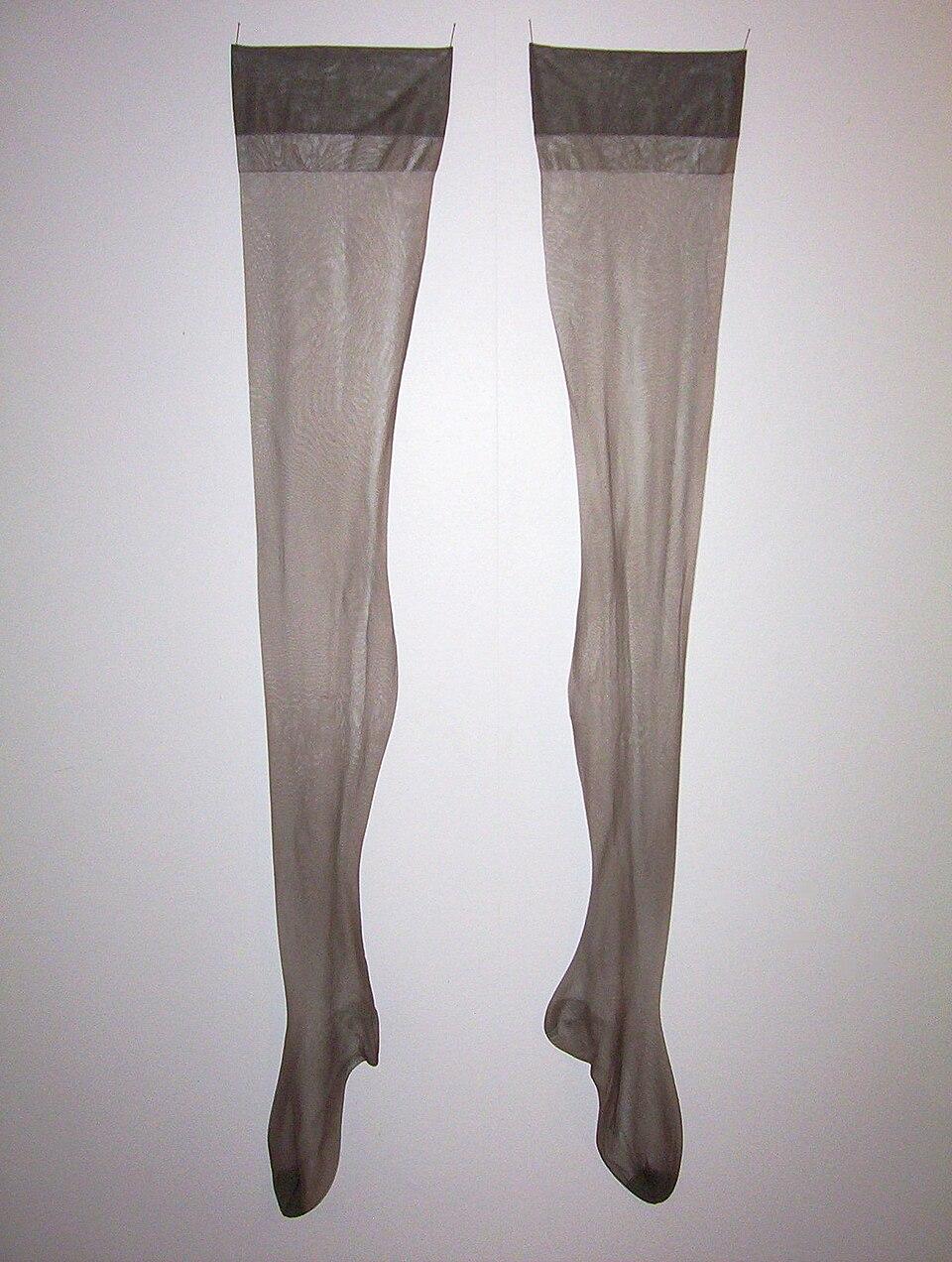
Antique Rose, "Nylon stockings" (2006). English Wikipedia, CC BY 2.5, via Wikimedia Commons. 1950–1980 · The Polyester Dream
InnovationThe Wash-and-Wear Revolution
The shirt that promised to retire the iron.
Read the story →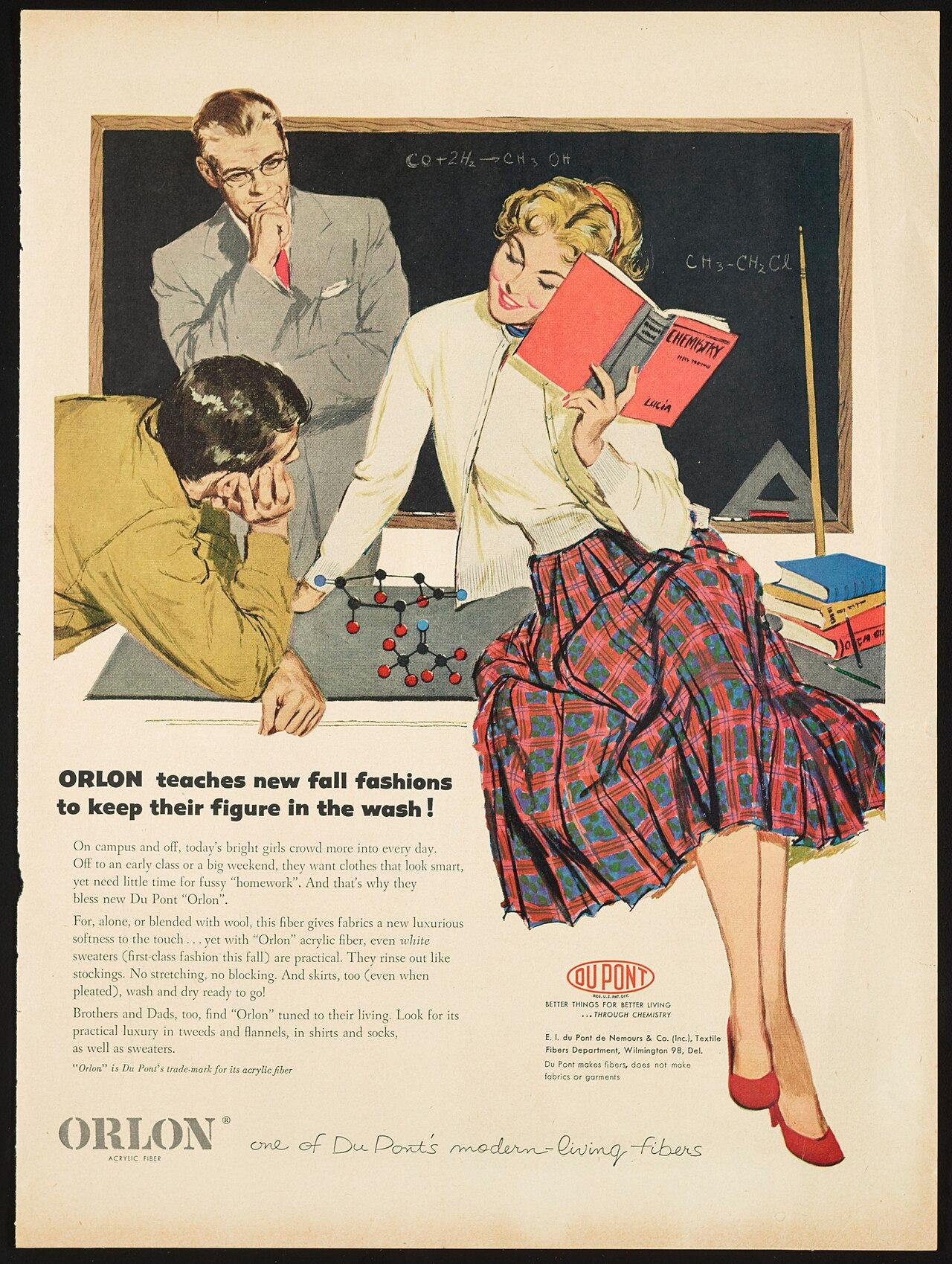
E. I. du Pont de Nemours & Company, "ORLON teaches new fall fashions to keep their figure in the wash!" magazine advertisement, 1950s. Science History Institute, via Wikimedia Commons. Public domain. 1960-1985 · The Long Integration
LaborOpening the Mill Gates
How Black workers used Title VII to integrate the South's largest industry.
Read the story →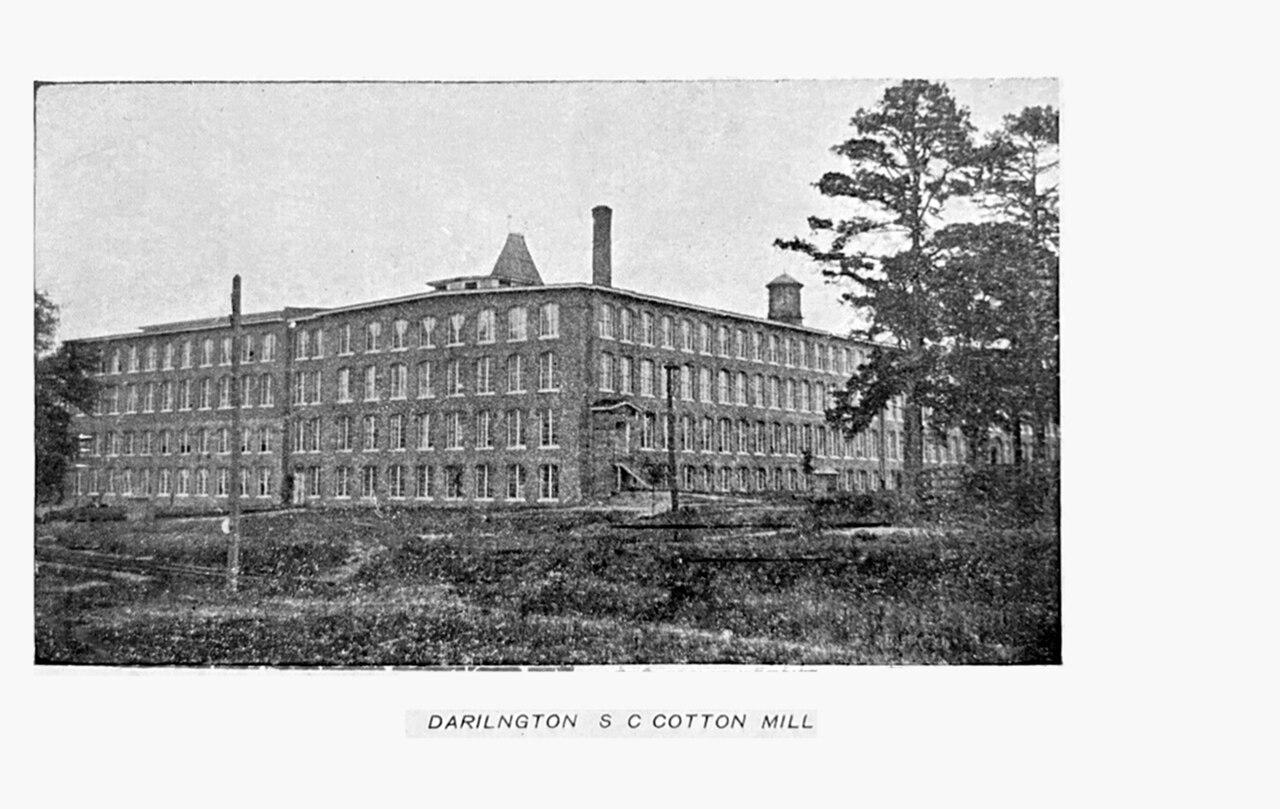
Illustrated Post Card Co., "Darlington, S.C. Cotton Mill," tinted halftone postcard, c. 1905. Public domain, via Wikimedia Commons. - Biography
The Real Norma Rae
Crystal Lee Sutton, a cardboard sign, and the seventeen-year fight to organize J.P. Stevens.
Read the story →Illustrated Post Card Co., "Darlington, S.C. Cotton Mill," tinted halftone postcard, c. 1905. Public domain, via Wikimedia Commons. 1980–2000 · The Branded Empire
Material CultureCalvin Klein and the Birth of Designer Denim
How a Bronx-born designer made workwear a status symbol.
Read the story →
Carol M. Highsmith, "Indoor shopping mall," between 1980 and 1990. Carol M. Highsmith Archive, Library of Congress Prints and Photographs Division (LCCN 2011635987). Public domain. 2020–Present · The Circular Reckoning
LaborFrom El Monte to SB 62
Slavery in a Los Angeles suburb in 1995, and California's 2021 law making brands answer for their sweatshops.
Read the story →
Daniel Capilla, "Textile Recycling Container and Waste Containers," Málaga, Spain (2022). Wikimedia Commons, CC BY-SA 4.0.
Other threads
- Labor & OrganizingWho did the work, and what did it take for them to be heard?
- Slavery & RaceHow did race shape who grew the fiber, who ran the mills, and who was kept out?
- ImmigrationHow did the mills remake who Americans were?
- ChildhoodWhat did it mean to grow up in a mill?
- Machines & MaterialsDid new technology free workers or bind them more tightly?
- Health & SafetyWhat did it cost in lives before workplaces were made safe?
- Law & PolicyHow did government decide whose side to take?
- Global TradeWhere does your shirt come from, and who decides?
- Land & EnvironmentWhat did the industry take from the land and water?