Biography · Chapter 04, 1790–1810
Slater the Memoryman
How an apprentice carried an empire's secret across an ocean in his head—and what he needed help to rebuild.
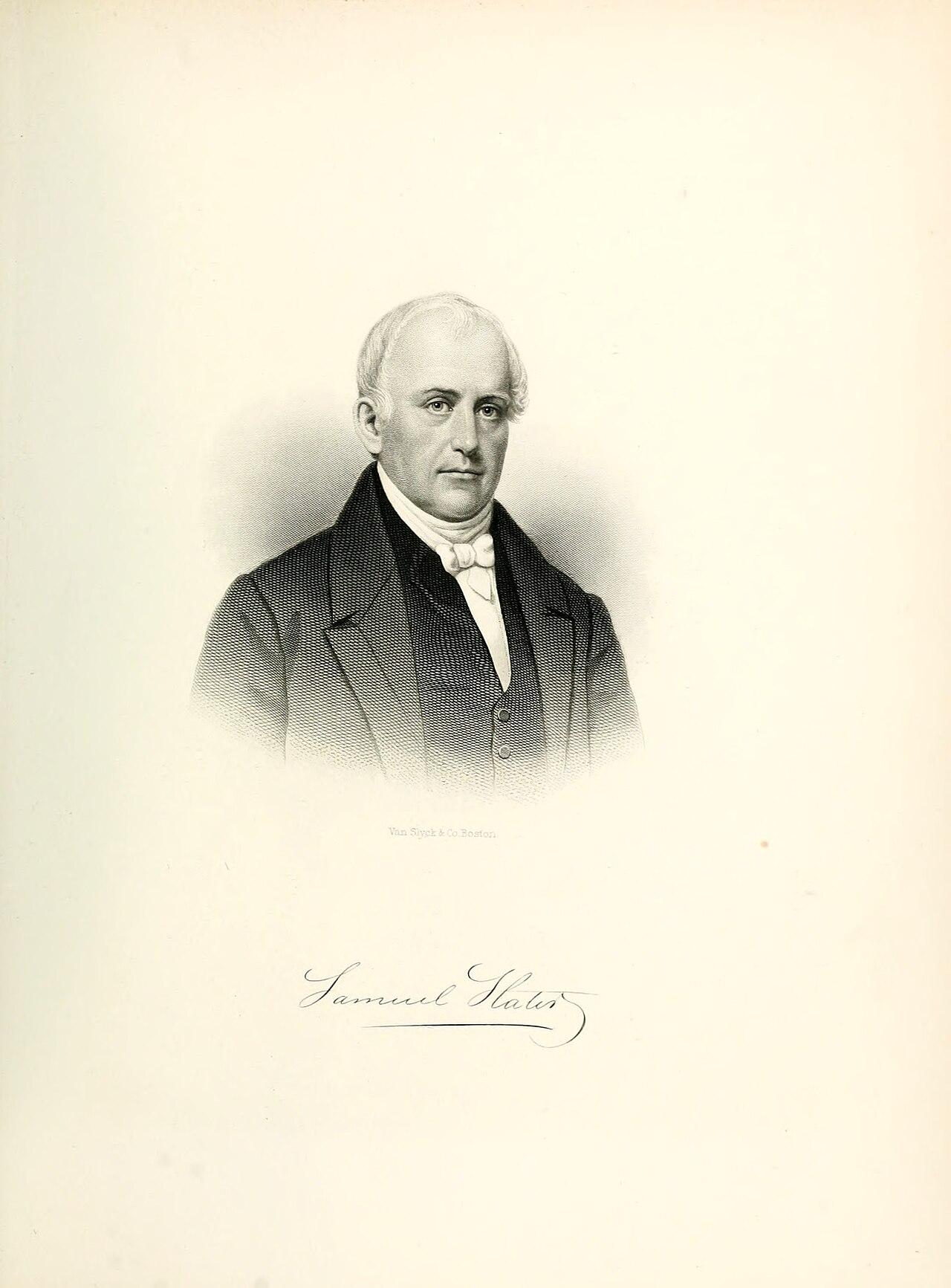
British law in 1789 forbade the export of textile machinery and its drawings, and skilled mechanics who tried to leave could be stopped. Slater, born June 9, 1768, had worked at Strutt's Milford mill from 1782 until 1789 and rose to an overseer's knowledge of the Arkwright system. He sailed from London in September 1789 carrying, by his own later account, no drawings; the often-told detail that he disguised himself as a farm laborer comes from traditional accounts rather than documents of the time. In Rhode Island he did not rebuild the machinery single-handedly from memory: the National Register documentation for Slater Mill notes that he worked with skilled local craftsmen—among them the Wilkinson family of ironworkers and the carpenter-machinist Sylvanus Brown—and struggled for months with the carding engine before the system ran in December 1790. In Belper he is still remembered as 'Slater the Traitor'; in the United States he has been called 'the Father of the American Industrial Revolution.' Both labels are part of the story.
Sources
- Government recordSamuel Slater. National Park Service, Blackstone River Valley National Historical Park.
- Government recordSamuel Slater: American Hero or English Traitor? (Teaching with Historic Places lesson). National Park Service.
- Government recordOld Slater Mill, National Register of Historic Places nomination. National Park Service.