A thread through time
Immigration
How did the mills remake who Americans were?
Irish, French-Canadian, Italian, Jewish, Portuguese, and later Latin American and Asian workers each arrived to fill the looms, and each changed the towns they came to.
11 stories across 7 chapters
1790–1810 · The Industrial Spy
BiographySlater the Memoryman
How an apprentice carried an empire's secret across an ocean in his head—and what he needed help to rebuild.
Read the story →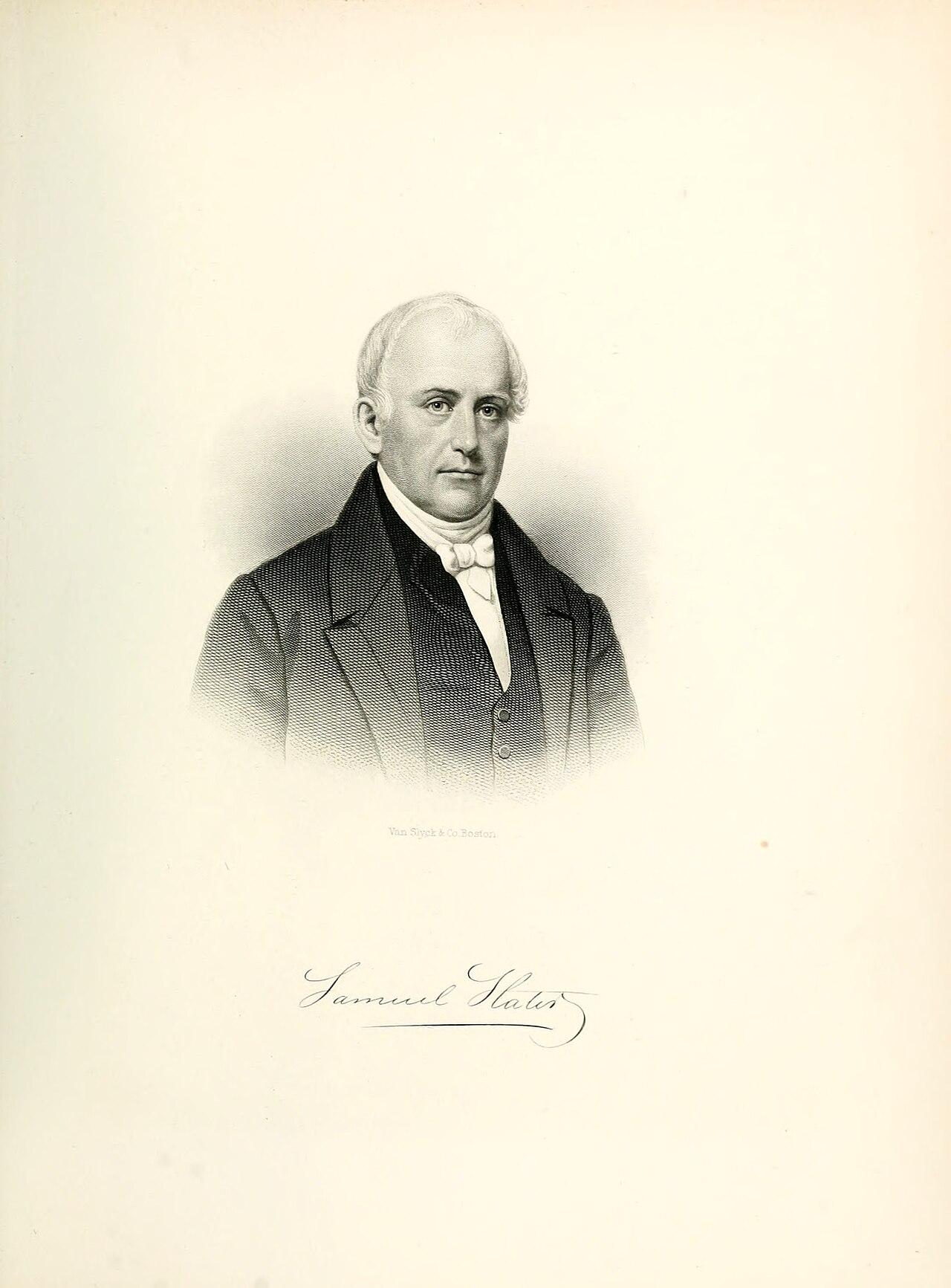
Engraved portrait of Samuel Slater from "The Biographical Cyclopedia of Representative Men of Rhode Island" (Providence: National Biographical Publishing Co., 1881). Internet Archive, via Wikimedia Commons. Public domain. 1840–1920 · The Silk City
LaborThe Paterson Pageant
The 1913 strike that staged itself in Madison Square Garden.
Read the story →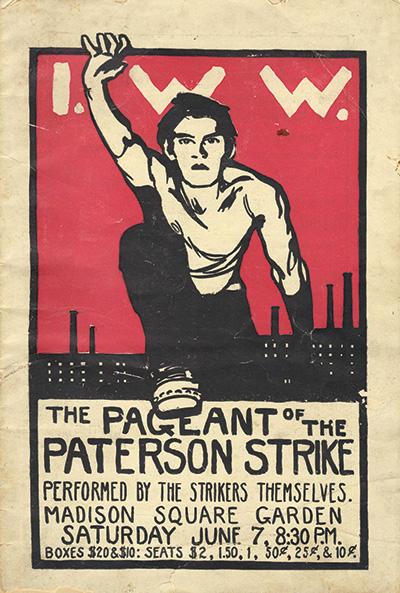
Robert Edmond Jones, poster for the Paterson Strike Pageant, Madison Square Garden, June 7, 1913. Public domain (published 1913). - Biography
Hannah Silverman, Strike Captain
A teenager who led the women's picket lines.
Read the story →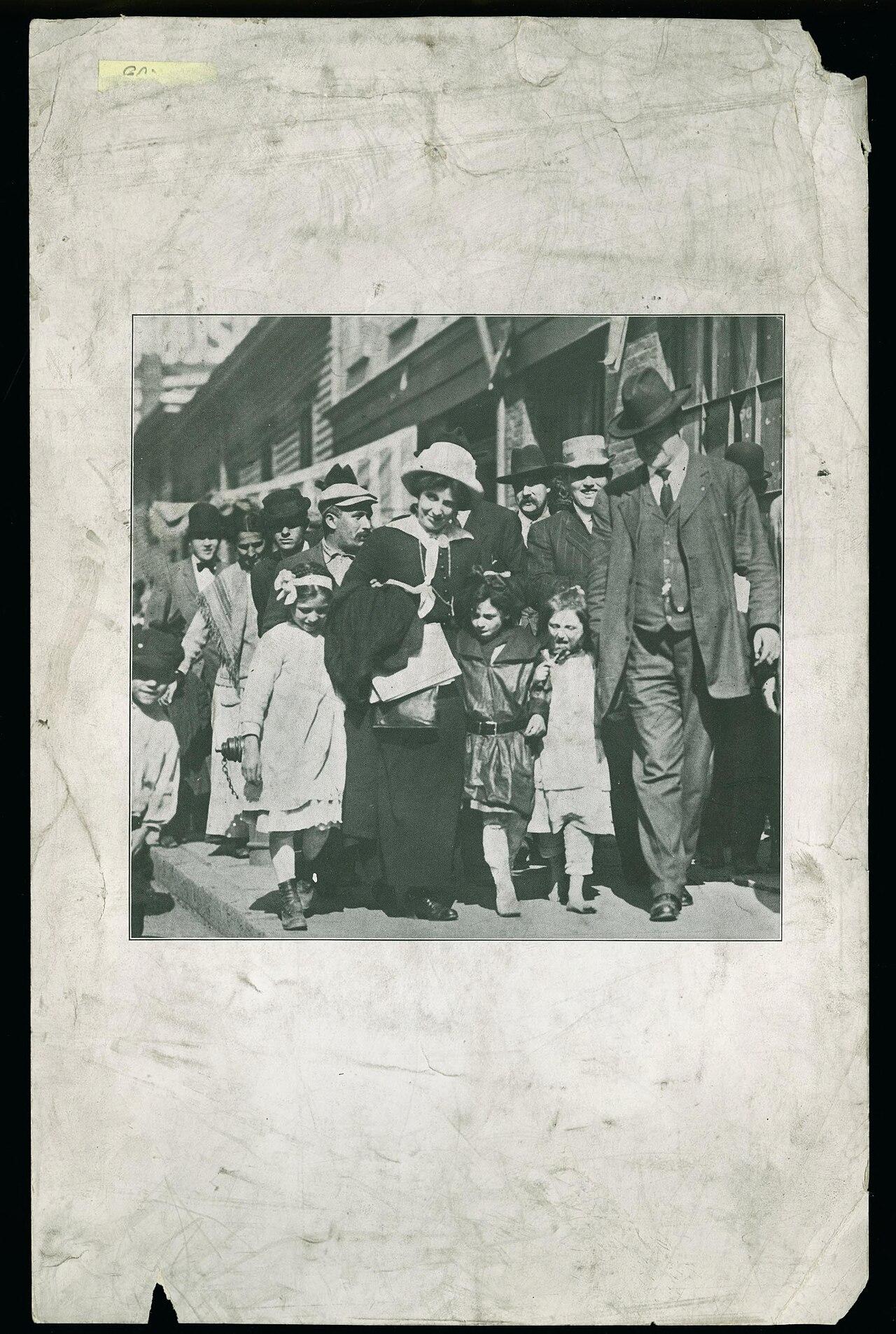
Unidentified photographer, "Paterson Strike, Elizabeth Gurley Flynn, etc.," 1913. Internet Archive (mms_kerr_bx_2_fl_29_05). Public domain. 1870–1910 · The Garment District
LaborThe Sweatshop System
Exploitation engineered into the architecture of the tenement.
Read the story →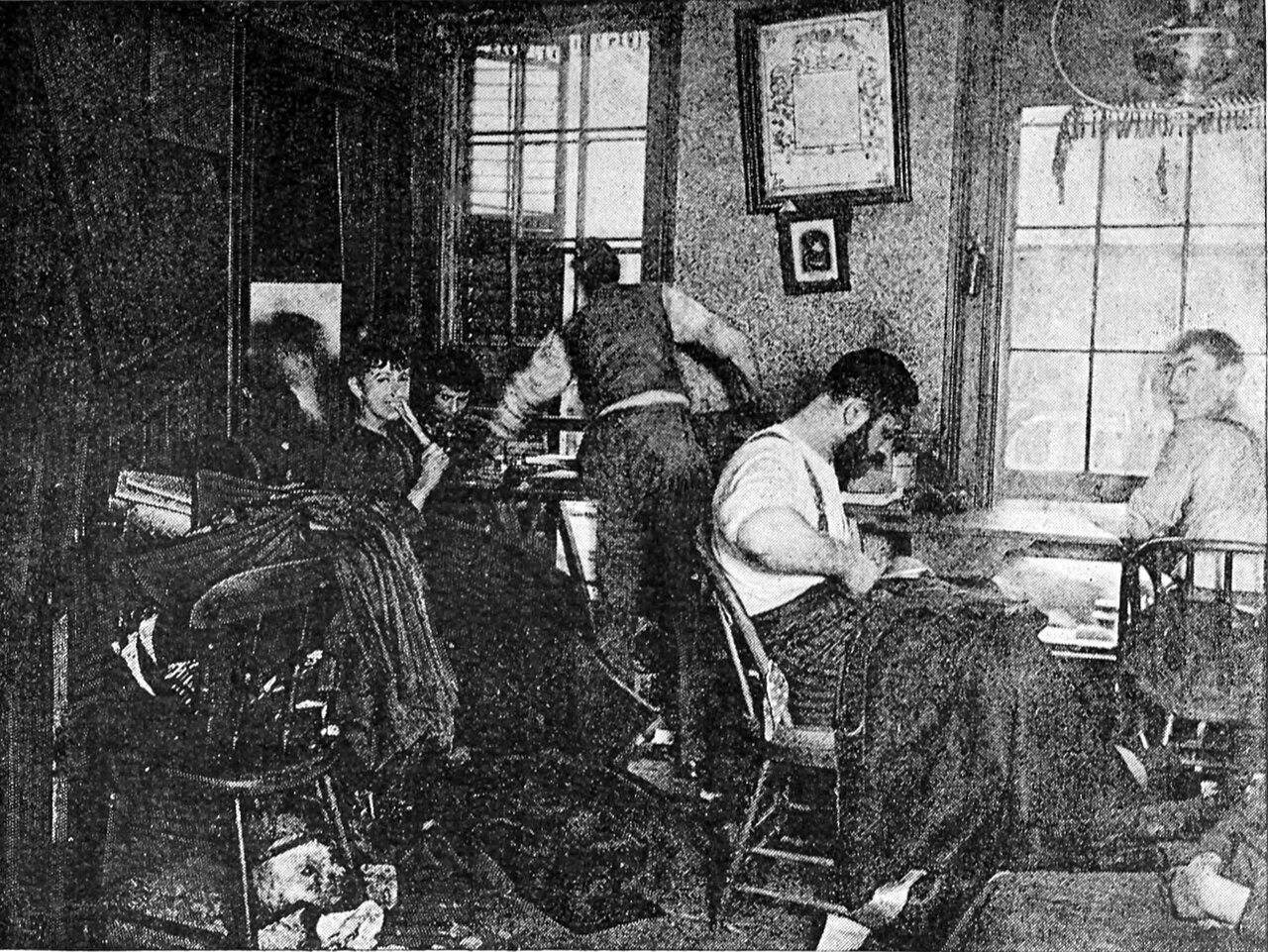
Jacob A. Riis, "Knee Pants at Forty-Five Cents a Dozen-A Ludlow Street Sweater's Shop," from "How the Other Half Lives" (1890). Public domain. - Biography
The Uprising of the 20,000
The strike that built the ILGWU—and set the stage for Triangle.
Read the story →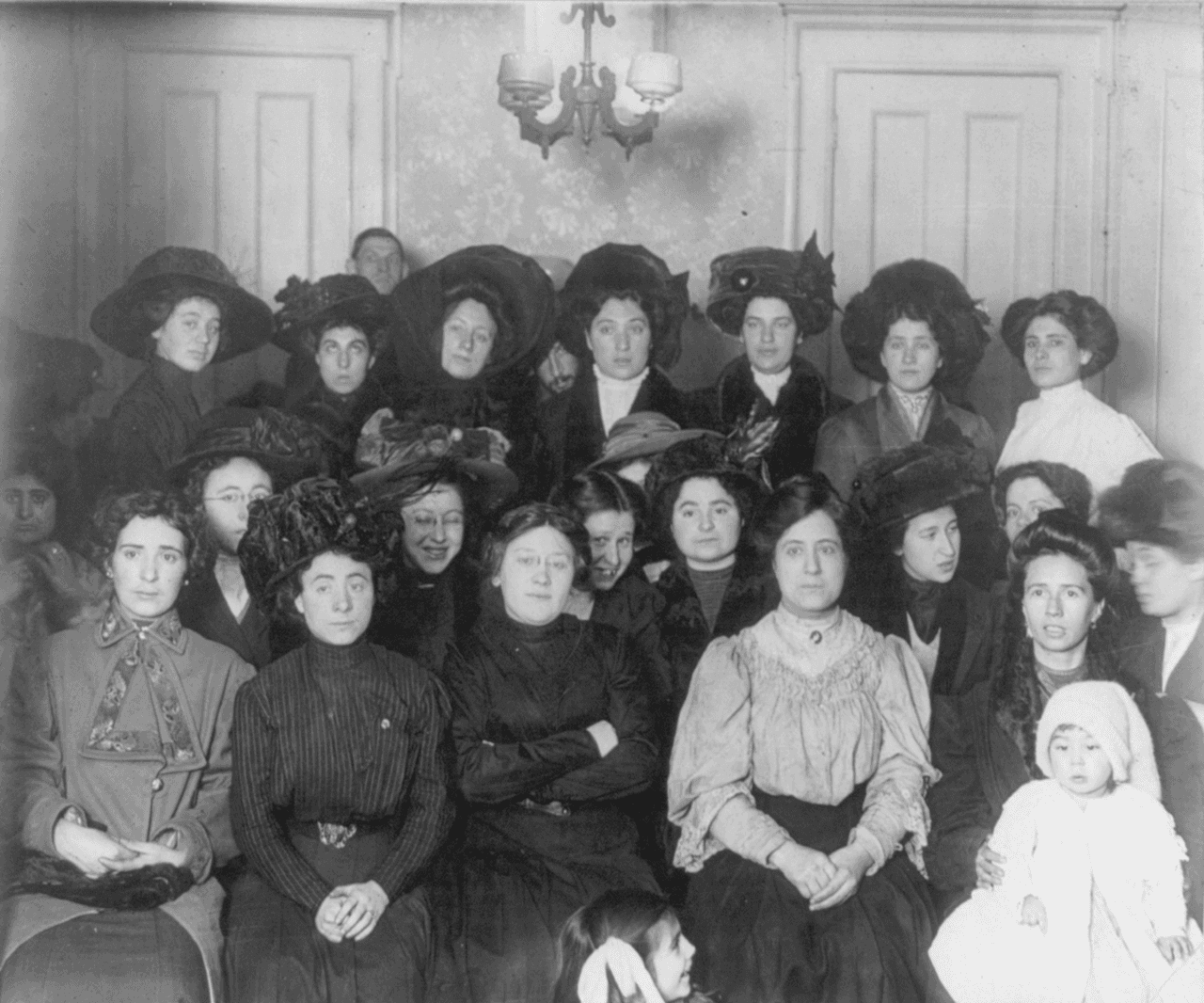
Bain News Service, "Group of mainly female shirtwaist workers on strike, in a room, New York," January 1910. Library of Congress, George Grantham Bain Collection (cph.3a51055). Public domain. 1880–1920 · The Gilded Age of Wool
LaborBread and Roses
The 1912 Lawrence strike that united dozens of nationalities.
Read the story →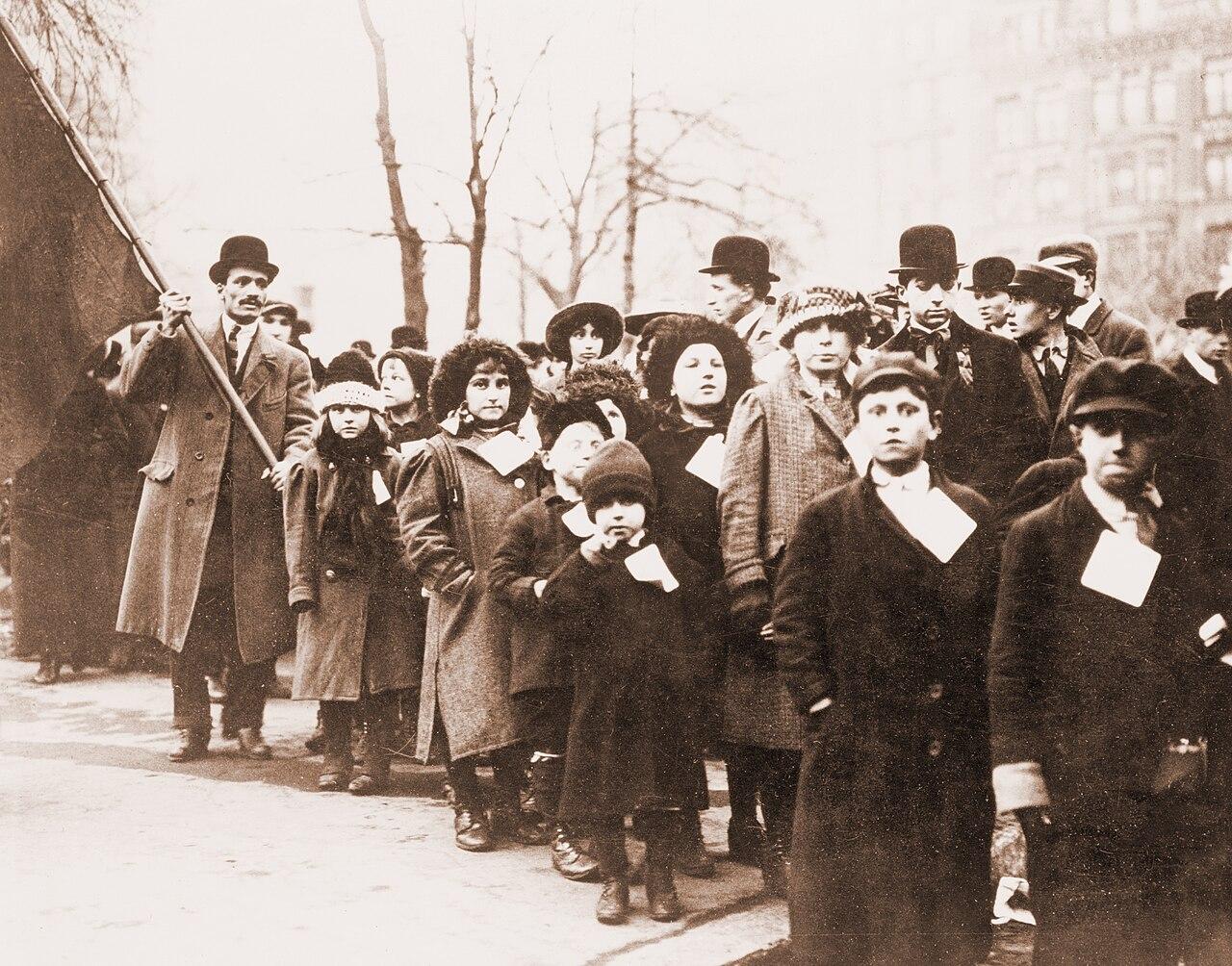
Bain News Service, children of Lawrence strikers sent to sympathizers in New York City, 1912. Library of Congress, George Grantham Bain Collection. Public domain. - Tragedy
The Pemberton Mill Collapse
Lawrence's first industrial catastrophe—the disaster that haunted the city for a century.
Read the story →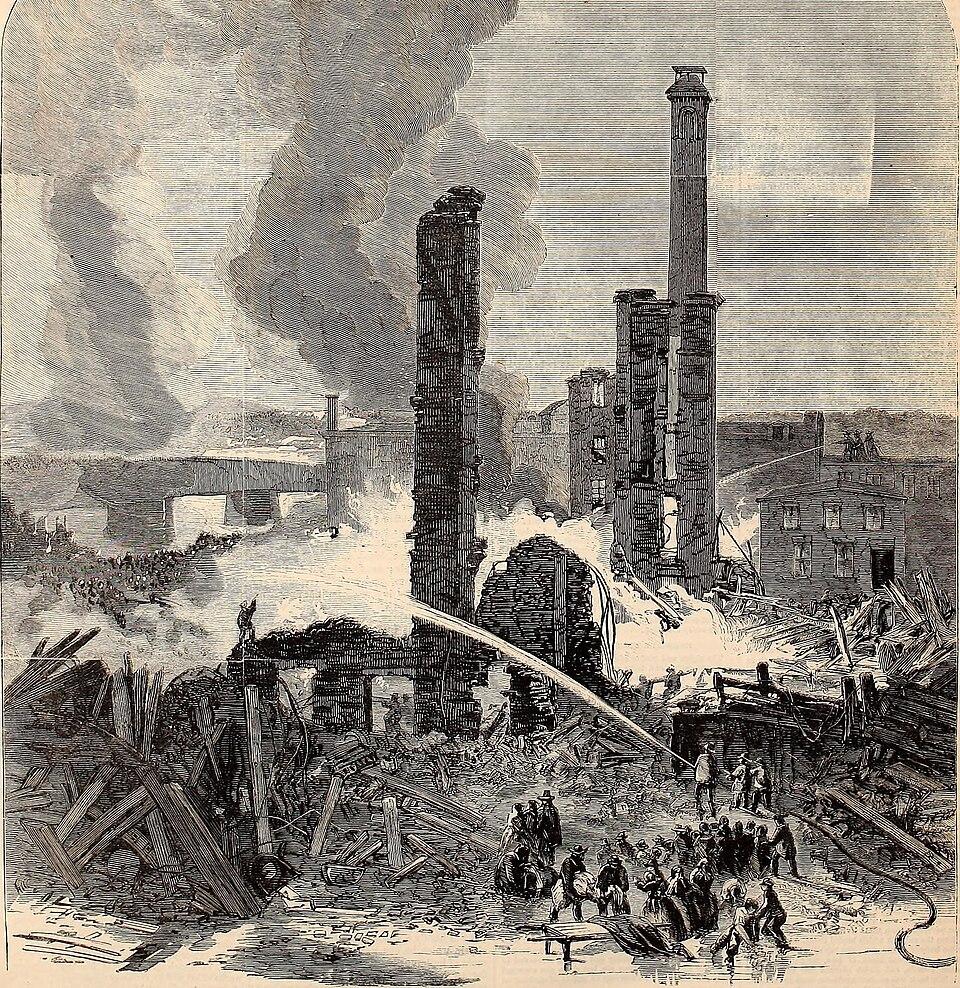
"Ruins of the Pemberton Mills, Lawrence, Massachusetts, the morning after the fall," wood engraving from a photograph by Whipple, Boston. Harper's Weekly, January 21, 1860. Internet Archive Book Images, via Wikimedia Commons. Public domain. - Impact
'The Chinese of the Eastern States'
French-Canadian migration to the New England mills, and the 1881 report that slandered it.
Read the story →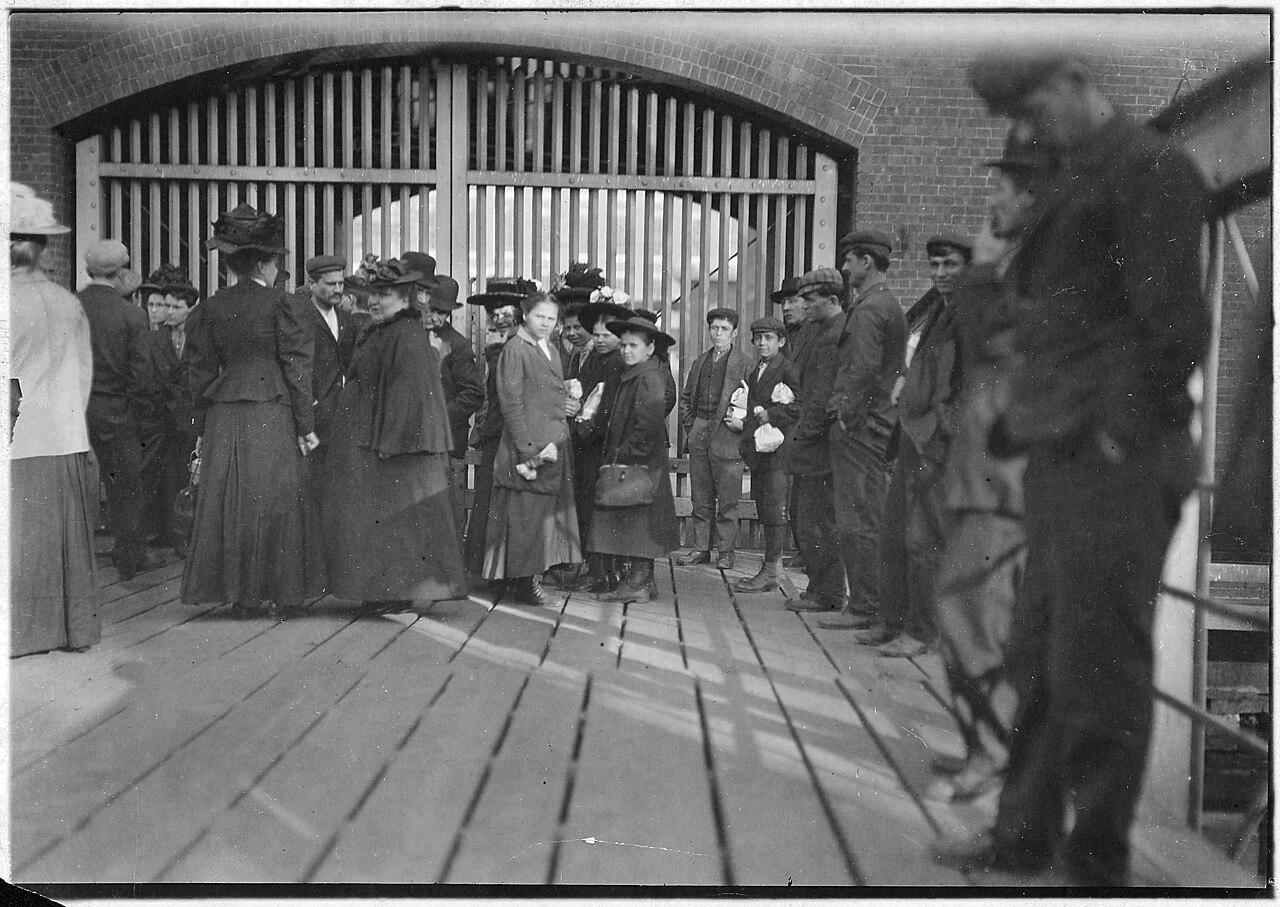
Lewis Wickes Hine, "6 A.M. Going to work in Amoskeag Mfg. Co., Manchester, N.H.," May 21, 1909. U.S. National Archives and Records Administration (NAID 523200). Public domain. 1911 · The Ashes of New York
BiographyClara Lemlich, Two Years Earlier
The warning the industry refused to hear.
Read the story →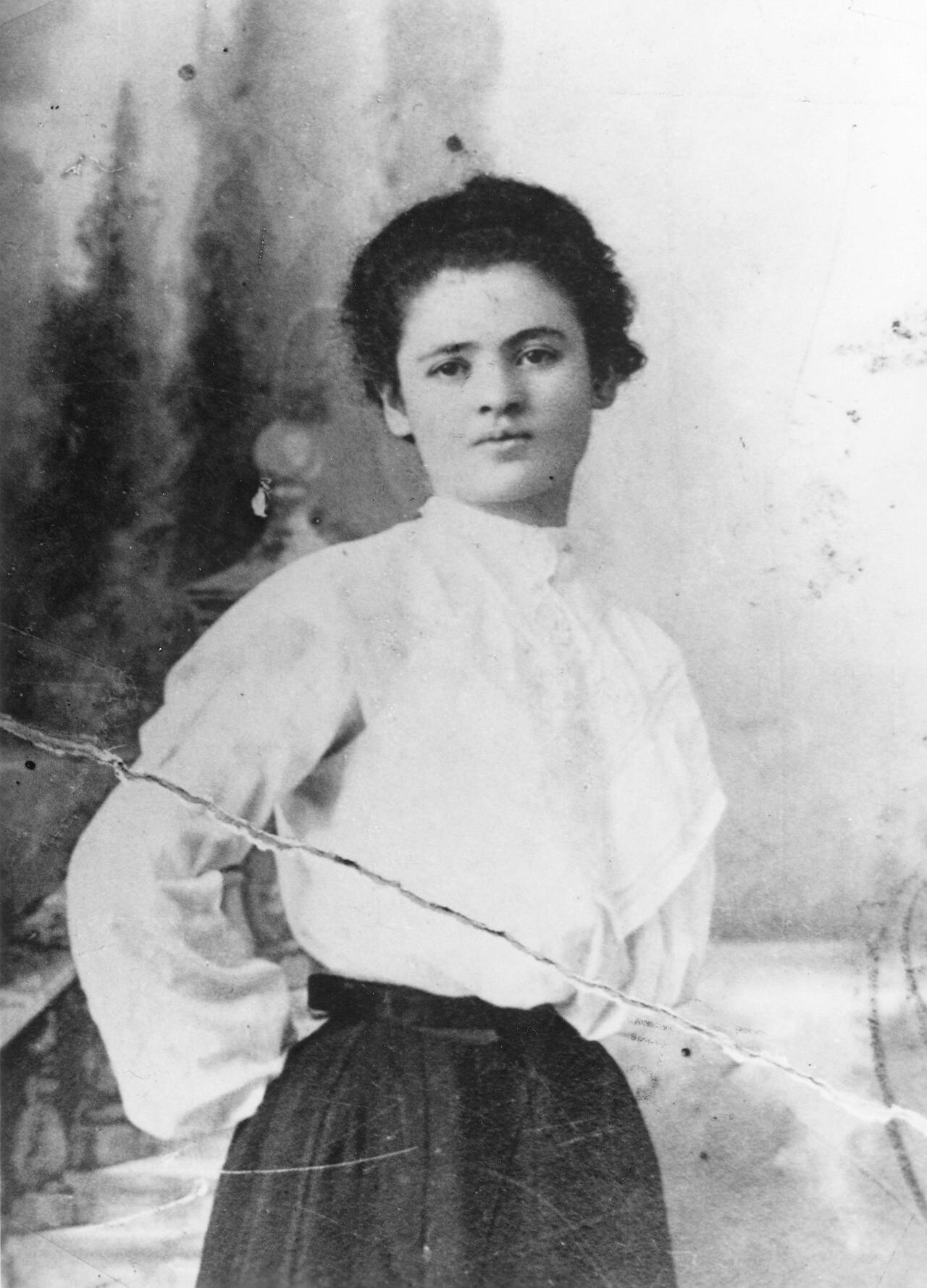
Portrait of Clara Lemlich, c. 1910. ILGWU Archives, Kheel Center for Labor-Management Documentation and Archives, Cornell University. Public domain. 1934 · The Great Textile Strike
TragedySaylesville and Woonsocket
The National Guard fires on strikers in two Rhode Island mill towns.
Read the story →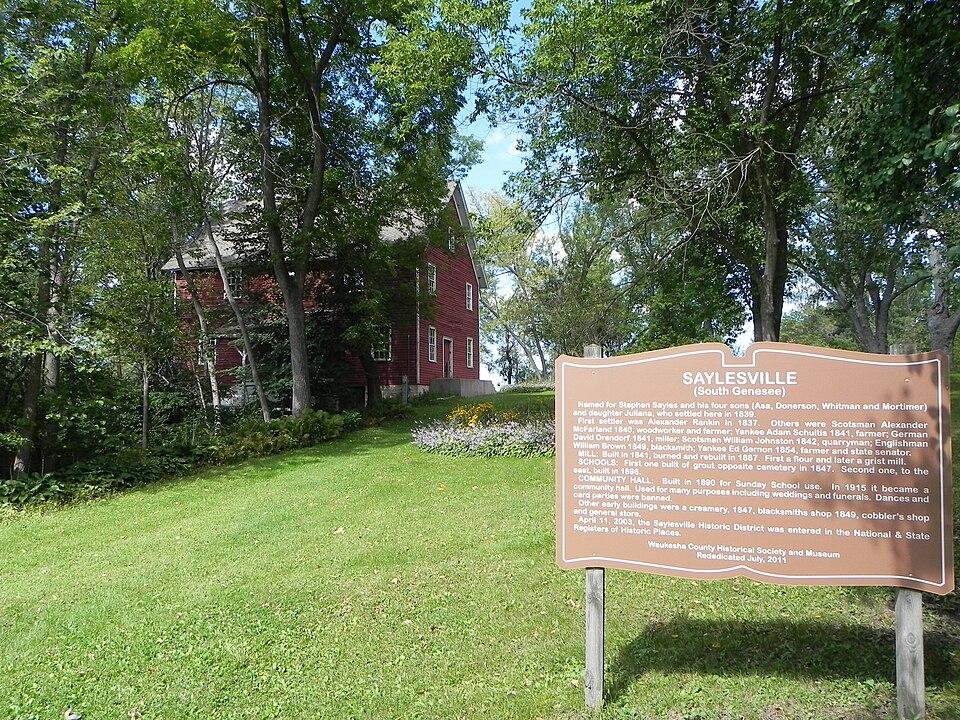
Shadowe, "Saylesville Historic District," Lincoln, Rhode Island (2014). Wikimedia Commons, CC BY-SA 3.0. 2020–Present · The Circular Reckoning
LaborFrom El Monte to SB 62
Slavery in a Los Angeles suburb in 1995, and California's 2021 law making brands answer for their sweatshops.
Read the story →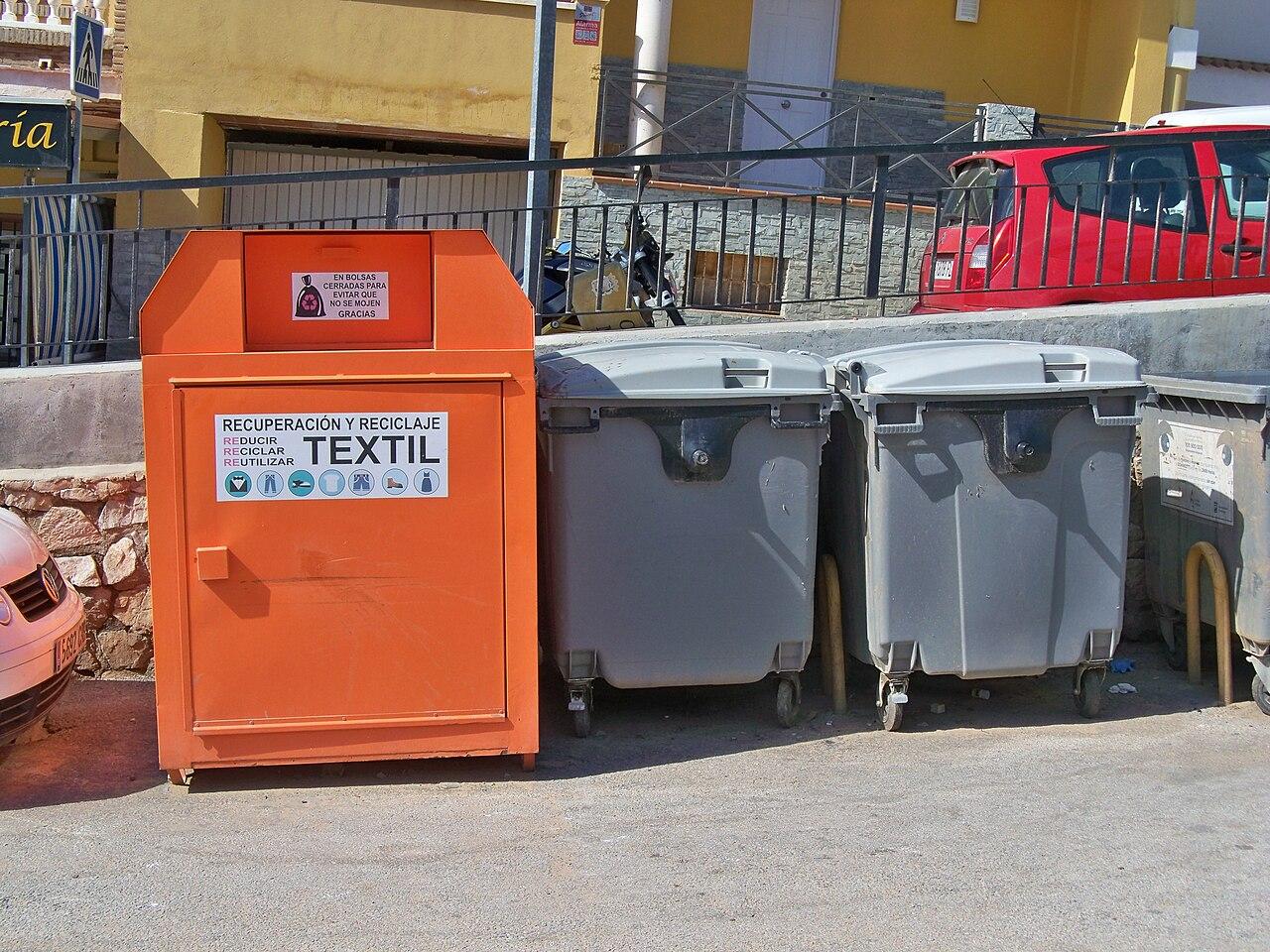
Daniel Capilla, "Textile Recycling Container and Waste Containers," Málaga, Spain (2022). Wikimedia Commons, CC BY-SA 4.0.
Other threads
- Labor & OrganizingWho did the work, and what did it take for them to be heard?
- Slavery & RaceHow did race shape who grew the fiber, who ran the mills, and who was kept out?
- Women at WorkWhy was the textile industry so often built on the labor of women and girls?
- ChildhoodWhat did it mean to grow up in a mill?
- Machines & MaterialsDid new technology free workers or bind them more tightly?
- Health & SafetyWhat did it cost in lives before workplaces were made safe?
- Law & PolicyHow did government decide whose side to take?
- Global TradeWhere does your shirt come from, and who decides?
- Land & EnvironmentWhat did the industry take from the land and water?