Biography · Chapter 05, 1793–1850
Eli Whitney's Patent Trap
The inventor of the gin made little from it.
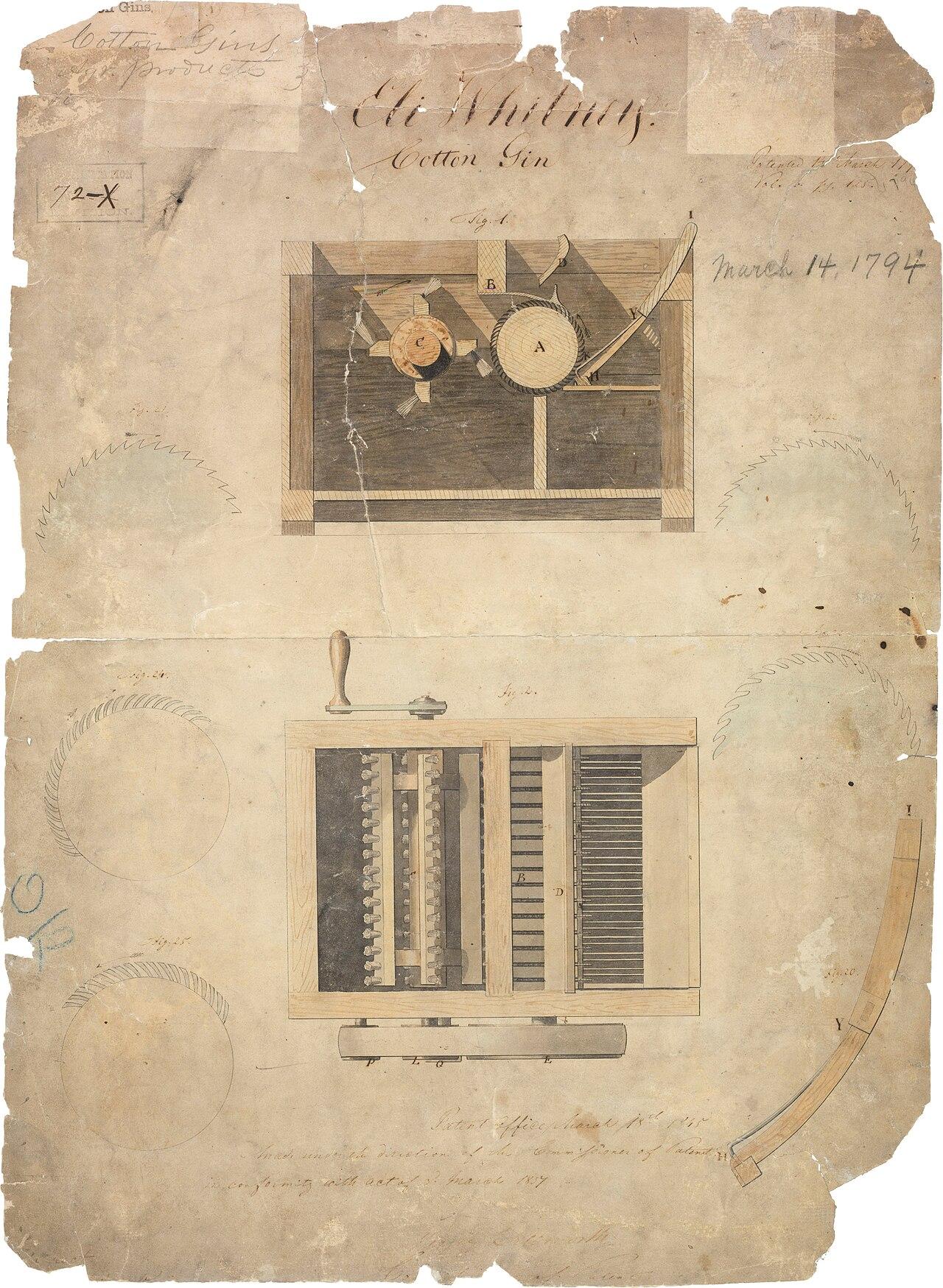
Whitney built his first gin in 1793 at Mulberry Grove, the Georgia plantation of Catharine Greene, who—with her future husband Phineas Miller—financed the venture; the National Archives notes that the design also drew on earlier gins and on ideas from others, possibly including enslaved workers. Whitney petitioned Secretary of State Thomas Jefferson for a patent on June 20, 1793, and received it on March 14, 1794. He and Miller planned to gin cotton for planters in exchange for two-fifths of the crop, a scheme so resented that copies spread across the South. A loophole in the 1793 patent act kept them from winning infringement suits until the law changed in 1800, and the patent was not upheld until 1807. South Carolina eventually paid $50,000 for its rights, and North Carolina and Tennessee also paid license fees, but litigation consumed most of the profit. Whitney did grow wealthy from federal musket contracts. Popular histories long credited him with inventing interchangeable parts; historians such as Merritt Roe Smith have shown that he promoted the idea far more than he achieved it, and that true interchangeability was first realized in government armories.
Sources
- Government recordEli Whitney's Patent for the Cotton Gin. U.S. National Archives.
- Primary sourcePatent for Cotton Gin (1794). U.S. National Archives.
- ScholarshipMerritt Roe Smith. Harpers Ferry Armory and the New Technology: The Challenge of Change. Cornell University Press, 1977.