Material Culture · Chapter 02, 1600–1760
The Agony of Flax
The long, many-stage process that turned a blue-flowered plant into a linen shirt.
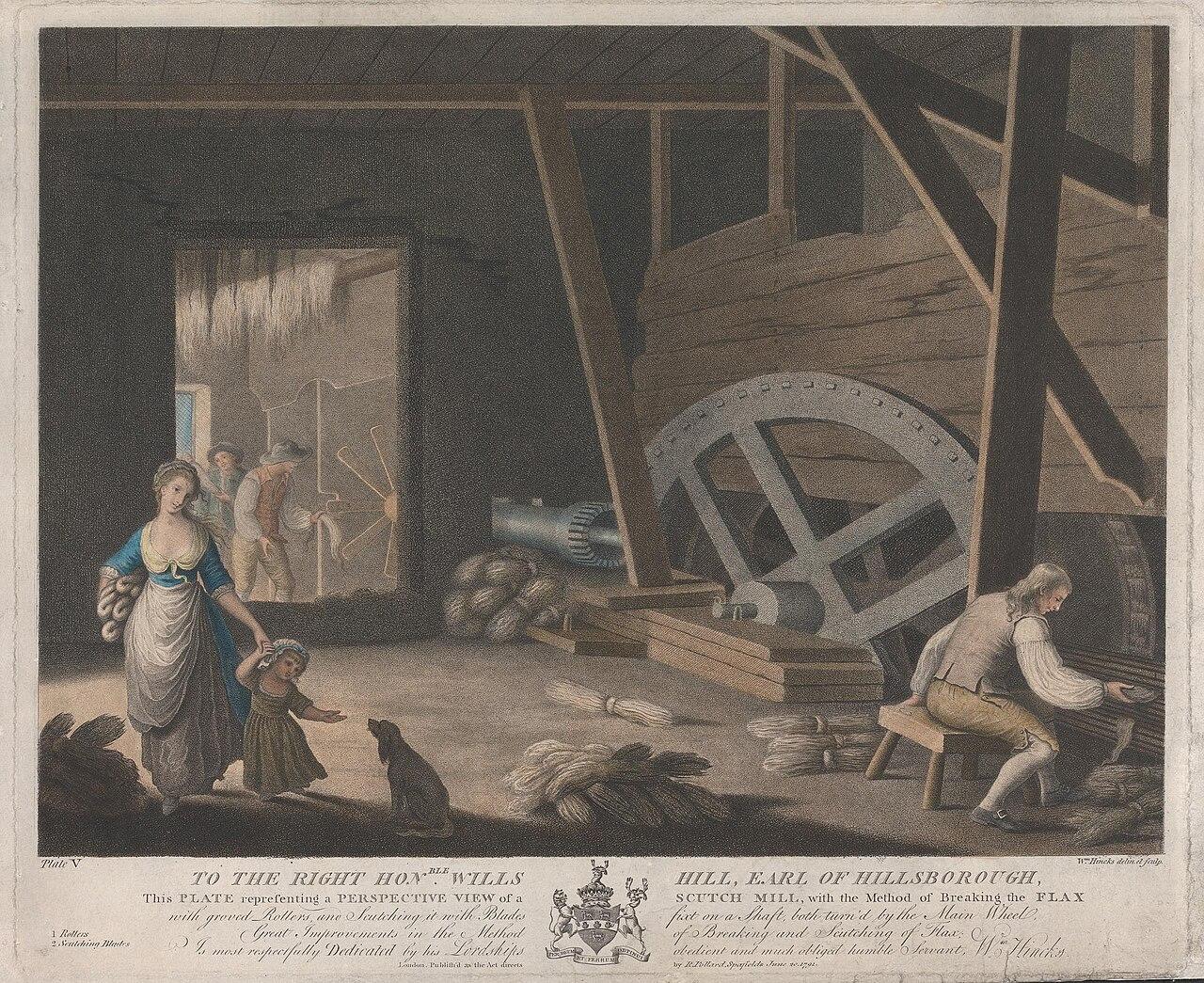
Before a single thread could be spun, flax had to be sown in spring, pulled by hand at the root in summer, rippled to strip the seed bolls, retted in water or dew for weeks until the woody stalk rotted away, dried, broken on a wooden brake, scutched with a wooden blade, hackled through progressively finer combs of iron teeth, and finally spun on a flax wheel. From seed to shirt, linen consumed the better part of a year. The labor was commonly divided by sex and season: men tended to pull and break the flax in the fields, while women and girls hackled, spun, and often wove beside the hearth through the long winters. Linen's durability made it the fiber of shirts, shifts, sheets, and towels—and its production one of the most relentless burdens of the colonial household.
Sources
- ScholarshipLaurel Thatcher Ulrich. The Age of Homespun: Objects and Stories in the Creation of an American Myth. Alfred A. Knopf, 2001.
- ScholarshipSusan M. Ouellette. All Hands Are Enjoined to Spin: Textile Production in Seventeenth-Century Massachusetts. University of Massachusetts Amherst (doctoral dissertation), 1996.