Innovation · Chapter 08, 1846–1860
The Sewing Machine Combination
The first patent pool in U.S. history, born of years of lawsuits.
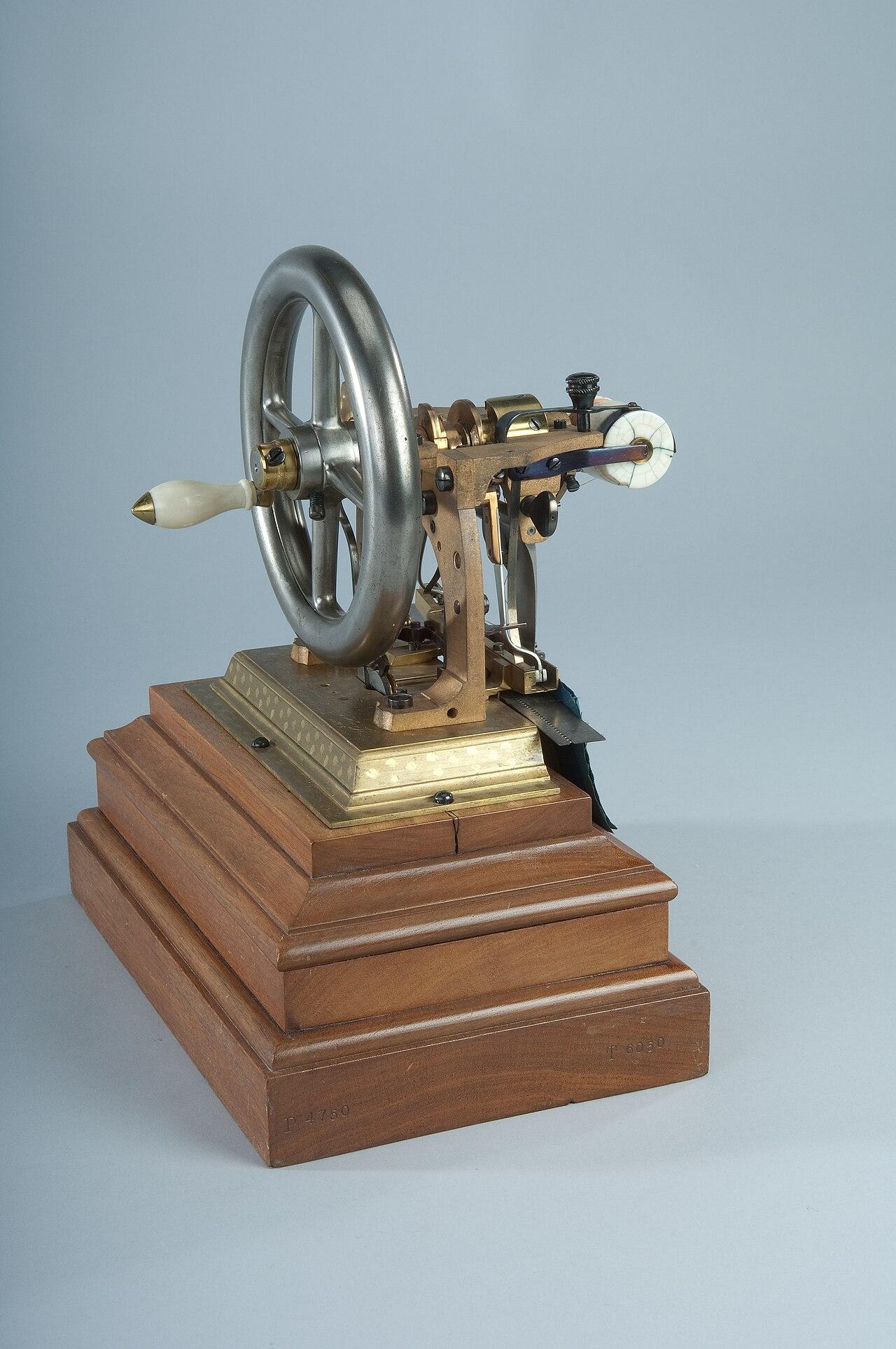
The 'Sewing Machine War' of the early 1850s was a maelstrom of patent litigation. Howe, I. M. Singer & Co., Wheeler & Wilson, and Grover & Baker each held overlapping claims, and no practical machine could be built without infringing several. In October 1856, with the principals gathered in Albany for a trial, Orlando B. Potter—a lawyer and president of Grover & Baker—proposed that they pool their patents instead. Under the Albany Agreement of October 24, 1856, the members cross-licensed one another and licensed outside manufacturers for a fee of fifteen dollars per machine (cut to seven dollars in 1860), with Howe receiving a special royalty of five dollars on each machine sold in the United States. The Combination, which lasted until its last key patent expired in 1877, was the first patent pool in American industry and a precedent for later licensing consortia.
Sources
- Archive / museum1846—Elias Howe Jr.'s Sewing Machine Patent Model. Smithsonian National Museum of American History.
- ScholarshipThe Sewing Machine Combination: The First American Patent Pool. The Volokh Conspiracy, 2009.
- ScholarshipHow Singer Won the Sewing Machine War. Smithsonian Magazine, 2015.