Impact · Chapter 07, 1840–1920
The Multiple-Loom System
The speed-up that triggered an industrial uprising.
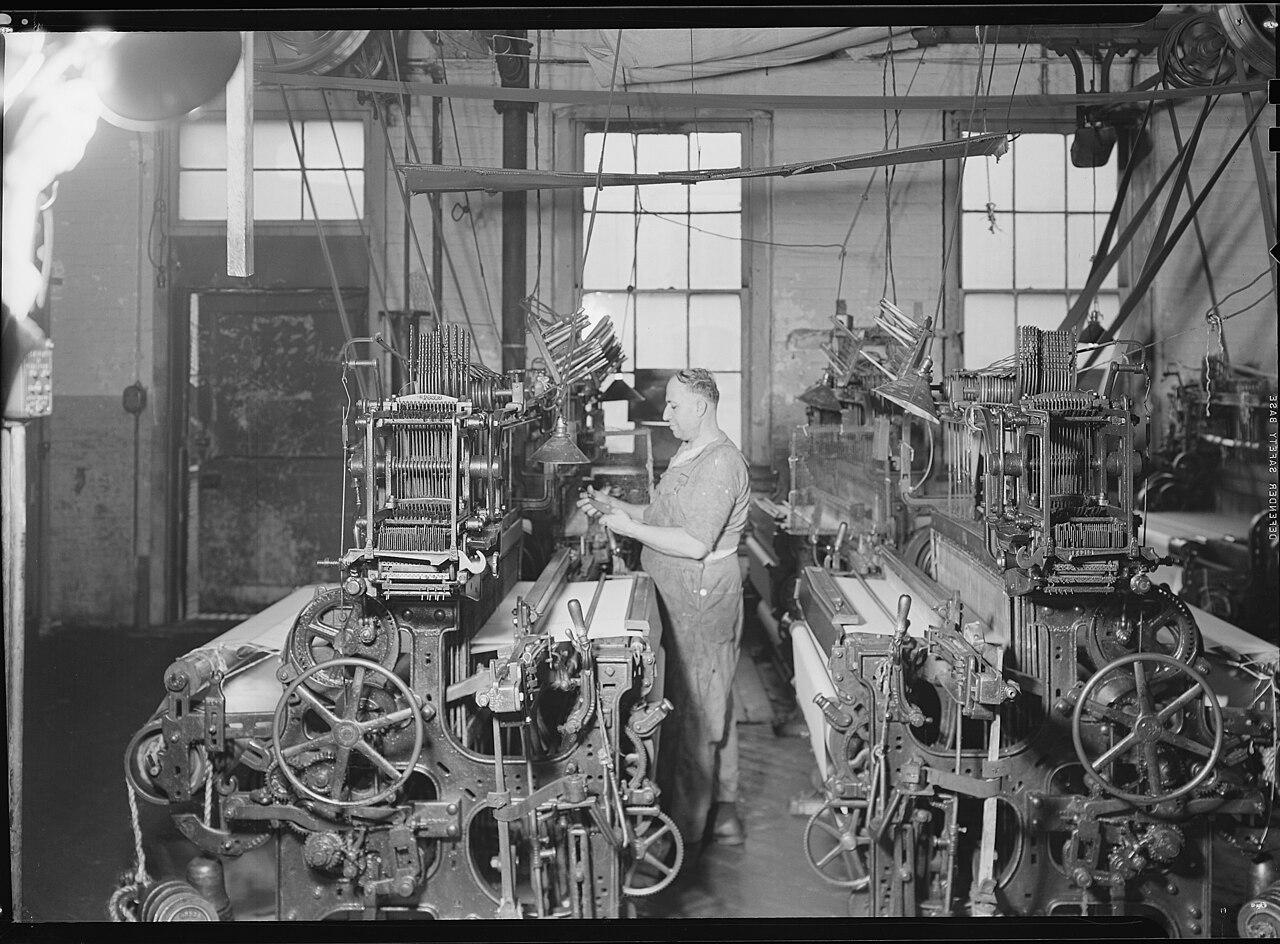
In the early 1900s, Paterson's broad-silk manufacturers began assigning weavers three and four looms instead of the traditional two, often without a matching rise in piece rates, while flaws in the cloth could still be charged against wages. Skilled weavers who had produced fine broad silks at their own pace were now expected to mind more machines at once, and many feared the change would halve the workforce. The multiple-loom system was a central grievance of the 1913 strike, along with the eight-hour day. It also previewed the 'stretch-out' that would convulse Southern cotton mills two decades later, marking a decisive shift from craft weaving toward machine-tending.
Sources
- ScholarshipSteve Golin. The Fragile Bridge: Paterson Silk Strike, 1913. Temple University Press, 1988.
- ScholarshipThe 1913 Paterson Silk Strike. PBS American Experience.