Impact · Chapter 08, 1846–1860
The Seamstress and the Machine
An economic cost rarely written into the history of the machine.
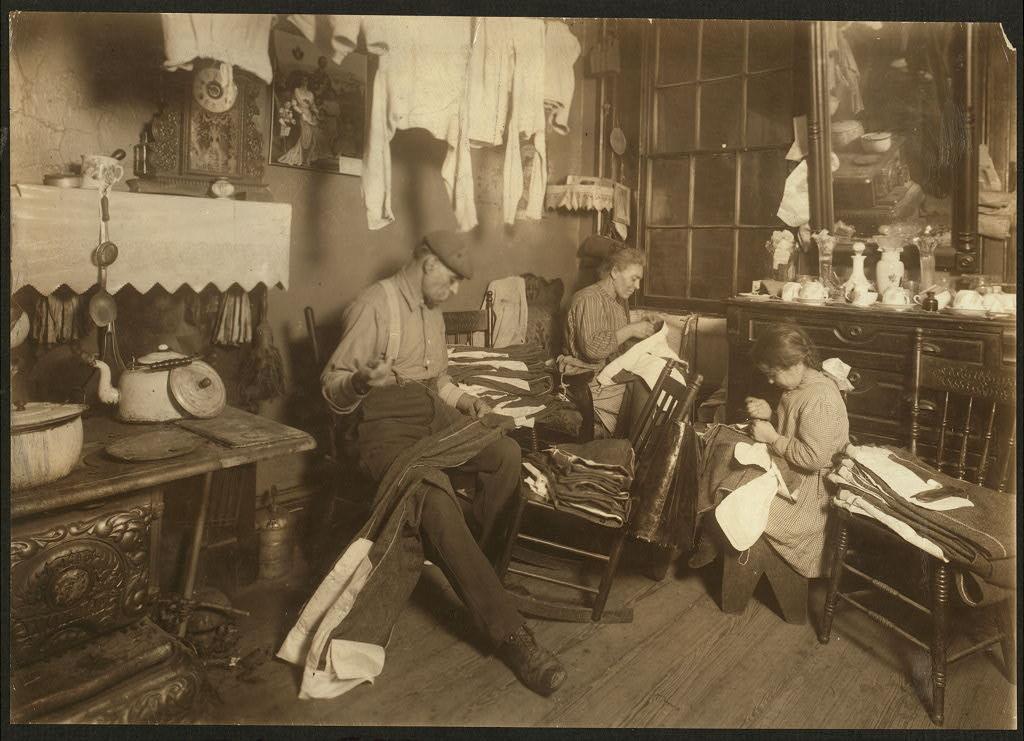
In 1850, sewing and clothing work was the second-largest paid occupation for free women in the United States, behind domestic service; estimates drawn from Helen Sumner's 1910 federal study count some sixty thousand women in the clothing trades. Needlewomen working at home on piece rates were already among the poorest workers in American cities. The sewing machine did not abolish their work—the expanding ready-made industry still needed tens of thousands of hands—but it reorganized it. Reformers at first urged manufacturers not to adopt the machines; some women bought machines on installment so they could keep sewing at home, and others moved into workshops. As the Smithsonian's history of sweatshops concludes, the machines dramatically raised productivity and lowered the price of clothing without greatly increasing the earnings of the women who ran them. The press celebrated the sewing machine as a liberator of women; the seamstresses themselves rarely appeared in the celebration.
Sources
- ScholarshipHistory of Sweatshops: 1820–1880. Smithsonian National Museum of American History.
- Government recordHelen L. Sumner. History of Women in Industry in the United States (Report on Condition of Woman and Child Wage-Earners, vol. 9). U.S. Government Printing Office, 1910.
- ScholarshipDid the Sewing Machine Bring Liberation or Drudgery?. History Today.