Chapter 12 · 1911
The Ashes of New York
Triangle Shirtwaist and the Birth of American Safety Law
The deadliest workplace disaster in New York City history changed the relationship between government and the workplace. One Saturday afternoon in March, 146 people died in about eighteen minutes.
Jump to classroom kit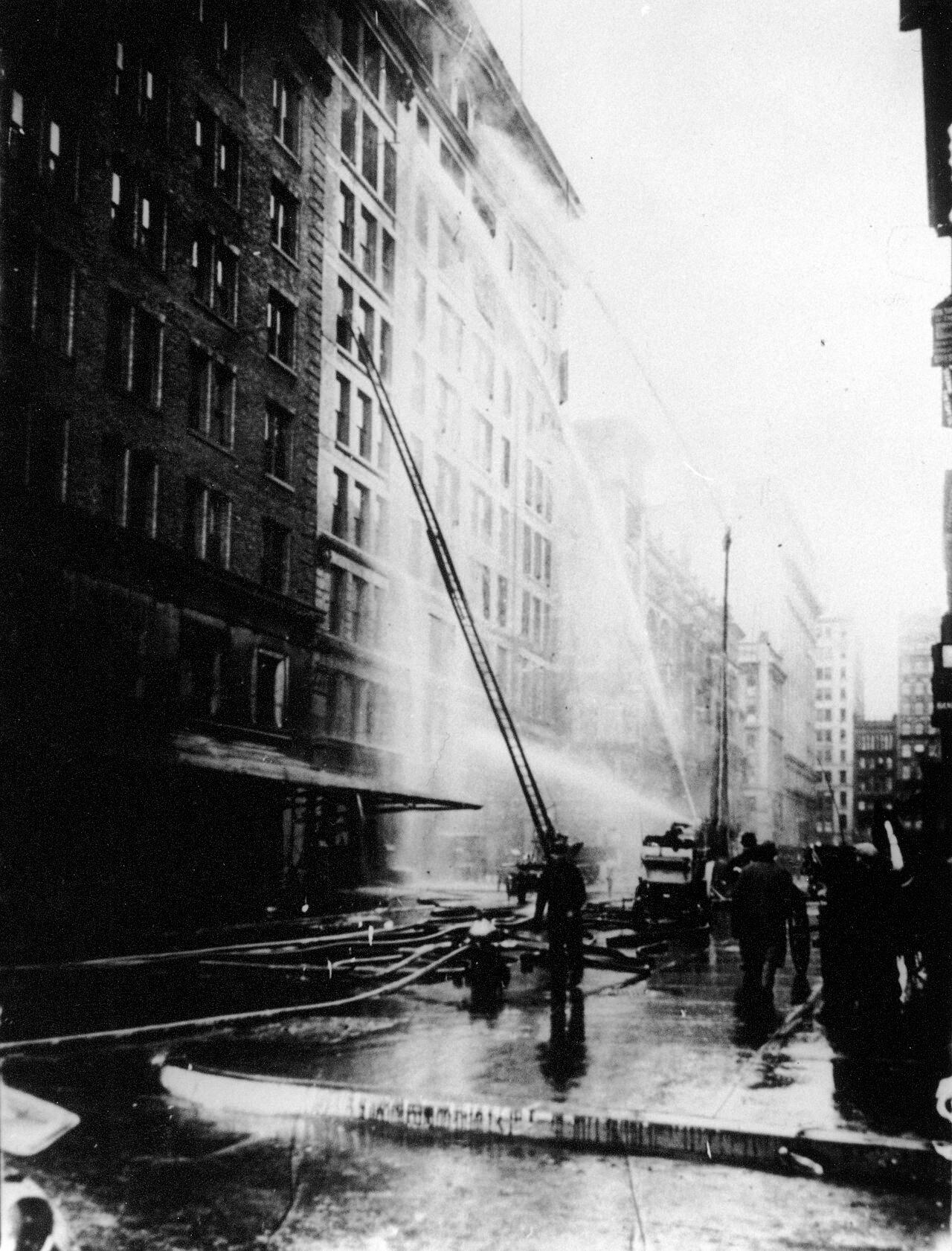
On March 25, 1911, fire broke out on the eighth floor of the Asch Building near Washington Square, where the Triangle Waist Company occupied the top three floors. Fed by cotton scraps and tissue, it spread within minutes. A door to one of the ninth-floor stairways was locked—a practice, the owners' critics charged, meant to prevent theft and to control workers' comings and goings. The single exterior fire escape twisted and collapsed under the weight of those who reached it, and fire department ladders could not reach the upper floors. Within about eighteen minutes, 146 workers—most of them young Jewish and Italian immigrant women, the youngest fourteen years old-were dead. The tragedy galvanized a generation of reformers and produced the New York State Factory Investigating Commission, chaired by state senator Robert F. Wagner with Assemblyman Alfred E. Smith as vice-chair, whose work helped lay the political foundation for the New Deal.
Inside this chapter
Classroom Kit
Was the Triangle fire an accident, a crime, or the predictable result of how the garment industry worked?
Eyewitness at the Triangle
William G. Shepherd, United Press, March 25, 1911 (published March 27, 1911)
The firemen raised the longest ladder. It reached only to the sixth floor. I saw the last girl jump at it and miss it. ... The floods of water from the firemen's hose that ran into the gutter were actually stained red with blood. I looked upon the heap of dead bodies and I remembered these girls were the shirtwaist makers. I remembered their great strike of last year in which these same girls had demanded more sanitary conditions and more safety precautions in the shops. These dead bodies were the answer.
Context: Shepherd, a reporter who happened to be in Washington Square, phoned in this account as the fire burned; it was telegraphed to newspapers nationwide. It was many Americans' first picture of the disaster that killed 146 garment workers.
Speech at the Triangle Fire Memorial Meeting
Rose Schneiderman, April 2, 1911
I would be a traitor to these poor burned bodies if I came here to talk good fellowship. We have tried you good people of the public and we have found you wanting. ... This is not the first time girls have been burned alive in the city. Every week I must learn of the untimely death of one of my sister workers. Every year thousands of us are maimed. The life of men and women is so cheap and property is so sacred. There are so many of us for one job it matters little if 146 of us are burned to death. ... I know from my experience it is up to the working people to save themselves. The only way they can save themselves is by a strong working-class movement.
Context: Schneiderman, a Women's Trade Union League organizer and former garment worker, spoke at the Metropolitan Opera House at a meeting called by civic leaders. Her speech, printed in The Survey, became one of the most quoted statements of the American labor movement.
Discussion questions
- What details in Shepherd's account show that the fire department's equipment could not save the workers?
- Schneiderman spoke to a mostly wealthy audience at a memorial meeting a week after the fire. Why does she refuse to "talk good fellowship," and what does she demand instead?
- Shepherd connects the dead to the 1909 strike. How does the chapter narrative support or complicate his claim that "These dead bodies were the answer"?
- Schneiderman argued that workers must "save themselves" through a strong labor movement; New York responded mainly by passing safety laws. Which approach better protects workers today, in warehouses here or garment factories abroad? Argue your position.
Key terms
- Shirtwaist
- A woman's tailored blouse, hugely popular in the early 1900s and mass-produced in New York factories.
- Fire code
- Laws that set safety requirements for buildings, such as exits, sprinklers, and fire escapes.
- Factory Investigating Commission
- A New York State commission created after the fire that inspected workplaces and led to dozens of new safety and labor laws.
- Women's Trade Union League
- An organization of working-class and wealthy women, founded in 1903, that helped women workers form unions.
- Workers' compensation
- Insurance, required by law, that pays workers who are injured on the job or the families of those killed.
Sources
- ScholarshipRemembering the 1911 Triangle Factory Fire: Introduction. Kheel Center, Cornell University ILR School.
- Government recordFourth Report of the Factory Investigating Commission. State of New York, 1915.
- ScholarshipThe Triangle Shirtwaist Factory Fire. Historical Society of the New York Courts.
- Government recordSafety and Health Regulation, Part VII. U.S. Department of Labor.