Chapter 17 · 1960-1985
The Long Integration
Civil Rights, Union Wars, and Brown Lung in the Southern Mill
For most of the twentieth century the Southern cotton mill was a white workplace by design, and its owners were among the most determined opponents of organized labor in the nation. Between 1960 and 1985, Black workers, union organizers, and disabled millhands used federal law to force open the mill gates, win the first contracts at J.P. Stevens, and make cotton dust a regulated hazard.
Jump to classroom kit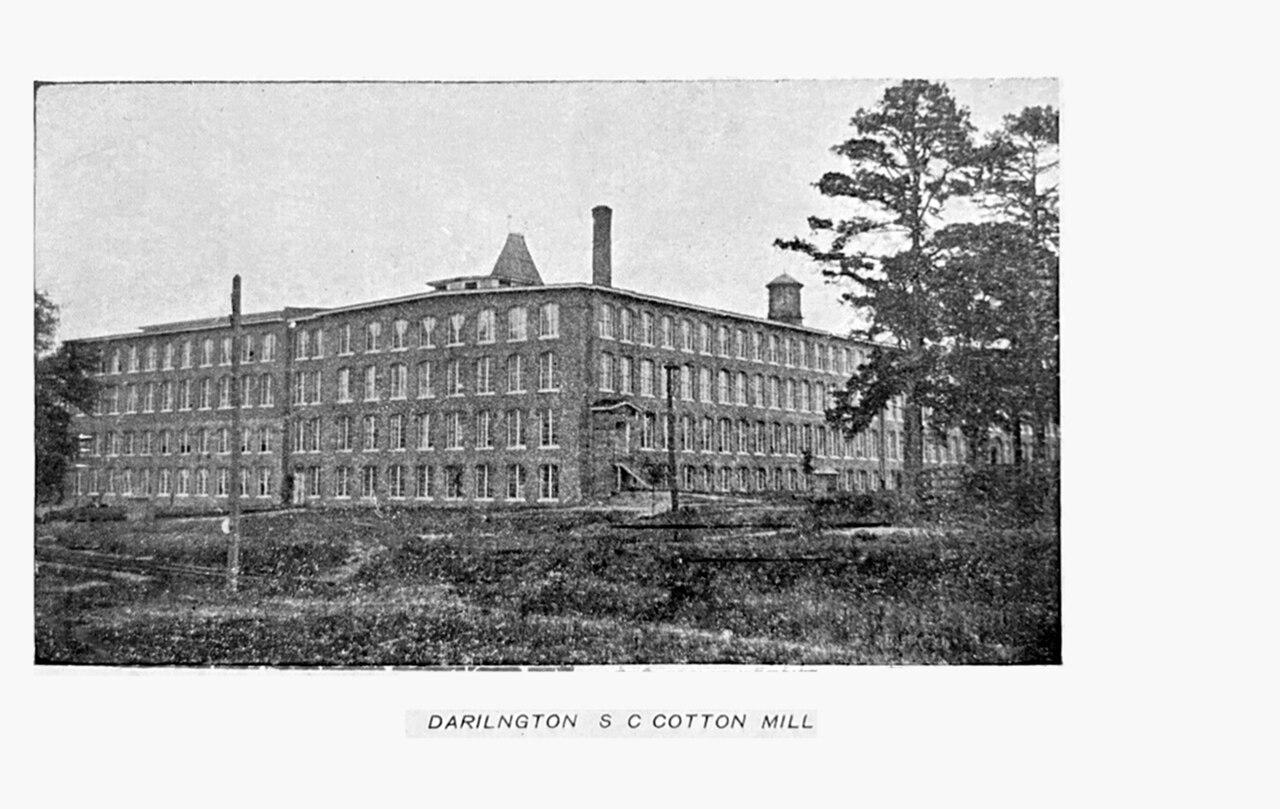
In 1960 only 3.3 percent of Southern textile workers were Black. Black men had long been hired for the yard, the opening room, and other laboring jobs, but production work at the frames and looms was reserved for whites, and Black women were almost never hired at all. Title VII of the Civil Rights Act of 1964 changed the legal terrain, and Black workers acted on it: they wrote to the new Equal Employment Opportunity Commission, testified at its textile forum in Charlotte in January 1967, and filed lawsuits against nearly every major firm in the industry. By 1978 one in four Southern textile workers was Black. The same years brought the industry's longest labor war. J.P. Stevens, the nation's second-largest textile company, resisted unionization from 1963 until it signed a contract in 1980, and the Supreme Court's 1965 Darlington decision defined how far an employer could go to escape a union. Meanwhile retired and disabled millhands organized around a disease the industry had long minimized, byssinosis, and won a federal cotton dust standard that the Court upheld in 1981. These were separate campaigns, but they converged on the same mill towns: Roanoke Rapids, North Carolina, was at once the site of a landmark discrimination suit, the union victory dramatized in Norma Rae, and a chapter of the Carolina Brown Lung Association.
Inside this chapter
- Labor
Opening the Mill Gates
How Black workers used Title VII to integrate the South's largest industry.
- Biography
The Real Norma Rae
Crystal Lee Sutton, a cardboard sign, and the seventeen-year fight to organize J.P. Stevens.
- Labor
Remember Darlington
A mill closed to punish a union vote, and the Supreme Court case that followed.
- Impact
Brown Lung
Byssinosis, the Carolina Brown Lung Association, and the fight for a cotton dust standard.
Classroom Kit
Did civil rights law, union organizing, and the brown lung movement change Southern mills, or did the industry's decline overtake them?
Civil Rights Act of 1964, Title VII, Section 703(a)
U.S. Congress, July 2, 1964
It shall be an unlawful employment practice for an employer—(1) to fail or refuse to hire or to discharge any individual, or otherwise to discriminate against any individual with respect to his compensation, terms, conditions, or privileges of employment, because of such individual's race, color, religion, sex, or national origin; or (2) to limit, segregate, or classify his employees or applicants for employment in any way which would deprive or tend to deprive any individual of employment opportunities or otherwise adversely affect his status as an employee, because of such individual's race, color, religion, sex, or national origin.
Context: Title VII banned job discrimination and created the Equal Employment Opportunity Commission. Combined with federal contract rules and lawsuits, it opened Southern textile production jobs, long reserved for white workers, to Black men and women.
Source: Title VII of the Civil Rights Act of 1964. U.S. Equal Employment Opportunity Commission. 1964
Recollection of the 1973 J.P. Stevens Organizing Campaign
Crystal Lee Sutton, 1973 (later recollection)
"Management and others treated me as if I had leprosy," ... "I took a piece of cardboard and wrote the word UNION on it in big letters, got up on my work table, and slowly turned it around. The workers started cutting their machines off and giving me the victory sign. All of a sudden the plant was very quiet ..."
Context: Sutton was fired from J.P. Stevens in Roanoke Rapids, North Carolina, for union organizing; her protest inspired the 1979 film Norma Rae. Workers there won a union election in 1974, but Stevens did not sign a contract until 1980.
Source: About Crystal Lee Sutton (Crystal Lee Sutton Collection). Alamance Community College Library
American Textile Manufacturers Institute v. Donovan
U.S. Supreme Court (opinion of Justice William J. Brennan Jr.), June 17, 1981
Byssinosis, known in its more severe manifestations as "brown lung" disease, is a serious and potentially disabling respiratory disease primarily caused by the inhalation of cotton dust. ... In its most serious form, byssinosis is a chronic and irreversible obstructive pulmonary disease, clinically similar to chronic bronchitis or emphysema, and can be severely disabling. ... Estimates indicate that at least 35,000 employed and retired cotton mill workers, or 1 in 12 such workers, suffer from the most disabling form of byssinosis.
Context: The textile industry sued to block OSHA's 1978 cotton dust standard, arguing its costs outweighed its benefits. The Court upheld the rule, a major victory for the Carolina Brown Lung Association and retired mill workers.
Discussion questions
- What two kinds of employer actions does Section 703(a) of Title VII make illegal?
- Sutton's words come from a later recollection quoted by a college archive that holds her papers, and her story was retold in the Hollywood film Norma Rae. How might memory and fame shape her account?
- Black workers entered Southern mills in large numbers under Title VII just as unions campaigned at J.P. Stevens and brown lung activists pushed for health rules. How did these movements reinforce or compete with each other?
- In 1981 the Supreme Court upheld OSHA's cotton dust standard without requiring a cost-benefit test. Should regulators today have to prove that a health rule's benefits outweigh its costs before protecting workers? Argue.
Key terms
- Title VII
- The section of the Civil Rights Act of 1964 that bans job discrimination based on race, color, religion, sex, or national origin.
- EEOC
- The Equal Employment Opportunity Commission, the federal agency that enforces laws against job discrimination.
- Byssinosis (brown lung)
- A lung disease caused by breathing cotton dust, common among workers in older textile mills.
- OSHA
- The Occupational Safety and Health Administration, the federal agency created in 1970 to set and enforce workplace safety rules.
- Union election
- A secret-ballot vote, supervised by the National Labor Relations Board, in which workers decide whether to be represented by a union.
Sources
- ScholarshipTimothy J. Minchin. Hiring the Black Worker: The Racial Integration of the Southern Textile Industry, 1960–1980. University of North Carolina Press, 1999.
- Primary sourceTextile Workers Union v. Darlington Manufacturing Co., 380 U.S. 263 (1965). Justia U.S. Supreme Court Center, 1965.
- Primary sourceAmerican Textile Manufacturers Institute, Inc. v. Donovan, 452 U.S. 490 (1981). Justia U.S. Supreme Court Center, 1981.
- Government recordThe Real 'Norma Rae'. North Carolina Department of Natural and Cultural Resources, 2016.