Innovation · Chapter 02, 1600–1760
Two Wheels, Two Worlds
How the great wheel and the flax wheel divided the colonial household.
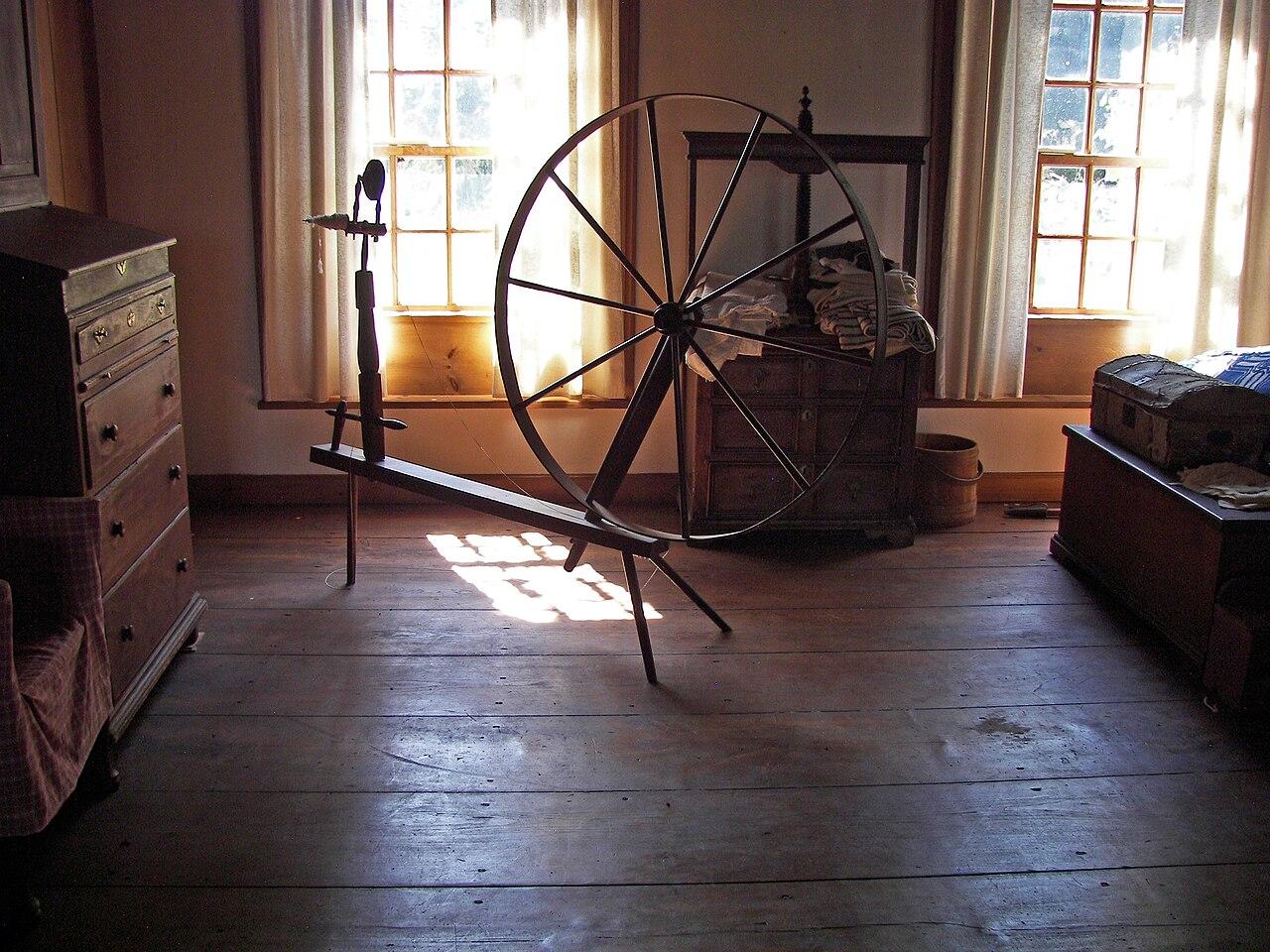
Many colonial households owned two kinds of spinning wheel. The 'great wheel' (or walking wheel) was worked standing up to spin wool: the spinner turned the large wheel by hand and stepped back and forth, drawing out the fiber in long arcs. The smaller 'flax wheel' was treadled while seated and produced the fine, even, moistened thread needed for linen. The two wheels embodied a choreography of household labor: the great wheel demanded room and movement; the flax wheel allowed a woman to spin while keeping watch over children, a pot, or a neighbor's conversation. Much of pre-industrial American cloth was built from these two postures.
Sources
- ScholarshipLaurel Thatcher Ulrich. The Age of Homespun: Objects and Stories in the Creation of an American Myth. Alfred A. Knopf, 2001.
- ScholarshipTextiles and Independence.