Biography · Chapter 06, 1820–1845
Sarah Bagley: A Labor Voice in Print
A weaver who became the public voice of industrial reform.
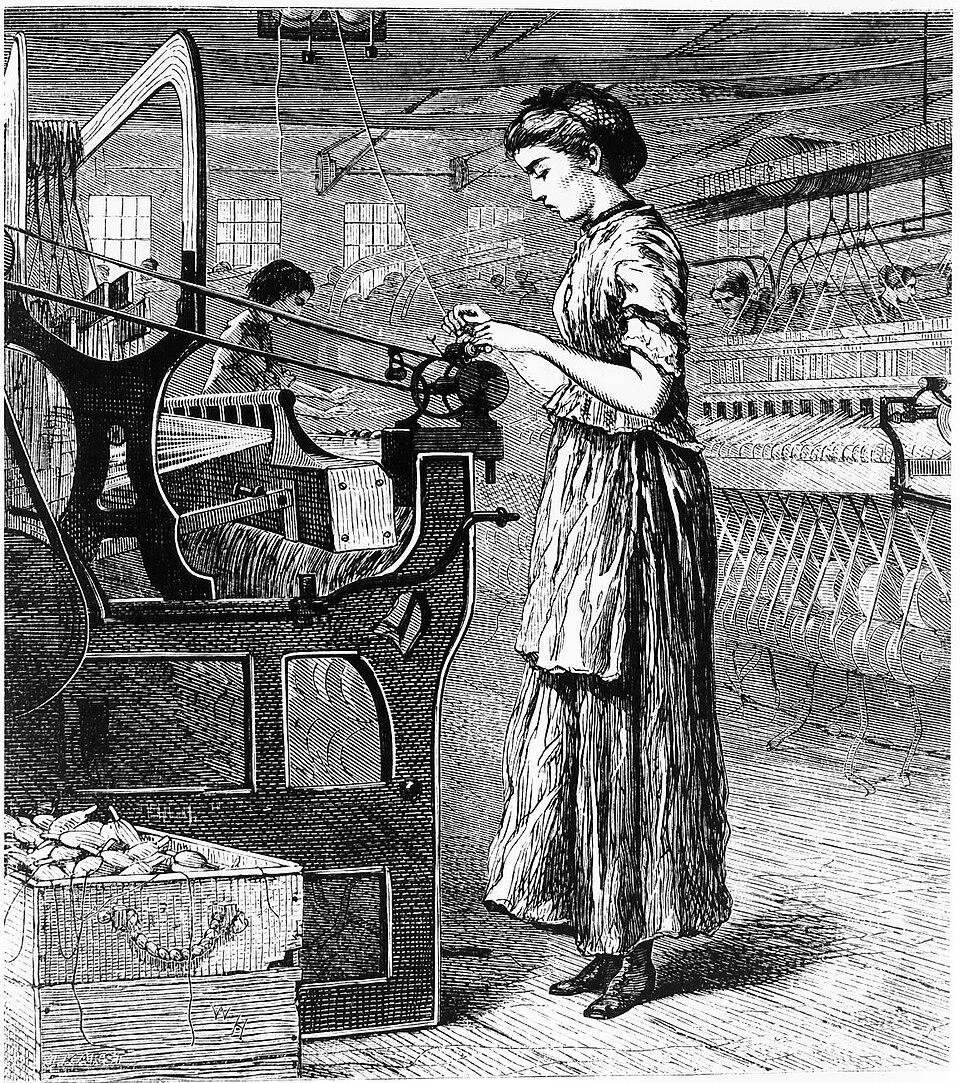
Sarah Bagley (1806–1889), born in rural New Hampshire, began work as a weaver in Lowell around 1837. In 1845 she became a founder and the first president of the Lowell Female Labor Reform Association, which collected thousands of signatures on petitions for a ten-hour day. That year she and other operatives testified before a Massachusetts legislative committee investigating factory hours—an early instance of working women giving public testimony on industrial conditions—though the committee recommended no law. She wrote for and helped edit the Voice of Industry, the labor paper the association acquired after its founding in 1844, and publicly attacked the Lowell Offering as a mouthpiece of the corporations. In 1846 she left the mills to run Lowell's new telegraph office, often described as making her the first woman telegraph operator in the United States. Her later life took her into reform work in Philadelphia and New York, and much of it remained obscure until historians recovered it.
Sources
- Government recordEarly Strikes. National Park Service, Lowell National Historical Park.
- Government recordThe Mill Girls of Lowell. National Park Service, Lowell National Historical Park.
- ScholarshipThomas Dublin. Women at Work: The Transformation of Work and Community in Lowell, Massachusetts, 1826–1860. Columbia University Press, 1979.