Material Culture · Chapter 03, 1760–1789
The Spinning Bee as Political Theater
A domestic chore staged as a public act.
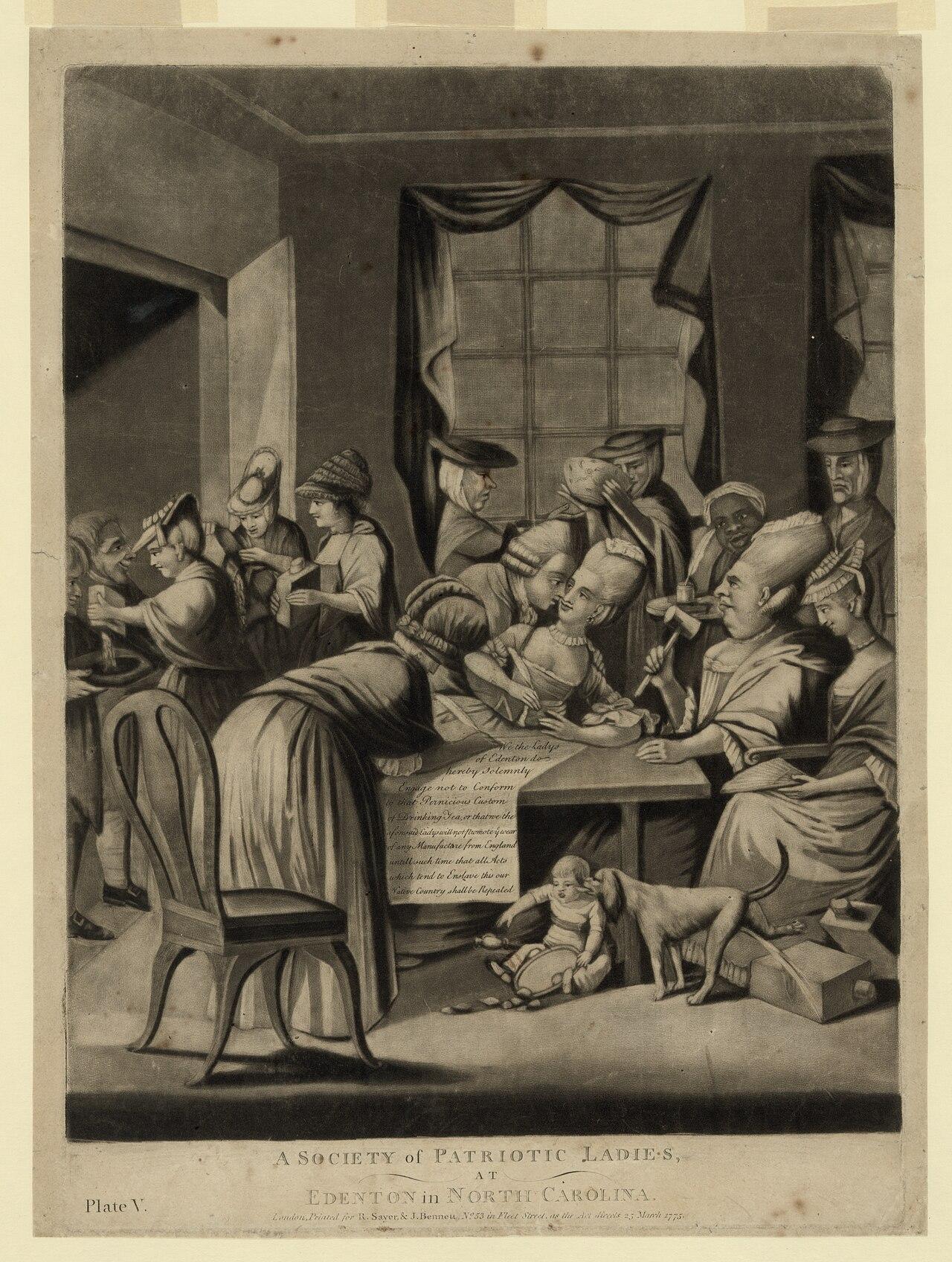
The spinning meeting was a performance as much as a work session. Women brought their wheels to the minister's house, spun from dawn until dusk, and were often treated to a sermon on industry and virtue; townspeople came to watch. Local newspapers tallied the day's output—skeins of yarn, yards of cloth—as if reporting a victory. Historians stress that many such gatherings were also charitable, with the yarn given to the minister's family, and that their political meaning was amplified by the printers who publicized them. Even so, the bee transformed an invisible household labor into a public ritual of citizenship and gave colonial women a rare, sanctioned political voice in a polity that would deny them formal political rights.
Sources
- ScholarshipLaurel Thatcher Ulrich. The Age of Homespun: Objects and Stories in the Creation of an American Myth. Alfred A. Knopf, 2001.
- ScholarshipT. H. Breen. The Marketplace of Revolution: How Consumer Politics Shaped American Independence. Oxford University Press, 2004.