Biography · Chapter 10, 1870–1910
The Uprising of the 20,000
The strike that built the ILGWU—and set the stage for Triangle.
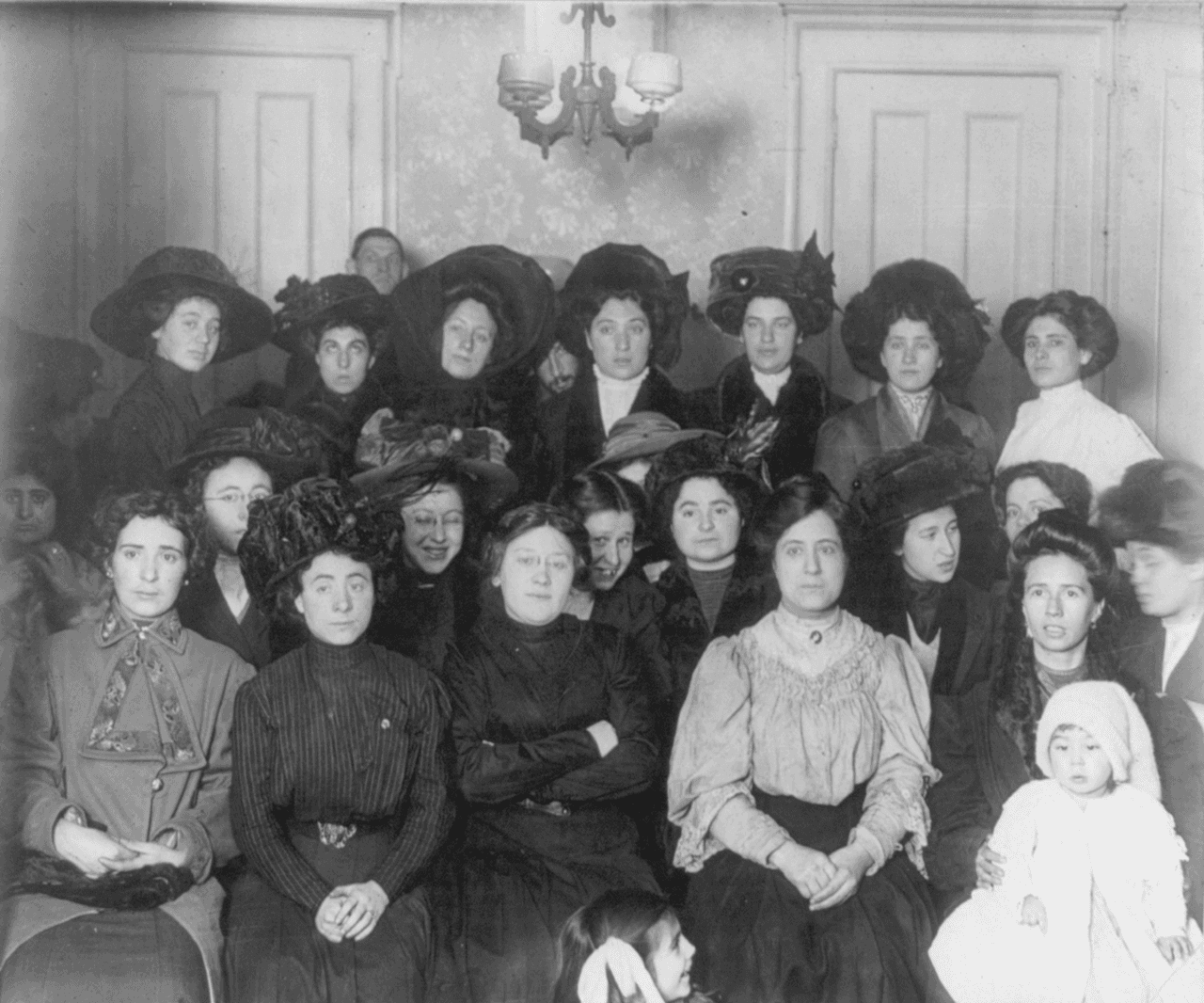
On November 22, 1909, at a packed meeting at Cooper Union, the twenty-three-year-old shirtwaist maker Clara Lemlich interrupted the speeches and, in Yiddish, called for a general strike. Within days, some twenty thousand shirtwaist workers—most of them young Jewish and Italian immigrant women—had walked off the job. The strike lasted into February 1910, drew financial backing and picket-line support from suffragists and wealthy allies in the Women's Trade Union League, and won agreements at most shops, though not full union recognition everywhere. The Triangle Waist Company was among the firms that refused to settle on the union's terms. Sixteen months later, its factory would be the scene of a tragedy that reshaped American labor law.
Sources
- ScholarshipSweatshops and Strikes before 1911. Kheel Center, Cornell University ILR School.
- Primary sourceClara Lemlich testimony (Out of the Sweatshop). Kheel Center, Cornell University ILR School.
- ScholarshipAnnelise Orleck. Common Sense and a Little Fire: Women and Working-Class Politics in the United States, 1900–1965. University of North Carolina Press, 1995.