Tragedy · Chapter 11, 1880–1920
The Pemberton Mill Collapse
Lawrence's first industrial catastrophe—the disaster that haunted the city for a century.
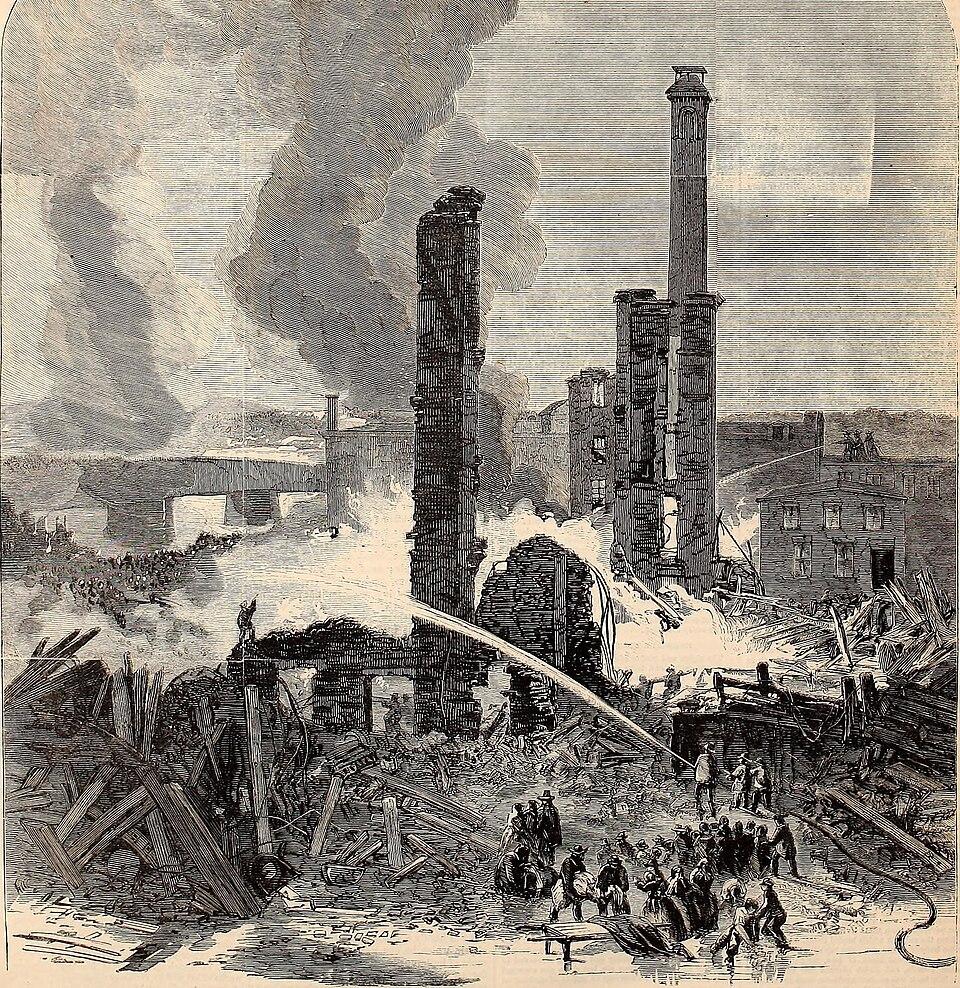
The Pemberton Mill, a five-story brick mill about 280 feet long, was built in Lawrence in 1853 with backing from John A. Lowell and J. Pickering Putnam. In 1857 it was sold to George Howe and David Nevins, who filled it with additional machinery. Late in the afternoon of January 10, 1860, with roughly eight hundred people at work inside—most of them young women, many of them Irish immigrants—the building collapsed in less than a minute into a heap of brick, iron, and machinery. Rescuers worked through the night by lantern light. Around half past nine, a broken lantern ignited cotton waste in the wreckage, and the fire killed workers who were still trapped; contemporary accounts reported more than a dozen burned to death within earshot of the crowd. Estimates of the dead range from 88 to about 145, with some 166 injured. Investigators blamed brittle, defectively cast iron columns, poor mortar, and the weight of the added machinery. No one was held criminally responsible. The collapse became a foundational memory of the New England working class and an early, unheeded lesson—half a century before Triangle—in the responsibility of owners for the safety of their buildings.
Sources
- ScholarshipThe Pemberton Mill Disaster. New England Historical Society.
- Archive / museumPemberton Mill collapse (document collection). House Divided: The Civil War Research Engine at Dickinson College.