Impact · Chapter 02, 1600–1760
Sheep, Statutes, and Survival
How colonial law conscripted the household into a textile economy.
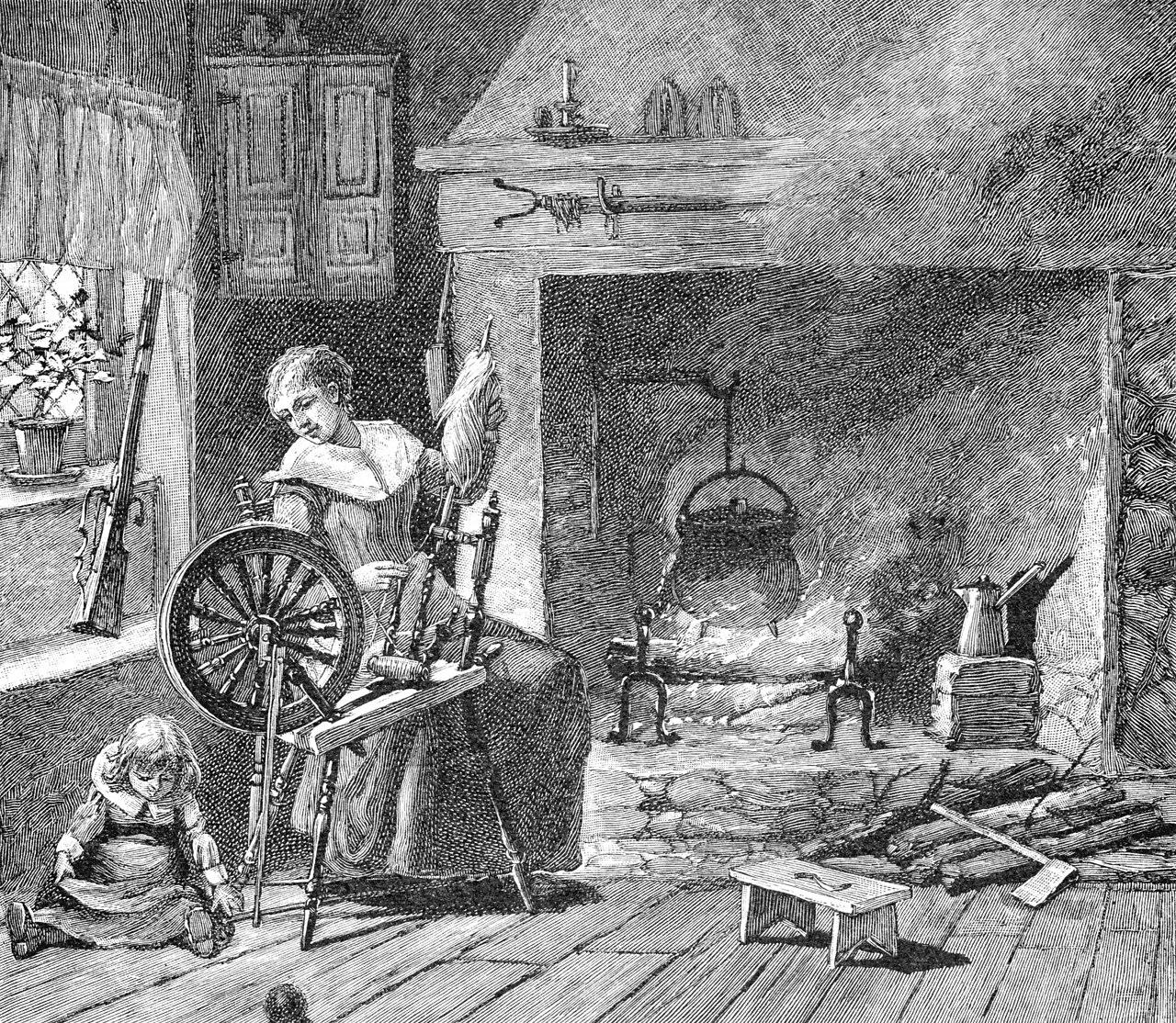
Wool came slowly to New England. Wolves, hard winters, and hungry settlers thinned the early flocks, and the Massachusetts General Court spent the 1640s and 1650s issuing orders to protect and multiply sheep: towns were told to preserve their animals and procure more from England, the slaughter of young stock was restricted, and the export of ewes was forbidden. In 1656 the Court went further, ordering selectmen to assess every family for a whole, half, or quarter 'spinner' and fining households twelve pence for every pound of yarn short of the quota. Connecticut's General Court likewise ordered families to sow hemp and flax. Later popular histories sometimes claim that colonists smuggled lambs past a British ban in hay-packed barrels; no contemporary evidence supports the story. The documented reality is a colony legislating its kitchens into a shadow textile economy—and a 'homespun' garment that was at once a sign of necessity and, by the 1760s, a statement of independence.
Sources
- ScholarshipSusan M. Ouellette. All Hands Are Enjoined to Spin: Textile Production in Seventeenth-Century Massachusetts. University of Massachusetts Amherst (doctoral dissertation), 1996.
- ScholarshipTroubles with Sheep. Historic Ipswich, 2021.
- ScholarshipTextiles and Independence.