Labor · Chapter 03, 1760–1789
The Daughters of Liberty
Women as the economic engine of colonial resistance.
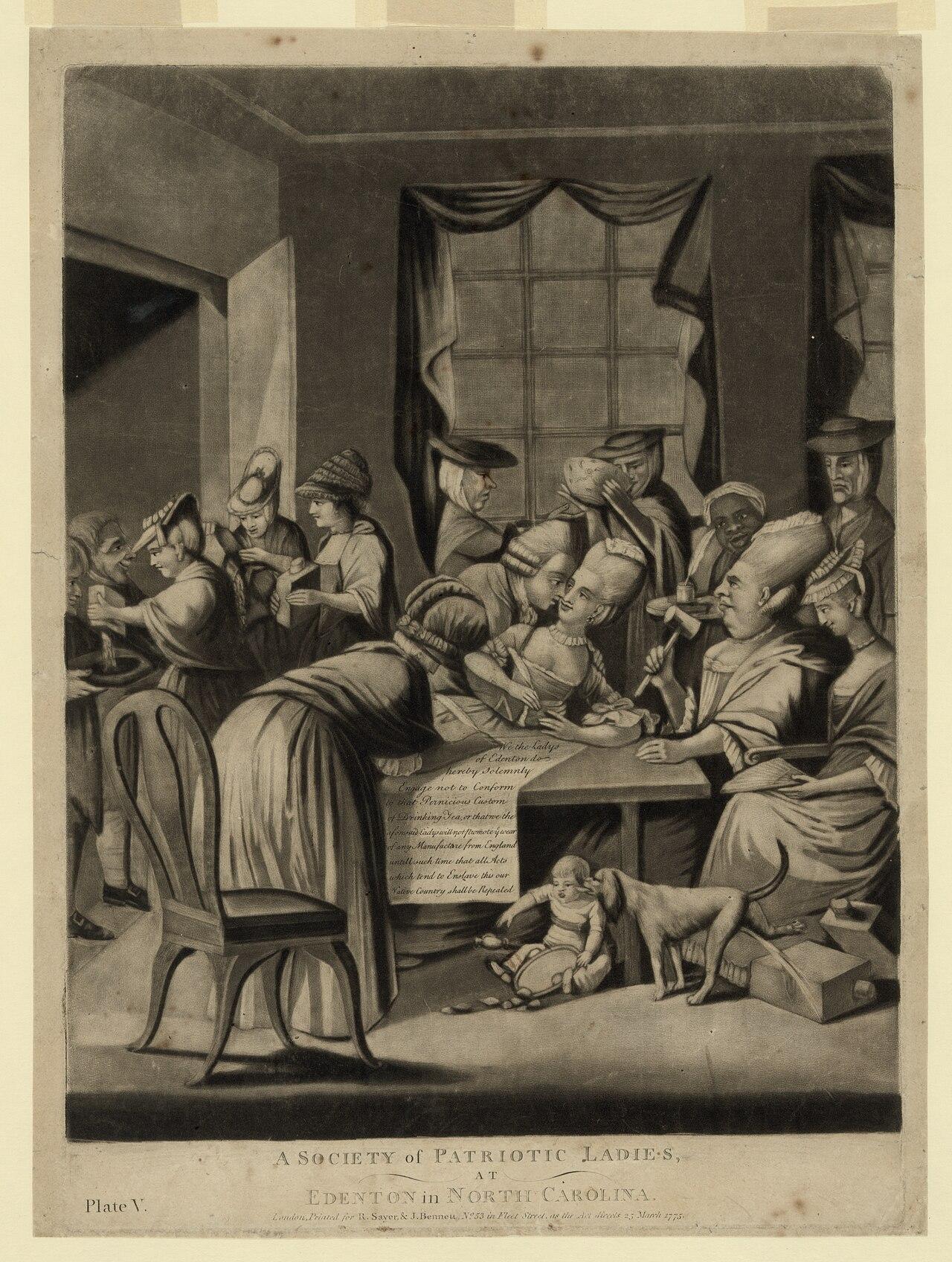
While men debated non-importation in taverns and assemblies, women supplied the cloth that made boycotts possible. In towns across New England—Newport, Providence, and dozens of smaller Massachusetts and Connecticut communities—groups of women, often numbering several dozen, gathered for daylong spinning meetings, usually hosted by the local minister, and newspapers printed their output as patriotic statistics. The name 'Daughters of Liberty' was applied loosely in the press rather than to a single organization. Their labor, rarely cited in older revolutionary histories, was what turned the political threat of a boycott into an economic reality, and household spinning remained essential when wartime disruption cut off imported cloth.
Sources
- ScholarshipLaurel Thatcher Ulrich. The Age of Homespun: Objects and Stories in the Creation of an American Myth. Alfred A. Knopf, 2001.
- ScholarshipT. H. Breen. The Marketplace of Revolution: How Consumer Politics Shaped American Independence. Oxford University Press, 2004.
- ScholarshipTextiles and Independence.