Labor · Chapter 11, 1880–1920
Bread and Roses
The 1912 Lawrence strike that united dozens of nationalities.
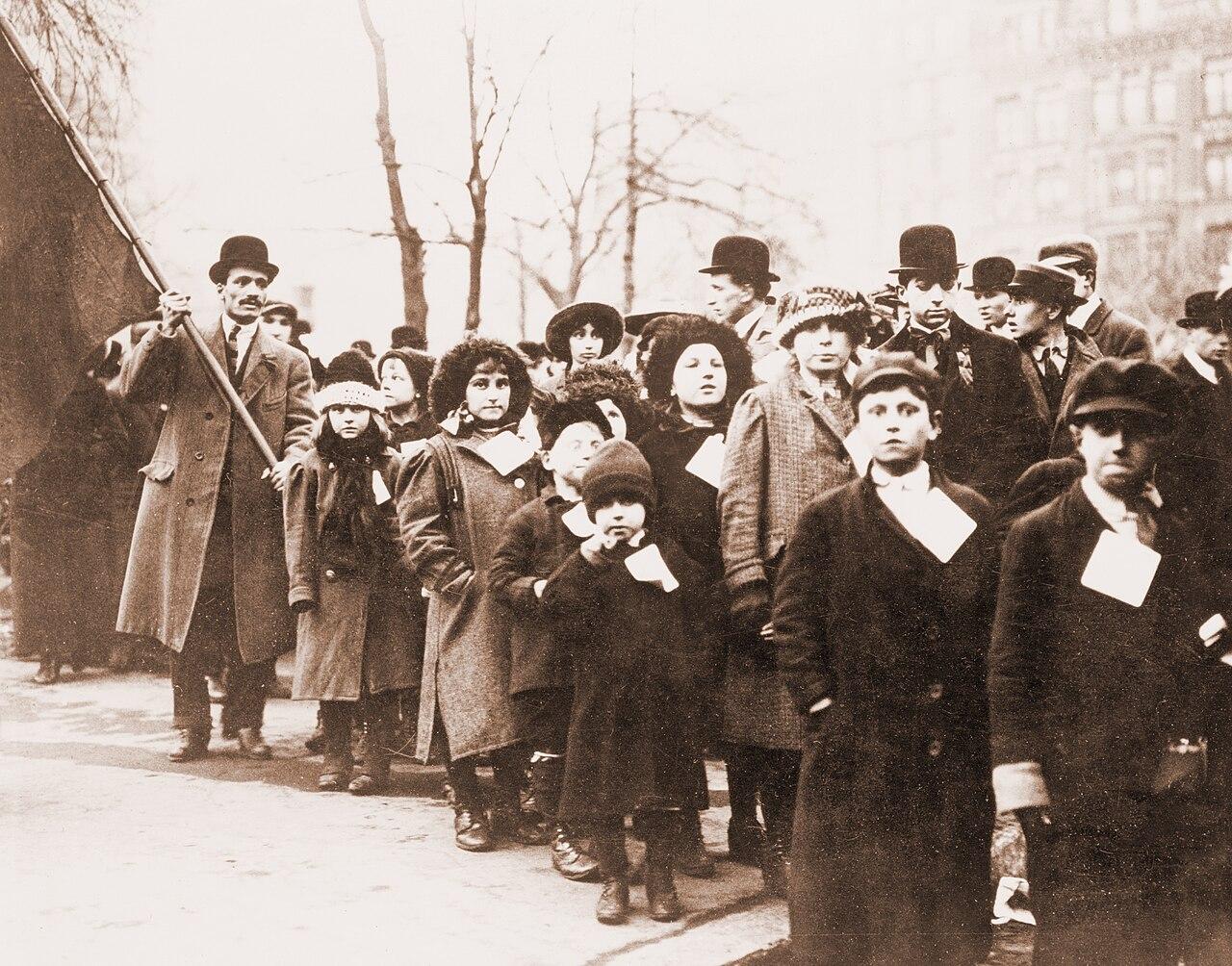
A new Massachusetts law cutting the work week for women and minors from fifty-six to fifty-four hours took effect on January 1, 1912, and the mills cut pay accordingly. On January 11, Polish women weavers at the Everett Mill opened short pay envelopes and walked out; within days the strike had spread across the city, and by March more than twenty thousand workers of dozens of nationalities were out. Led by the Industrial Workers of the World, the strikers organized by language group, with interpreters and a multilingual strike committee. The strike claimed lives: Anna LoPizzo was shot dead on January 29 by a bullet whose source was never established, and the teenager John Rami was killed by a militia bayonet the next day. Strikers sent hundreds of their children to sympathizers in other cities; when police clubbed mothers and children at the Lawrence station in February, national outrage followed, including congressional hearings. The strike ended on March 14 with raises of five to twenty-five percent, time-and-a-quarter for overtime, and a promise of no discrimination against strikers. The famous slogan 'bread and roses' is not documented during the strike itself: it comes from James Oppenheim's poem of December 1911 and was first linked to Lawrence in Upton Sinclair's 1916 anthology The Cry for Justice.
Sources
- ScholarshipBread and Roses Strike of 1912. The Samuel Gompers Papers, University of Maryland.
- Primary sourceLawrence Strike Comes to an End; Increased Wage Scale Accepted. The New York Times, 1912.
- ScholarshipBread and Roses Strike of 1912: Two Months in Lawrence, Massachusetts, that Changed Labor History. Georgetown University, Labor History Research Portal.
- ScholarshipBread and Roses (song). Zinn Education Project.