Labor · Chapter 10, 1870–1910
The Sweatshop System
Exploitation engineered into the architecture of the tenement.
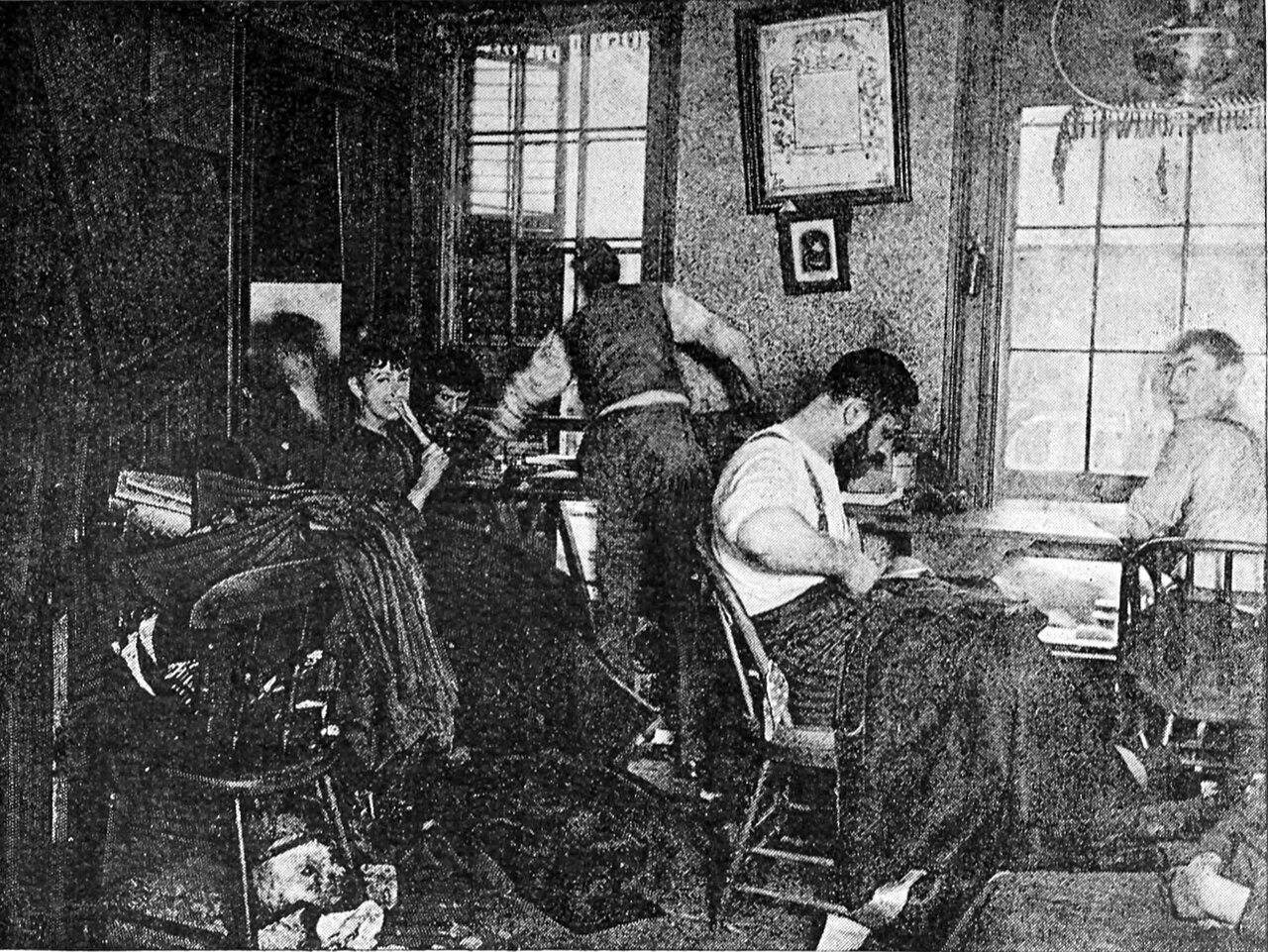
The late nineteenth-century garment trade ran on layered sub-contracting. A manufacturer cut the fabric, then handed bundles to a contractor who set up shop in his own apartment or a rented tenement room, hiring workers—often newly arrived from Eastern Europe or southern Italy—at piece rates that fell whenever orders slowed. Families slept and ate in the rooms where they sewed, and in busy seasons the foot-powered machines ran far into the night. The system pushed overhead costs—rent, light, heat, machines, thread—onto the workers themselves. And because the work happened in private dwellings, it long escaped the factory laws, until New York's tenement-licensing statutes of the 1890s began, imperfectly, to reach inside.
Sources
- Primary sourceJacob A. Riis. How the Other Half Lives: Studies Among the Tenements of New York. Charles Scribner's Sons, 1890.
- ScholarshipSweatshops and Strikes before 1911. Kheel Center, Cornell University ILR School.
- ScholarshipHistory of Sweatshops: 1820–1880. Smithsonian National Museum of American History.