Impact · Chapter 11, 1880–1920
The Piedmont Mill Village
A new social order built around the Southern cotton mill.
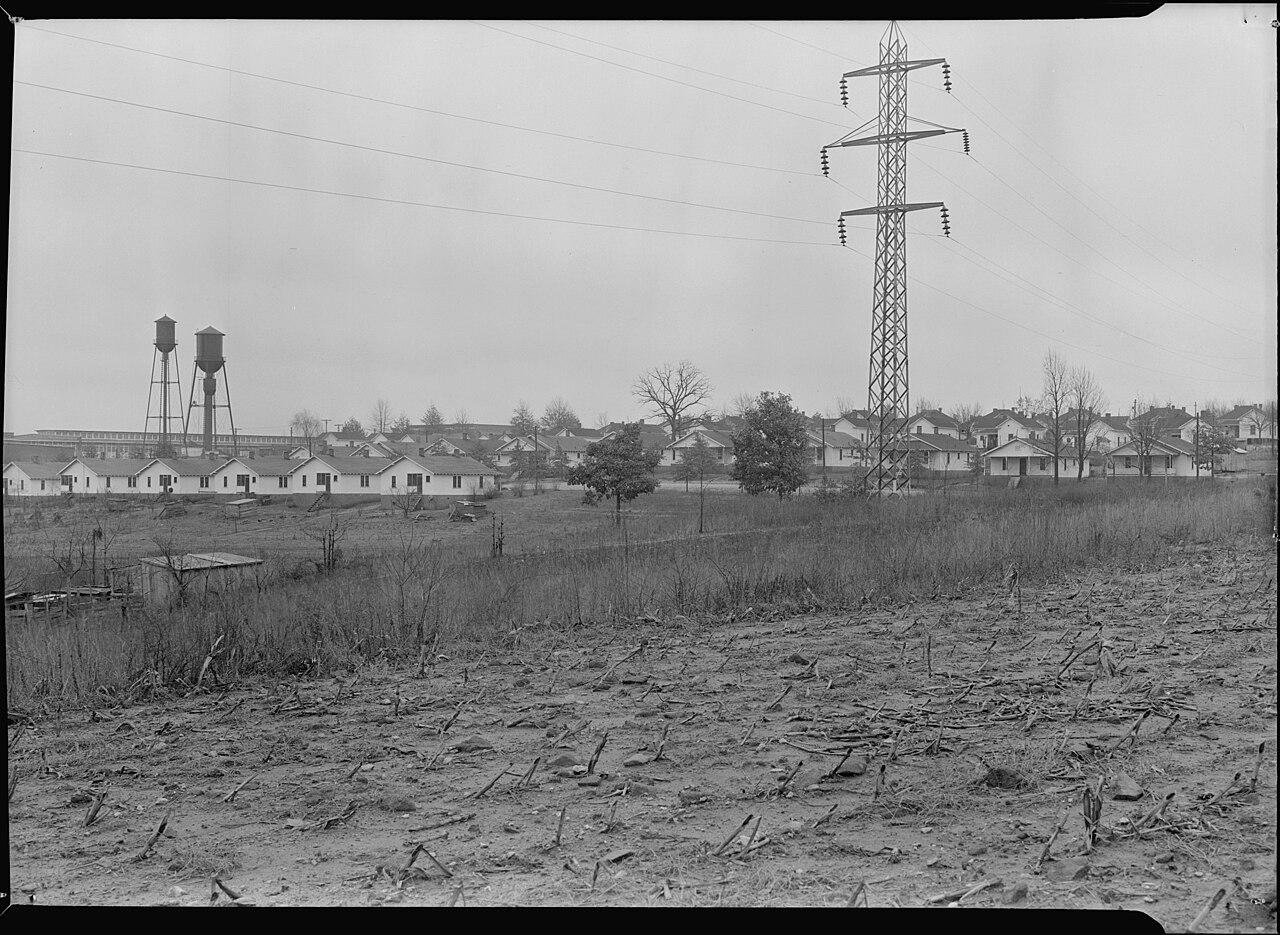
From the 1880s onward, Southern mill builders recruited rural white families—many of them failing farmers and tenants from the Piedmont and the Appalachian foothills—into mill villages the company owned outright. The mill typically owned the houses and often subsidized the church, the school, the store, and the doctor. Wages were low, and housing was tied to employment: a family that lost its job could lose its home. Families often worked as units, children included, until child-labor laws and the New Deal codes curtailed the practice. Black workers were confined largely to outdoor, warehouse, and heavy labor and were excluded from most production jobs until federal civil-rights law and enforcement in the 1960s opened them. The system supplied generations of cheap labor and built a regional culture—intensely local, family-centered, and wary of outsiders—whose collapse in the 1990s and 2000s remains a defining American story.
Sources
- ScholarshipJacquelyn Dowd Hall, James Leloudis, Robert Korstad, et al. Like a Family: The Making of a Southern Cotton Mill World. University of North Carolina Press, 1987.
- ScholarshipCotton Mills. NCpedia (State Library of North Carolina).
- ScholarshipTextile Industry. South Carolina Encyclopedia.