Impact · Chapter 11, 1880–1920
The Dagenhart Boys and the Law
How a Charlotte cotton mill family carried child labor to the Supreme Court, and why it took twenty-five years to end it.
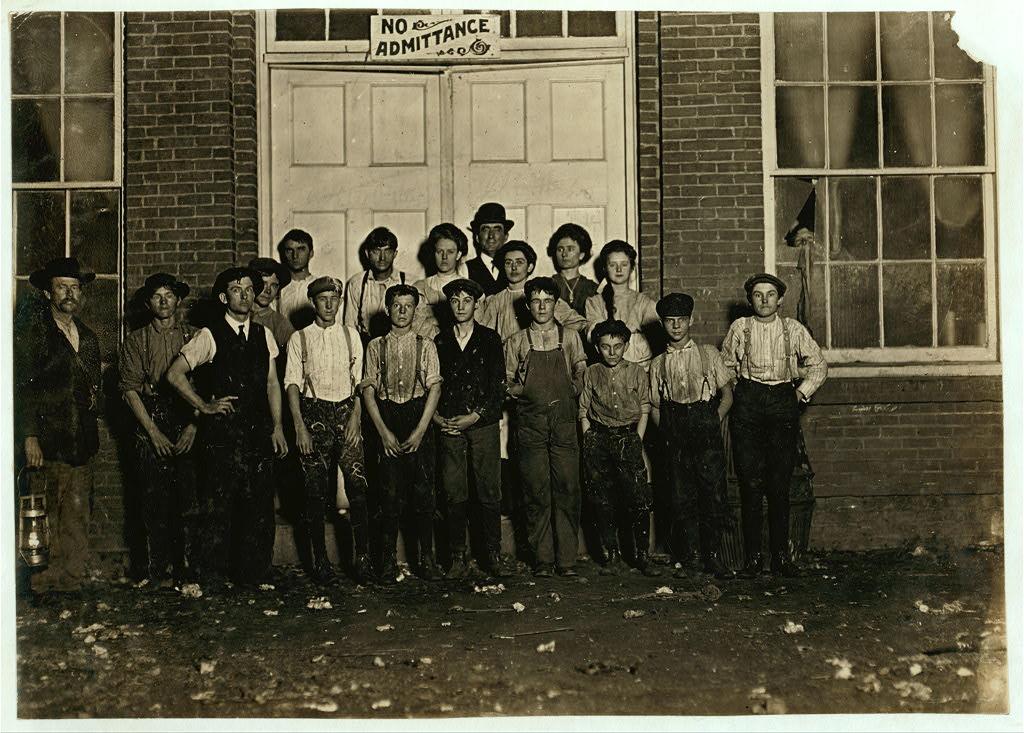
The 1900 census counted about two million American children at work in mills, mines, fields, factories, and on city streets, and Southern cotton mills were among the largest employers of the very young. On September 1, 1916, President Woodrow Wilson signed the Keating-Owen Act, the first federal child labor law. It did not ban child labor outright; it barred from interstate commerce the products of any mill that employed children under fourteen, or that worked children of fourteen and fifteen more than eight hours a day, six days a week, or after seven at night. Southern cotton manufacturers organized and financed a challenge before the law took effect. The plaintiff was Roland Dagenhart, a Charlotte, North Carolina, millhand suing on behalf of his two sons, John, under fourteen, and Reuben, between fourteen and sixteen, who worked in a cotton mill in the city. On June 3, 1918, in Hammer v. Dagenhart, the Supreme Court struck the law down, five to four. Justice William R. Day held that Congress could regulate commerce but not the manufacturing that came before it. Justice Oliver Wendell Holmes Jr., joined by three colleagues, dissented: 'if there is any matter upon which civilized countries have agreed,' he wrote, 'it is the evil of premature and excessive child labor.' Congress tried again with a tax on the profits of firms employing children; the Court struck that down in 1922. A constitutional amendment giving Congress power over child labor passed Congress in 1924 but was never ratified. Years later Reuben Dagenhart, grown, told a Collier's reporter that he could see no benefit to himself from the victory won in his name. The turn came in the Depression. The Cotton Textile Code of 1933, the first industry code under the National Industrial Recovery Act, abolished child labor in the cotton mills, and Roosevelt said nothing since he came to Washington had made him happier. When the Supreme Court voided the codes in 1935, the protection lapsed with them. The Fair Labor Standards Act, signed on June 25, 1938, restored and extended it, and on February 3, 1941, in United States v. Darby, a unanimous Court upheld that law and expressly overruled Hammer v. Dagenhart.
Sources
- Government recordKeating-Owen Child Labor Act (1916). National Archives, Milestone Documents.
- Primary sourceHammer v. Dagenhart, 247 U.S. 251 (1918). Justia U.S. Supreme Court Center.
- Primary sourceUnited States v. Darby, 312 U.S. 100 (1941). Justia U.S. Supreme Court Center.
- Government recordJonathan Grossman. Fair Labor Standards Act of 1938: Maximum Struggle for a Minimum Wage. U.S. Department of Labor.
- Archive / museumLewis Wickes Hine. National Child Labor Committee Collection: Charlotte, North Carolina, January 1909. Library of Congress, Prints and Photographs Division.