MA · Textile era 1643–1955
Massachusetts
The Cradle of American Industry
Massachusetts was the laboratory in which American industrial textile manufacturing was invented. From the Rowley fulling mill of 1643 through the planned city of Lowell, the catastrophe at the Pemberton Mill, and the 1912 strike at Lawrence, the Commonwealth carried much of the moral and technological weight of American industry for three centuries.
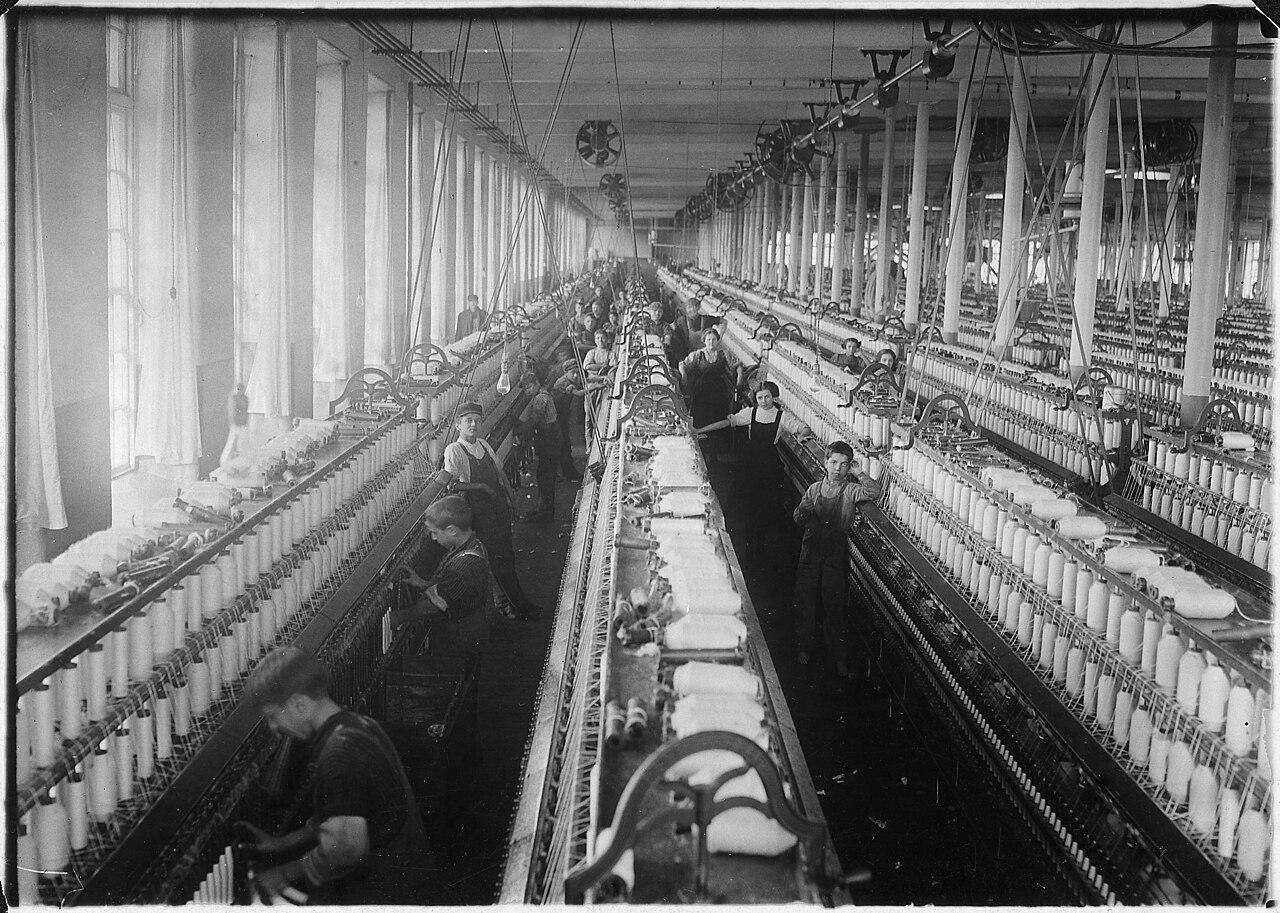
A fulling mill at Rowley, settled in 1639 by Yorkshire cloth-workers, began finishing local homespun around 1643 and is traditionally counted as the first in the English colonies. From that seed, Massachusetts grew the densest concentration of textile capital in the Western Hemisphere. Francis Cabot Lowell's Boston Manufacturing Company at Waltham (1814) was the first American mill to combine power spinning and power weaving under one roof. The planned industrial city named for him, begun in 1823 on the Merrimack, drew young women from New England farms and became the model—and the warning—for the company towns that followed. Lawrence rose downstream as Lowell's industrial sibling; its Wood Worsted Mill (1906) was advertised as the largest worsted mill in the world. Fall River passed Lowell as the state's leading cotton city by the late 1860s and by 1876 was second only to Manchester, England, as a cotton-cloth center; around 1920 it held more than one hundred mills and roughly four million spindles before New Bedford overtook it. The state's textile dominance lasted into the 1920s; by the 1950s most of its mills had moved south or closed, leaving behind brick monuments and a labor history that shaped the American workplace.
In memoriam: industrial tragedies
1860Pemberton Mill Collapse
88–145 dead
A five-story mill in Lawrence collapses and burns, blamed on defective cast-iron columns and overloading; no one is held criminally responsible.
1912Anna LoPizzo Killed
1
A striker is shot dead during a clash between strikers and police; strike leaders Joseph Ettor and Arturo Giovannitti, though not present, are charged as accessories and acquitted in November.
What remains
The Massachusetts mill cities reinvented themselves slowly. Lowell National Historical Park, established in 1978, preserves boarding houses, canals, and mill yards as one of the country's best-known industrial-heritage sites. Lawrence remains an immigrant city, layered with the descendants of the workers who held the picket lines of 1912. Fall River and New Bedford retain smaller apparel and textile businesses tied to immigrant communities from Portugal, Cape Verde, and Latin America.
Stories set here
Sources
- Government recordThe Mill Girls of Lowell. National Park Service, Lowell National Historical Park.
- ScholarshipThe Pemberton Mill Disaster. New England Historical Society.
- Government recordWood Worsted Mill, National Register of Historic Places nomination. National Park Service.
- ScholarshipThe Jewel Mill and Stone Arch Bridge. Historic Ipswich, 2023.