Labor · Chapter 17, 1960-1985
Remember Darlington
A mill closed to punish a union vote, and the Supreme Court case that followed.
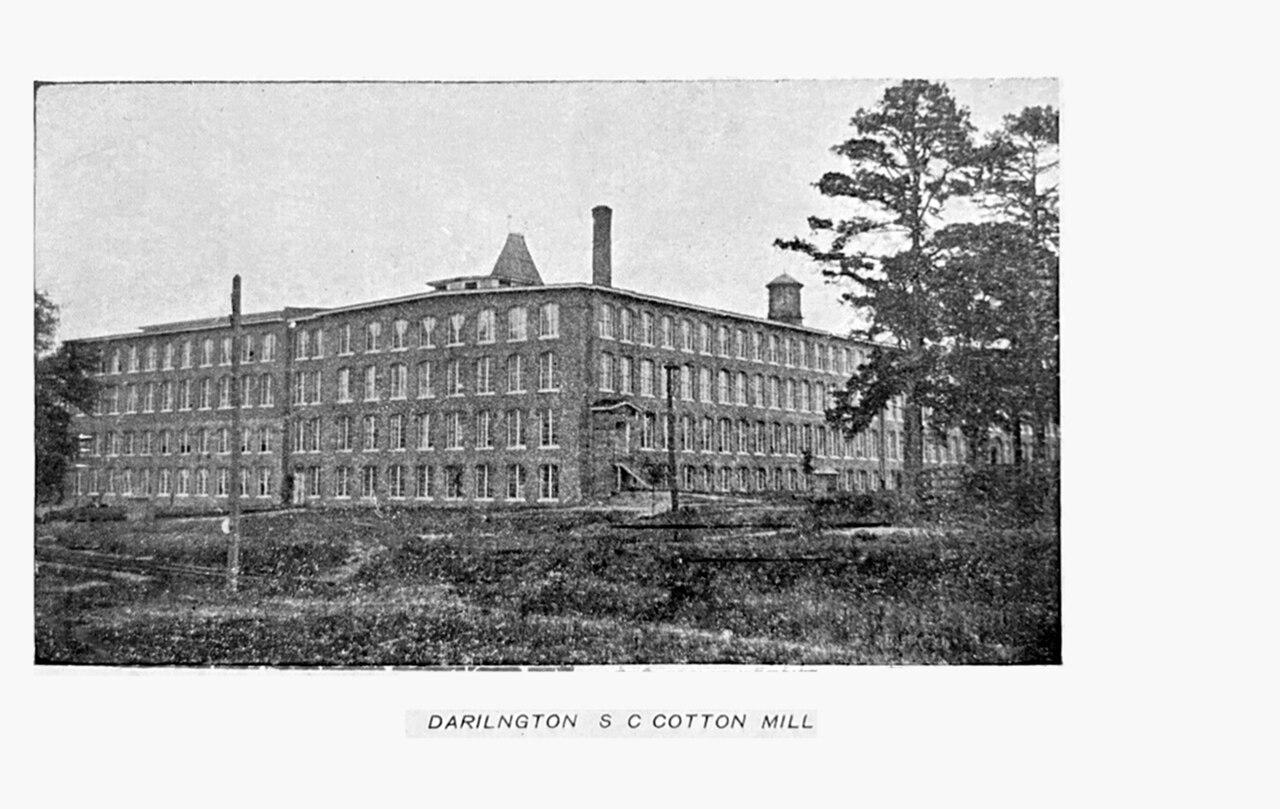
In March 1956 the Textile Workers Union of America began organizing the Darlington Manufacturing Company, a single cotton mill in Darlington, South Carolina, controlled through the selling house Deering Milliken by Roger Milliken and his family. The company threatened to close if the union won. On September 6, 1956, the union won the election by a narrow margin. Six days later the board voted to liquidate; the mill stopped running in November, and its machinery was sold at auction in December. About 550 workers lost their jobs, and Southern employers drew the lesson in two words: 'Remember Darlington.' The National Labor Relations Board found the closing an unfair labor practice driven by antiunion animus, but the Fourth Circuit refused to enforce its order. In Textile Workers Union v. Darlington Manufacturing Co., decided March 29, 1965, Justice John Marshall Harlan wrote for the Supreme Court that an employer has the absolute right to terminate its entire business for any reason, even hostility to a union, but that closing part of a business is unlawful if it is meant to chill unionism in the remaining plants and that effect is reasonably foreseeable. Because the Milliken interests operated many other mills, the case went back to the Board. It dragged on for fifteen more years. In December 1980, former workers and the heirs of those who had died accepted a $5 million back-pay settlement, ending the longest back-pay fight the NLRB had ever handled.
Sources
- Primary sourceTextile Workers Union v. Darlington Manufacturing Co., 380 U.S. 263 (1965). Justia U.S. Supreme Court Center, 1965.
- ScholarshipMilliken, Roger. South Carolina Encyclopedia.
- Primary sourceFormer workers get $5 million settlement. United Press International, 1980.
- Primary sourceThe Supreme Court: Limits on Labor & Management. Time, 1965.