AL · Textile era 1897-2006
Alabama
Mill Villages, Child Doffers, and the Summer of 1934
Alabama's textile industry grew from Northern capital and Southern boosterism at the turn of the twentieth century: the Lowell-based Merrimack Manufacturing Company built a mill and village in Huntsville in 1900, and Braxton Bragg Comer's Avondale Mills rose in Birmingham and Sylacauga. Lewis Hine's photographs of child workers in both companies' mills became indictments of Southern child labor, and in July 1934 Alabama millhands walked out weeks before the rest of the nation, setting the General Textile Strike in motion.
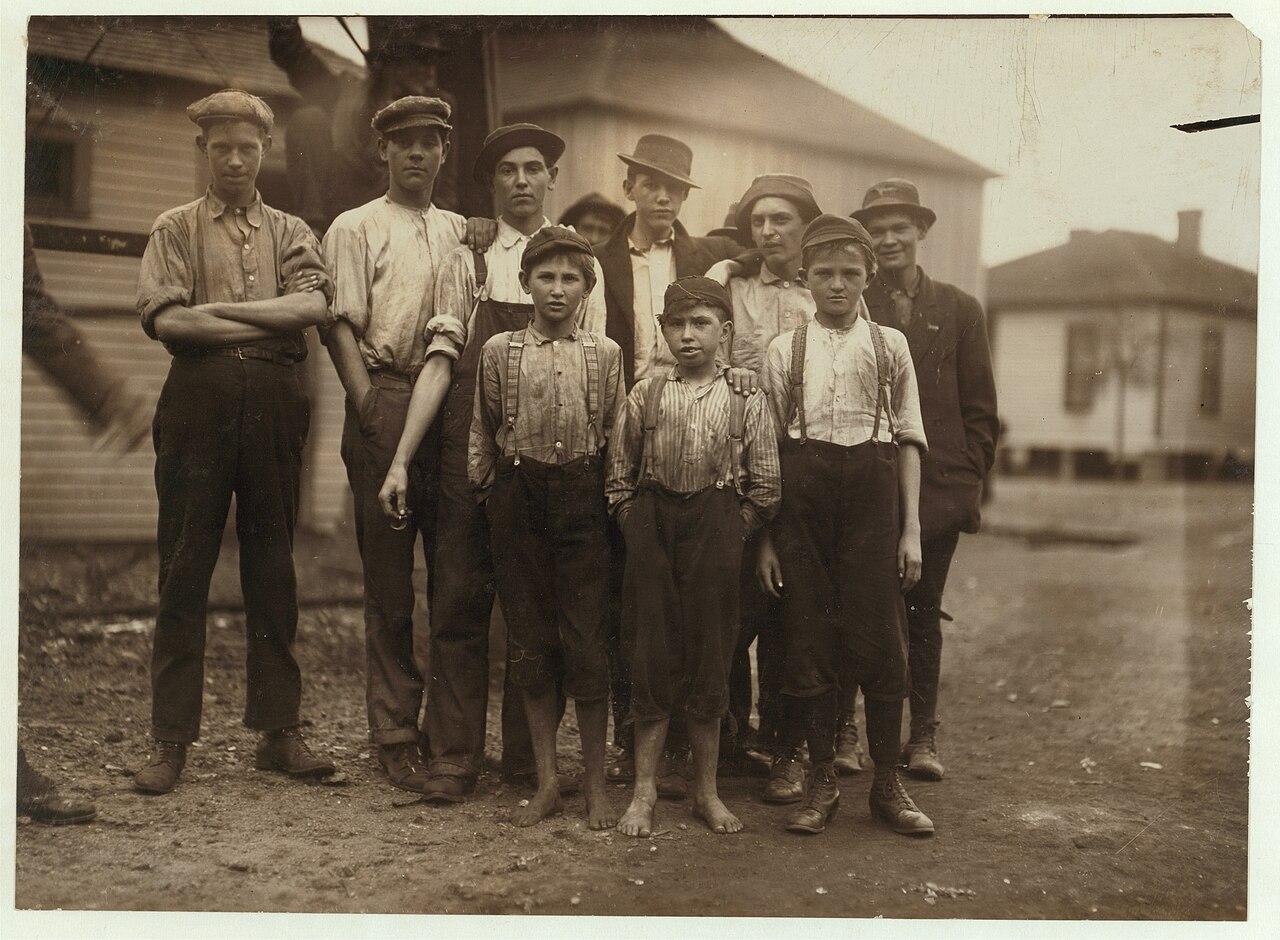
Alabama's mill era arrived with the new century. By 1900 an estimated 31 mills employed about 8,000 millhands, and growth accelerated as Northern investors sought cheaper labor and nearby cotton. In Huntsville, the Merrimack Manufacturing Company of Lowell, Massachusetts, broke ground on July 4, 1899, and opened its mill on July 9, 1900; a second mill in 1903 made it one of the largest in the South, and its village grew to 279 houses with a school, hospital, and company store. In Birmingham, Braxton Bragg Comer opened Avondale Mills in 1897. Comer, elected governor in 1906, opposed child-labor restrictions; one historian counted 187 children aged eight to fifteen among the mill's 774 workers in 1900. Lewis Hine photographed Avondale's doffer boys in November 1910 and Merrimack's child workers in December 1913. Under Donald Comer, Avondale expanded to Sylacauga with the Eva Jane plant in 1913 and practiced a paternalism of cheap rents, schools, and profit-sharing that earned loyalty and kept unions out. In 1934 Alabama moved first: workers at Gadsden's Dwight Manufacturing Company walked out on July 12, Guntersville followed on July 14, some 4,000 Huntsville millhands struck on July 16, and the next day the state's United Textile Workers leaders called for statewide action. As many as 23,000 of Alabama's 40,000 textile workers joined. Closures mounted from the 1970s and accelerated after NAFTA; Merrimack, renamed Huntsville Manufacturing, closed in 1989, and Avondale ceased operations in 2006.
In memoriam: industrial tragedies
2005Graniteville Chlorine Release
5 Avondale workers among the dead
On January 6 a Norfolk Southern train runs through a misaligned switch beside Avondale's Graniteville, South Carolina, plant and ruptures a chlorine tank car; five Avondale workers are among the dead, and the company never recovers.
What remains
Merrimack's mill buildings were razed in 1992, but the Merrimack Mill Village Historic District survives in Huntsville. Avondale Mills and its housing in Pell City, the Pepperell mill and village in Opelika, Tallassee Mills, and the West Point Manufacturing villages of Chambers County are listed on the National Register of Historic Places. Lewis Hine's Alabama photographs, held by the Library of Congress, remain among the most widely taught images of American child labor.
Sources
- ScholarshipLaura King. Textile Industry in Alabama. Encyclopedia of Alabama, 2022.
- ScholarshipLynn Price McWhorter. Avondale Mills. Encyclopedia of Alabama, 2009.
- ScholarshipJohn Salmond. General Textile Strike of 1934. Encyclopedia of Alabama, 2007.
- Archive / museumLewis Wickes Hine. Workers in Avondale Mills. Location: Birmingham, Alabama. Library of Congress, National Child Labor Committee Collection, 1910.