NY · Textile era 1827–Present
New York
The Needle Trades Capital
New York City became the national capital of the apparel trade in the late nineteenth century and remained so through the twentieth. Its garment industry—first on the Lower East Side, later in the Garment District on Manhattan's West Side—was the setting of the founding of the ILGWU (1900), the Uprising of the 20,000 (1909), the Triangle fire (1911), and the rise of a Jewish labor movement that reshaped national politics.
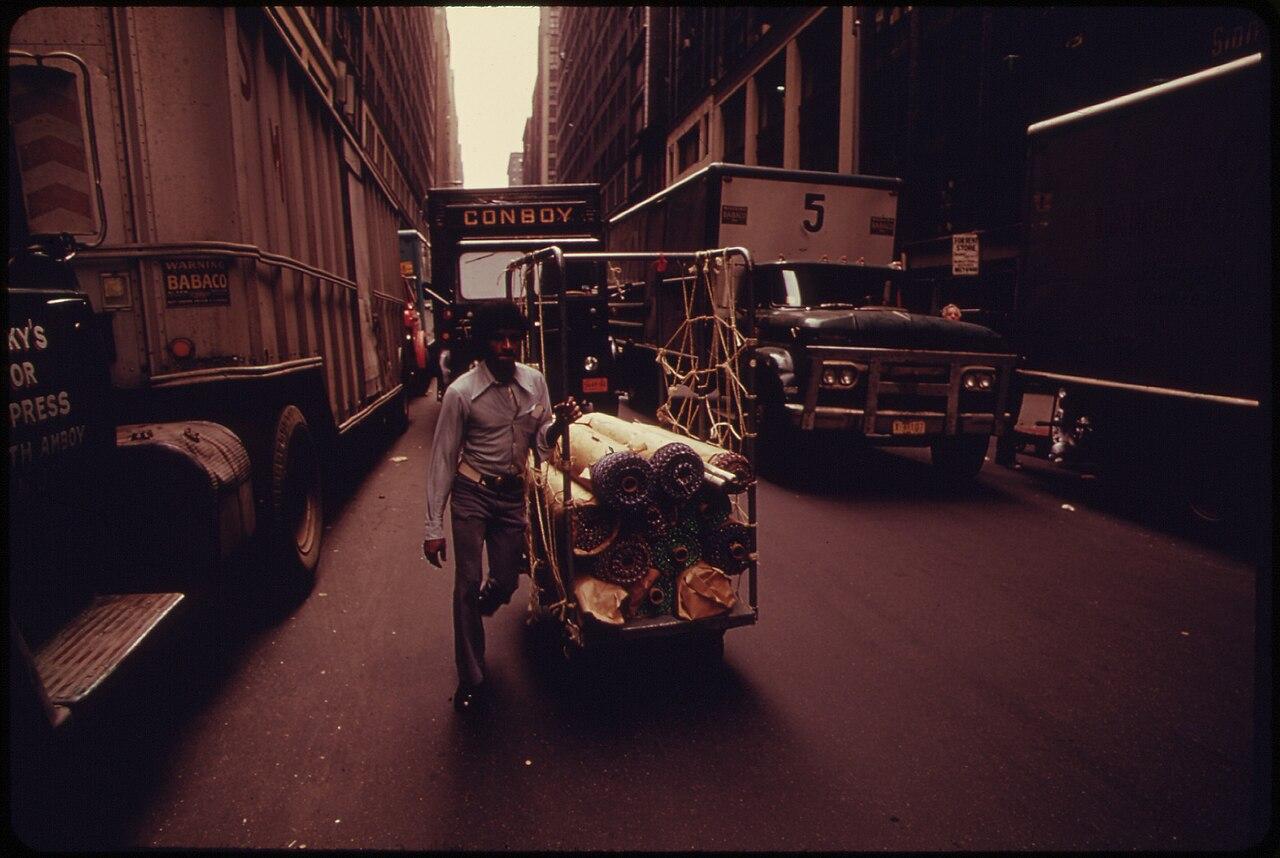
New York's textile history begins upstate, with the detachable-collar trade that made Troy the 'Collar City' and the cotton mills of the Harmony Manufacturing Company at Cohoes, but the state's defining contribution was the needle trade. Jewish tailors from the Russian Pale and Italian seamstresses concentrated on the Lower East Side from the 1880s onward, working in tenement sweatshops and lofts that produced more ready-to-wear clothing than any other city in the country. The Uprising of the 20,000 in 1909 was the largest strike by women in American history to that point; sixteen months later, the Triangle fire killed 146 garment workers. From the ashes came the New York State Factory Investigating Commission, the rise of reformers like Frances Perkins, and much of the architecture of the New Deal. In the 1920s the industry moved north to the blocks of Seventh Avenue in the West 30s, where at mid-century hundreds of thousands of New Yorkers worked in the apparel trades. Today the district has shrunk dramatically, but design studios, sample makers, and showrooms persist in the same high-rise lofts.
In memoriam: industrial tragedies
1911Triangle Fire
146
146 workers die in about eighteen minutes; a locked stairway door and a collapsing fire escape make it the deadliest workplace disaster in New York City history.
What remains
A permanent Triangle Fire Memorial, dedicated in October 2023, wraps the corner of the former Asch Building, now NYU's Brown Building. In 2018 the city rezoned the Garment District, removing most of the 1987 space-preservation rule while adding incentives and a city-backed building for garment production.
Sources
- ScholarshipRemembering the 1911 Triangle Factory Fire. Kheel Center, Cornell University ILR School.
- Government recordGarment Center District (N 180373 ZRM). New York City Department of City Planning, Zoning Resolution, 2018.
- ScholarshipGarment Center Rezoning Approved, but Core to Be Protected. WWD, 2018.
- ScholarshipAnnelise Orleck. Common Sense and a Little Fire: Women and Working-Class Politics in the United States, 1900–1965. University of North Carolina Press, 1995.