Biography · Chapter 04, 1790–1810
Moses Brown: The Quaker Capitalist
The abolitionist financier whose family fortune was tangled with slavery.
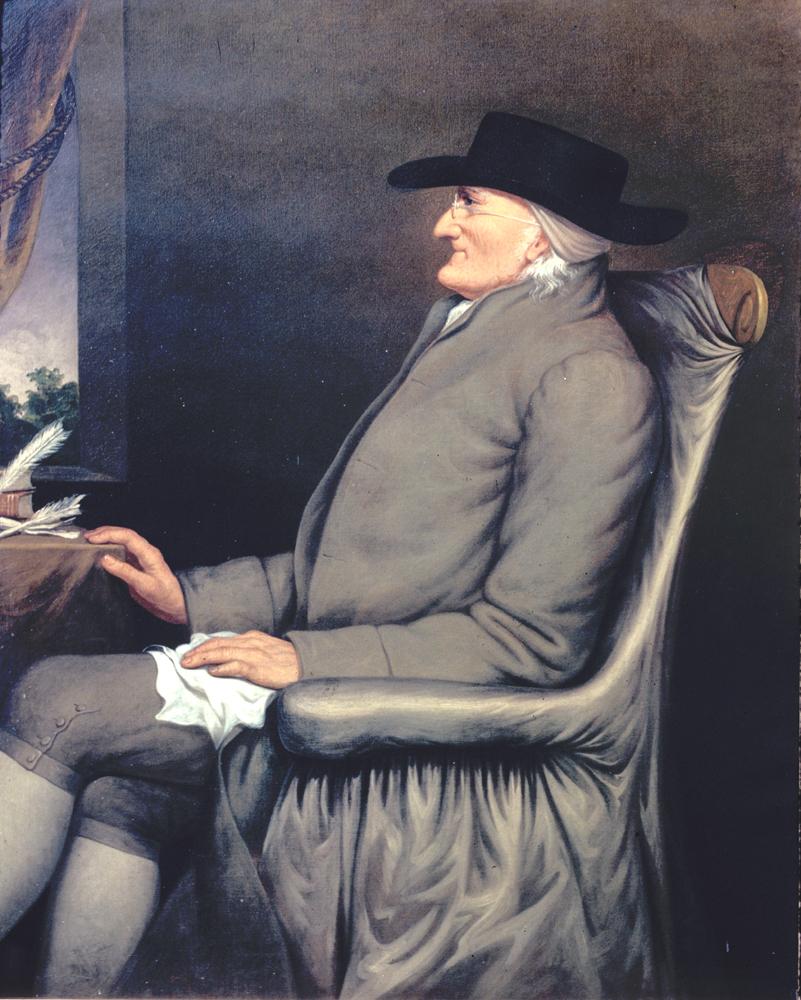
Moses Brown provided the capital, connections, and Quaker respectability that made Slater's enterprise possible, through the firm of his son-in-law William Almy and his cousin Smith Brown. His own history embodies the moral contradictions of early American industry. As a partner in Nicholas Brown & Company, he shared in a family business built on spermaceti candles, rum, and the Hope iron furnace—and in the 1764–65 voyage of the slave ship Sally, on which at least 109 of the 196 Africans purchased died. After his conversion to Quakerism he freed the people he held in slavery in November 1773 and became one of Rhode Island's leading abolitionists, publicly opposing his brother John, who defended the slave trade. Yet the mills he helped launch ran on cotton that, within a generation, came overwhelmingly from enslaved labor in the American South.
Sources
- ScholarshipSlavery and Justice: Report of the Brown University Steering Committee on Slavery and Justice. Brown University, 2006.
- ScholarshipThe Voyage of the Slave Ship Sally: Aftermath. Brown University Center for Digital Scholarship.
- Archive / museumMoses Brown Papers (MSS 313), finding aid. Rhode Island Historical Society.