Impact · Chapter 09, 1861–1865
Uniforms and the Black Soldier
When the right to wear blue was an argument for citizenship.
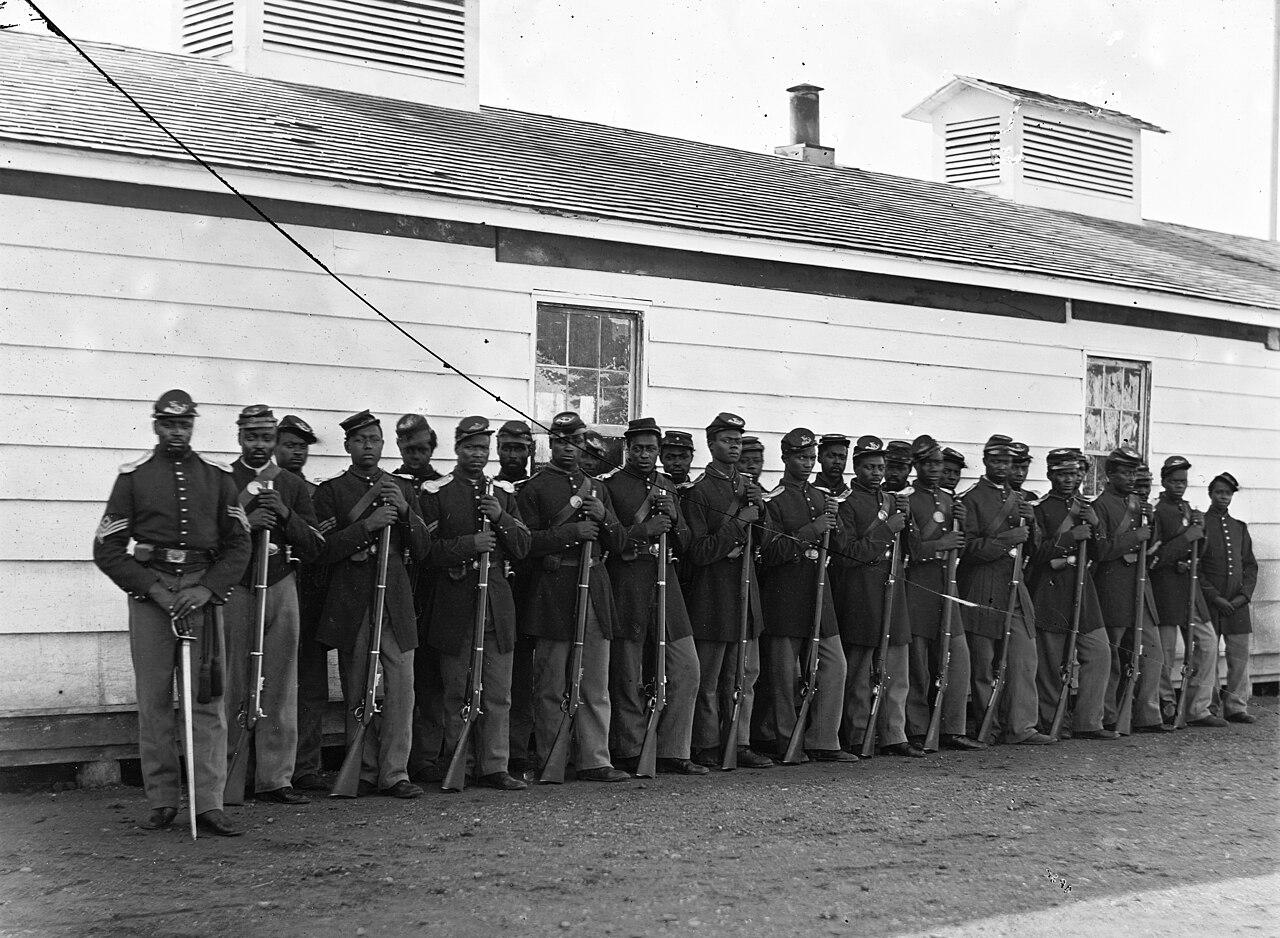
After the Emancipation Proclamation authorized the enlistment of Black men, about 179,000 served in the Union Army, most in the regiments of the United States Colored Troops, and thousands more in the Navy. They wore the same blue uniform as white soldiers but were paid ten dollars a month, minus a three-dollar clothing deduction, while white privates received thirteen dollars plus a clothing allowance. The 54th Massachusetts refused all pay rather than accept the lesser rate, serving for more than a year without wages until Congress equalized pay in June 1864. The uniform was thus not only clothing but argument: a public declaration that the wearer was a soldier of the United States, and therefore—as the Fourteenth Amendment would affirm in 1868—entitled to the rights of a citizen.
Sources
- Government recordBlack Soldiers in the U.S. Military During the Civil War. U.S. National Archives.
- ScholarshipJoseph T. Glatthaar. Forged in Battle: The Civil War Alliance of Black Soldiers and White Officers. Free Press, 1990.
- Primary sourceLuis F. Emilio. A Brave Black Regiment: History of the Fifty-Fourth Regiment of Massachusetts Volunteer Infantry, 1863–1865. Boston Book Company, 1891.