Labor · Chapter 14, 1934
The Flying Squadrons
Mobile labor organizing in the Piedmont South.
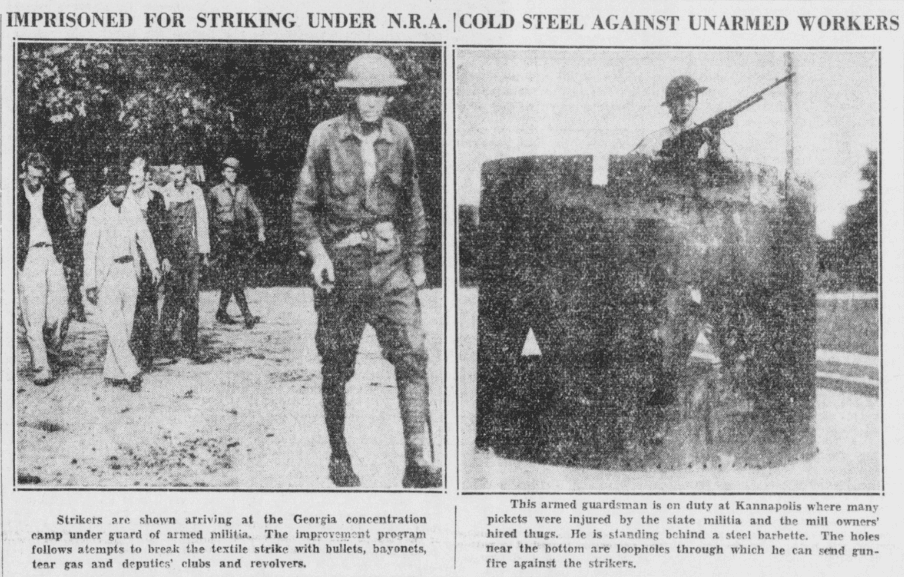
The geographic dispersion of Southern mill villages made conventional picketing nearly useless—each mill was its own isolated company town. Strikers in 1934 answered with 'flying squadrons': caravans of cars and trucks, sometimes dozens or even hundreds of vehicles, that rolled from mill to mill calling workers out. The squadrons spread the strike across the Piedmont within days. The response was swift: governors sent in the National Guard, troops guarded mill gates with machine guns, and squadron members were arrested on charges ranging from trespass to rioting. The squadrons were among the most inventive labor tactics of the decade, and they were broken within weeks.
Sources
- ScholarshipGeneral Textile Strike (1934). South Carolina Encyclopedia.
- ScholarshipThe Uprising of '34. West Georgia Textile Heritage Trail.
- ScholarshipJacquelyn Dowd Hall, James Leloudis, Robert Korstad, et al. Like a Family: The Making of a Southern Cotton Mill World. University of North Carolina Press, 1987.