Threading America · Study guide · Chapter 20
The Reshoring Frontier
Robotics, Digital Knitting, and the Technical-Textile Future · 2010–2020
Name
Class
Date
Guiding question
Can the United States rebuild a textile industry, and should national security be the reason to do it?
Part 1Before you read
- Read the guiding question. Write down what you already know, or think you know, about it.
- Predict one way your answer might change after reading the sources.
Part 2Read
Some textile and apparel production began to return to America—but it looked nothing like its predecessor. Automated, capital-intensive, and built around technical fabrics, the new U.S. mill employs hundreds where its predecessors employed thousands.
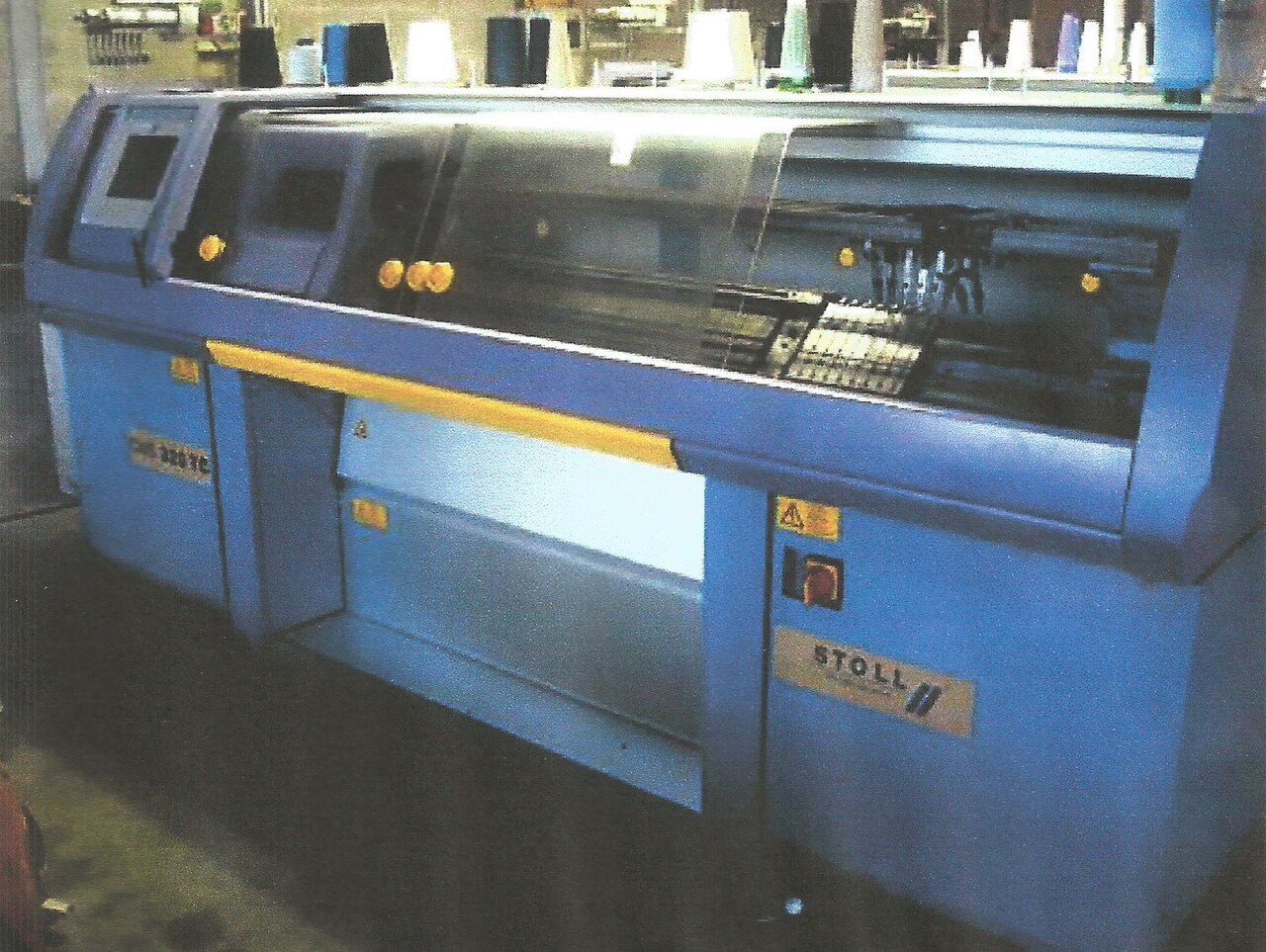
Much of what remains of American textile manufacturing focuses on technical and industrial fabrics: flame-resistant cloth for the military and first responders, medical textiles, automotive and filtration materials, and high-performance yarns. Reshoring arguments rest on speed to market, intellectual-property protection, and automation—including digital knitting machines that produce shaped panels or whole garments with little cutting waste. The most publicized experiment, Adidas's robot-assisted 'Speedfactory' plants in Ansbach, Germany (2016), and near Atlanta (2017), closed by April 2020, with the technology moved to suppliers in Asia. The pandemic of 2020 then forced a sudden test of whether what remained of the domestic supply chain could protect a nation.
Part 3Timeline
For each event, write one sentence on why it mattered.
- 2012
Knit Uppers
Nike's Flyknit and Adidas's Primeknit popularize engineered knit shoe uppers, produced on computerized flat-knitting machines with far less cutting waste.
- 2017
Speedfactory Atlanta
Adidas opens a robot-assisted footwear plant near Atlanta, following its 2016 Speedfactory in Ansbach, Germany.
- 2019
Speedfactory Closes
In November, Adidas announces it will end production at both Speedfactories by April 2020 and move the technology to suppliers in Vietnam and China.
- 2020
The PPE Pivot
Within weeks of the pandemic's onset, a consortium of U.S. textile and apparel firms retools to make cloth face coverings and medical gowns for the federal government.
Part 4Key terms
Write the letter of the matching definition beside each term.
- Berry Amendment
- Reshoring
- Functional fabrics
- Public-private partnership
- Supply chain
- A.The full sequence of businesses that grow, make, move, and sell a product, from raw material to customer.
- B.A federal law requiring the Department of Defense to buy clothing, textiles, and certain other items made in the United States.
- C.Textiles engineered to do more than cover the body, such as sensing, storing energy, or changing color.
- D.Bringing manufacturing that had moved overseas back to the home country.
- E.A project in which government agencies and private companies share costs, risks, and goals.
Part 5Primary source workshop
These excerpts are quoted word for word, including the spelling and language of their time.
Document A
The Berry Amendment, 10 U.S.C. § 4862
U.S. Congress, First enacted 1941; current codification
(a) Requirement.—Except as provided in subsections (c) through (h), funds appropriated or otherwise available to the Department of Defense may not be used for the procurement of an item described in subsection (b) if the item is not grown, reprocessed, reused, or produced in the United States. (b) Covered Items.—... (B) clothing and the materials and components thereof, other than sensors, electronics, or other items added to, and not normally associated with, clothing (and the materials and components thereof); ... (D) cotton and other natural fiber products, woven silk or woven silk blends, spun silk yarn for cartridge cloth, synthetic fabric or coated synthetic fabric (including all textile fibers and yarns that are for use in such fabrics), canvas products, or wool ...
Context: First passed on the eve of World War II, the Berry Amendment requires the military to buy American-made textiles and clothing. It guarantees a domestic market that has kept many U.S. mills and sewing plants open.
Source: 10 U.S. Code § 4862—Requirement to buy certain articles from American sources; exceptions. Legal Information Institute, Cornell Law School. https://www.law.cornell.edu/uscode/text/10/4862
- Historical context
- What was happening when and where this was created?
- Intended audience
- Who was meant to read, hear, or see it?
- Purpose
- Why was it created? What did its creator want to happen?
- Point of view
- Whose perspective does it show, and whose is missing?
Document B
DoD Announces Award of New Revolutionary Fibers and Textiles Manufacturing Innovation Hub
U.S. Department of Defense, April 1, 2016
The institute will bring together nontraditional partners to integrate fibers and yarns with integrated circuits, LEDs, solar cells, and other capabilities to create textiles and fabrics that can see, hear, sense, communicate, store energy, regulate temperature, monitor health, change color, and more. For example, the institute will pair the likes of leading audio equipment maker Bose, computer chip maker Intel, and nanofiber manufacturer FibeRio with textile manufacturers and textile users like Warwick Mills, Buhler Yarns, and New Balance.
Context: The Pentagon announced Advanced Functional Fabrics of America (AFFOA), a public-private institute led by MIT in Cambridge, Massachusetts. It was part of the Manufacturing USA network meant to rebuild American production through new technology.
Source: DoD Announces Award of New Revolutionary Fibers and Textiles Manufacturing Innovation Hub in Cambridge, Massachusetts. U.S. Department of Defense. 2016. https://www.defense.gov/News/Releases/Release/Article/710462/dod-announces-award-of-new-revolutionary-fibers-and-textiles-manufacturing-inno/
- Historical context
- What was happening when and where this was created?
- Intended audience
- Who was meant to read, hear, or see it?
- Purpose
- Why was it created? What did its creator want to happen?
- Point of view
- Whose perspective does it show, and whose is missing?
Corroborate
Compare "The Berry Amendment, 10 U.S.C. § 4862" (U.S. Congress, First enacted 1941; current codification) with "DoD Announces Award of New Revolutionary Fibers and Textiles Manufacturing Innovation Hub" (U.S. Department of Defense, April 1, 2016). Where do they agree, where do they differ, and what might explain the differences?
Part 6Discuss
- Which textile items does the Berry Amendment require the Department of Defense to buy from U.S. producers?
- A Pentagon press release is written to promote a program. Which claims in the AFFOA announcement would you want to verify, and how would you do it?
- How do the Berry Amendment and AFFOA represent two different strategies, guaranteed government demand and investment in innovation, for keeping textile manufacturing in the United States?
- Should ordinary consumers pay more for U.S.-made clothing, the way the military does? Argue, considering jobs, prices, and environmental impact.
Part 7Write: claim, evidence, reasoning
Answer the guiding question in one paragraph, using the documents and the reading.
| Claim | Answers the guiding question directly in one or two sentences. |
|---|---|
| Evidence | Cites at least two primary sources by name and at least one fact from the reading. |
| Reasoning | Explains how each piece of evidence supports the claim. |
| Sourcing | Notes at least one limitation of a source: who made it, when, and why. |
Part 8Exit ticket
- In one sentence, how would you answer the guiding question now?
- What piece of evidence would most change your mind?
Keep exploring
- Innovation
The Automated Factory
Robotics, digital knitting, and the limits of the 'factory of the future.'
https://www.threadingamerica.com/topics/automated-loom
- Biography
The Direct-to-Consumer Revolution
How the internet opened a niche for small American-made apparel brands.
https://www.threadingamerica.com/topics/dtc-revolution
- Impact
The PPE Pivot of 2020
What was left of the U.S. textile base, in a crisis.
https://www.threadingamerica.com/topics/ppe-pivot
Places: North Carolina