Threading America · Teacher edition · Chapter 19
The Great De-Industrialization
NAFTA, China, and the Death of Mill Towns · 1980–2005
Guiding question
Was the collapse of American textile jobs the unavoidable price of progress, or the result of policy choices that could have gone differently?
Teacher notes
Objectives
Students will be able to:
- Place the chapter's key events, from 1994 to 2005, in order and explain why each mattered.
- Analyze 2 primary sources for context, audience, purpose, and point of view.
- Use the chapter's vocabulary accurately: NAFTA, Offshoring, Multi-Fiber Arrangement, Trade Adjustment Assistance, Automation.
- Write an evidence-based argument that answers the guiding question.
AP U.S. History
Period 9 (1980–present)
Standards
| Framework | Code | Students |
|---|---|---|
| C3 Framework | D2.His.1.9-12 | Explain how events were shaped by their time and place and by broader historical contexts. |
| C3 Framework | D2.His.4.9-12 | Analyze the factors that shaped people's perspectives in different eras. |
| C3 Framework | D2.His.10.9-12 | Identify the limitations of different kinds of historical evidence. |
| C3 Framework | D2.His.16.9-12 | Integrate evidence from multiple sources into a reasoned argument about the past. |
| Common Core | RH.9-10.1 / RH.11-12.1 | Cite specific textual evidence from primary and secondary sources. |
| Common Core | RH.9-10.4 / RH.11-12.4 | Determine the meaning of words and phrases as used in historical texts. |
| Common Core | RH.9-10.6 / RH.11-12.6 | Compare and evaluate authors' points of view on the same events. |
| Common Core | WHST.9-10.1 / WHST.11-12.1 | Write arguments focused on discipline-specific content. |
Pacing
Day 1 (50 minutes)
- 5 minBefore you read: guiding question and predictions
- 15 minReading and timeline
- 25 minPrimary source workshop (2 sources)
- 5 minExit ticket
Day 2 (50 minutes)
- 5 minKey terms matching
- 20 minCorroboration and discussion questions
- 25 minClaim, evidence, reasoning paragraph
Teaching hard history
- Never use role-play or simulations of slavery, violence, or other atrocities. Ask students to analyze the testimony and documented choices of real people instead.
- Pair the voices of the people who did the work (enslaved people, children, strikers, immigrants) with the voices of those who profited, and ask whose records survived and why.
- Primary sources are reproduced word for word, including period language and dialect transcribed by interviewers. Before reading, discuss who recorded each source and for whom. Do not ask students to perform dialect aloud.
- Tell students before they see images of injured, captive, or dead people, and give them a way to step back.
- Distinguish what the sources show from what they cannot prove. Several stories in this exhibit correct popular myths; name the myth, then the evidence.
Guidance follows Learning for Justice, "Teaching Hard History: American Slavery" (Southern Poverty Law Center, 2018).
Answer key: key terms
NAFTA: C · Offshoring: E · Multi-Fiber Arrangement: A · Trade Adjustment Assistance: D · Automation: B
Part 1Before you read
- Read the guiding question. Write down what you already know, or think you know, about it.
- Predict one way your answer might change after reading the sources.
Part 2Read
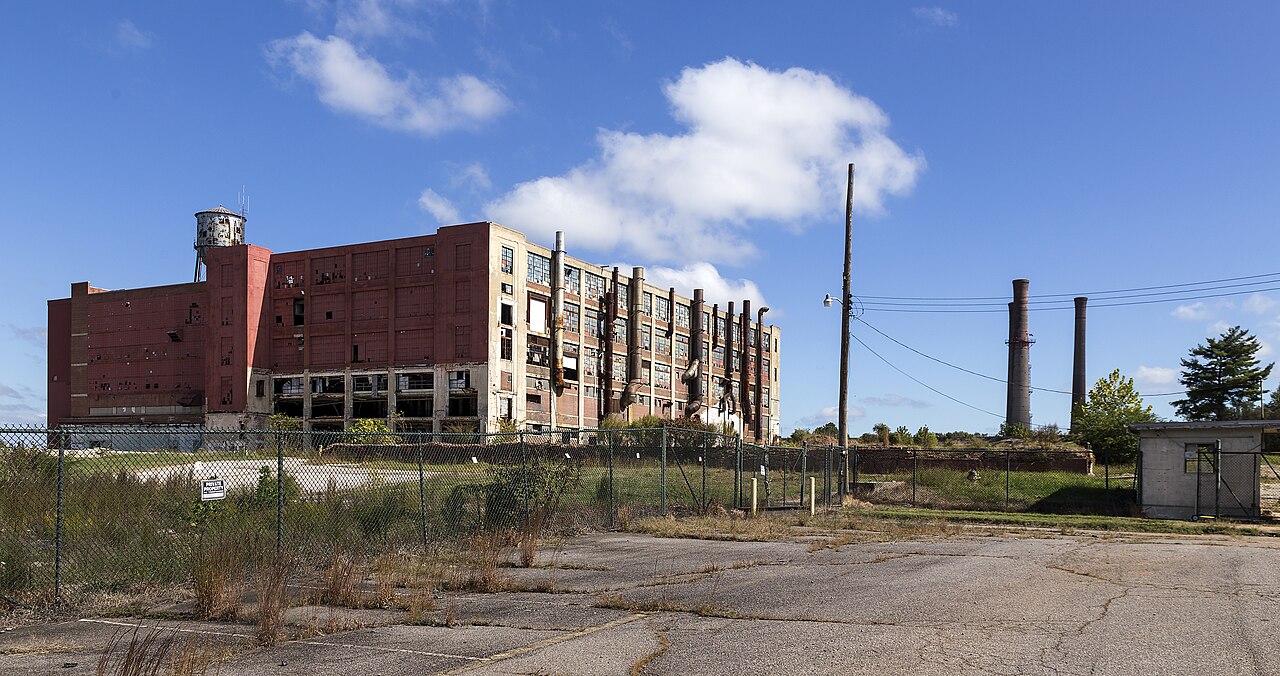
The end of the American mill. Globalization, trade agreements, and relentless cost competition emptied entire regions of the industry that had built them. The communities left behind became a defining political force in the twenty-first century.
The closing decades of the twentieth century brought brutal consolidation: hundreds of mills shut, hundreds of thousands of jobs disappeared or moved to lower-cost countries, and towns that had centered on a single mill for a century were hollowed out. The North American Free Trade Agreement (1994) accelerated the trend; China's entry into the World Trade Organization (2001) intensified it; and the end of the last import quotas on January 1, 2005, removed the final layer of protection. By the 2010s, roughly ninety-seven percent of the apparel sold in the United States was imported. The consequences of this loss—depopulation, collapsing local tax bases, addiction, and a deep wound in civic life—continue to reshape American politics.
Part 3Timeline
Students write one sentence on why each event mattered.
- 1994
NAFTA Takes Effect
The North American Free Trade Agreement phases out tariffs and quotas on qualifying apparel and textiles among the U.S., Mexico, and Canada, accelerating offshoring.
- 2001
China Joins the WTO
China's accession in December sets the stage for a surge of low-cost textile and apparel exports once quotas end.
- 2003
The Pillowtex Collapse
On July 30, Pillowtex—heir to Cannon Mills—shuts its plants and eliminates thousands of jobs, more than four thousand in the Kannapolis area alone: the largest single layoff in North Carolina history.
- 2005
The Quotas End
The WTO Agreement on Textiles and Clothing completes the ten-year phase-out of the Multi-Fibre Arrangement's quotas; Chinese imports surge so sharply that the U.S. imposes temporary safeguards.
Part 4Key terms
- NAFTA (answer C)
- The North American Free Trade Agreement, which removed most tariffs among the United States, Canada, and Mexico beginning in 1994.
- Offshoring (answer E)
- Moving production or jobs to another country, usually to lower costs.
- Multi-Fiber Arrangement (answer A)
- An international system of quotas, from 1974 to 2004, that limited how much clothing and textiles countries could export.
- Trade Adjustment Assistance (answer D)
- A federal program that offers retraining and income support to workers who lose jobs because of foreign trade.
- Automation (answer B)
- Using machines and computers to do work that people once did by hand.
Part 5Primary source workshop
These excerpts are quoted word for word, including the spelling and language of their time.
Document A
Remarks on Signing the North American Free Trade Agreement Implementation Act
William J. Clinton, December 8, 1993
NAFTA will tear down trade barriers between our three nations. It will create the world's largest trade zone and create 200,000 jobs in this country by 1995 alone. ... For two decades, most people have worked harder for less. Seemingly secure jobs have been lost. ... productivity means the same people can produce more or, very often, that fewer people can produce more. This is the world we face. We cannot stop global change.
Context: Clinton signed NAFTA after a close congressional fight in which textile-state representatives warned of mill closings. Combined with the 2005 end of global textile quotas, the agreement accelerated the move of apparel and textile production abroad.
Source: William J. Clinton. Remarks on Signing the North American Free Trade Agreement Implementation Act. The American Presidency Project, UC Santa Barbara. 1993. https://www.presidency.ucsb.edu/documents/remarks-signing-the-north-american-free-trade-agreement-implementation-act
- Historical context
- What was happening when and where this was created?
- Intended audience
- Who was meant to read, hear, or see it?
- Purpose
- Why was it created? What did its creator want to happen?
- Point of view
- Whose perspective does it show, and whose is missing?
Document B
Interview with Janet Patterson, Pillowtex Worker
Janet Patterson, interviewed by PBS NewsHour, September 23, 2003
I started five days after I turned 18. I was the first black hemmer in the sheet department ... It's like they took everything from us. And going to try and fill out applications, the only thing you can put on there is "Pillowtex, 38 years." ... It hurts.
Context: Patterson lost her job when Pillowtex, maker of Cannon and Fieldcrest towels and sheets, closed in July 2003, eliminating about 4,800 jobs in Kannapolis, North Carolina, and surrounding plants. It was the largest single layoff in North Carolina history.
Source: Textile Jobs in Decline. PBS NewsHour. 2003. https://www.pbs.org/newshour/show/textile-jobs-in-decline
- Historical context
- What was happening when and where this was created?
- Intended audience
- Who was meant to read, hear, or see it?
- Purpose
- Why was it created? What did its creator want to happen?
- Point of view
- Whose perspective does it show, and whose is missing?
Corroborate
Compare "Remarks on Signing the North American Free Trade Agreement Implementation Act" (William J. Clinton, December 8, 1993) with "Interview with Janet Patterson, Pillowtex Worker" (Janet Patterson, interviewed by PBS NewsHour, September 23, 2003). Where do they agree, where do they differ, and what might explain the differences?
Part 6Discuss
- What did Clinton predict NAFTA would do for American jobs, and what did he say about productivity?
- Clinton was persuading a divided Congress and public; Patterson spoke to a television reporter after her plant closed. How do their situations affect what each emphasizes?
- Clinton said that "fewer people can produce more." Using the chapter narrative, how much of textile job loss came from trade, and how much from automation?
- The United States is again using tariffs to protect manufacturing. Based on the textile experience, should government shield industries from global competition? Argue.
Part 7Write: claim, evidence, reasoning
Answer the guiding question in one paragraph, using the documents and the reading.
| Claim | Answers the guiding question directly in one or two sentences. |
|---|---|
| Evidence | Cites at least two primary sources by name and at least one fact from the reading. |
| Reasoning | Explains how each piece of evidence supports the claim. |
| Sourcing | Notes at least one limitation of a source: who made it, when, and why. |
Part 8Exit ticket
- In one sentence, how would you answer the guiding question now?
- What piece of evidence would most change your mind?
Keep exploring
- Impact
The Kannapolis Collapse
When the world's best-known towel company closed in a single day.
https://www.threadingamerica.com/topics/kannapolis-collapse
- Impact
The End of the Quotas
The night the quotas died.
https://www.threadingamerica.com/topics/the-mfa-ends
- Material Culture
Ghosts of the Mill Town
What remains in the buildings the looms left behind.
https://www.threadingamerica.com/topics/ghosts-of-the-mill-town
Places: North Carolina, South Carolina, Georgia, Virginia, Alabama, Tennessee