Threading America · Teacher edition · Chapter 21
The Circular Reckoning
Fast Fashion, Sustainability Law, and the Next Fiber · 2020–Present
Guiding question
Who should pay the true cost of fast fashion: brands, consumers, governments, or the workers who already do?
Teacher notes
Objectives
Students will be able to:
- Place the chapter's key events, from 2021 to 2026, in order and explain why each mattered.
- Analyze 2 primary sources for context, audience, purpose, and point of view.
- Use the chapter's vocabulary accurately: Fast fashion, Circular economy, Extended producer responsibility, Joint liability, Wage theft.
- Write an evidence-based argument that answers the guiding question.
AP U.S. History
Period 9 (1980–present)
Standards
| Framework | Code | Students |
|---|---|---|
| C3 Framework | D2.His.1.9-12 | Explain how events were shaped by their time and place and by broader historical contexts. |
| C3 Framework | D2.His.4.9-12 | Analyze the factors that shaped people's perspectives in different eras. |
| C3 Framework | D2.His.10.9-12 | Identify the limitations of different kinds of historical evidence. |
| C3 Framework | D2.His.16.9-12 | Integrate evidence from multiple sources into a reasoned argument about the past. |
| Common Core | RH.9-10.1 / RH.11-12.1 | Cite specific textual evidence from primary and secondary sources. |
| Common Core | RH.9-10.4 / RH.11-12.4 | Determine the meaning of words and phrases as used in historical texts. |
| Common Core | RH.9-10.6 / RH.11-12.6 | Compare and evaluate authors' points of view on the same events. |
| Common Core | WHST.9-10.1 / WHST.11-12.1 | Write arguments focused on discipline-specific content. |
Pacing
Day 1 (50 minutes)
- 5 minBefore you read: guiding question and predictions
- 15 minReading and timeline
- 25 minPrimary source workshop (2 sources)
- 5 minExit ticket
Day 2 (50 minutes)
- 5 minKey terms matching
- 20 minCorroboration and discussion questions
- 25 minClaim, evidence, reasoning paragraph
Teaching hard history
- Never use role-play or simulations of slavery, violence, or other atrocities. Ask students to analyze the testimony and documented choices of real people instead.
- Pair the voices of the people who did the work (enslaved people, children, strikers, immigrants) with the voices of those who profited, and ask whose records survived and why.
- Primary sources are reproduced word for word, including period language and dialect transcribed by interviewers. Before reading, discuss who recorded each source and for whom. Do not ask students to perform dialect aloud.
- Tell students before they see images of injured, captive, or dead people, and give them a way to step back.
- Distinguish what the sources show from what they cannot prove. Several stories in this exhibit correct popular myths; name the myth, then the evidence.
Guidance follows Learning for Justice, "Teaching Hard History: American Slavery" (Southern Poverty Law Center, 2018).
Answer key: key terms
Fast fashion: B · Circular economy: A · Extended producer responsibility: D · Joint liability: E · Wage theft: C
Part 1Before you read
- Read the guiding question. Write down what you already know, or think you know, about it.
- Predict one way your answer might change after reading the sources.
Part 2Read
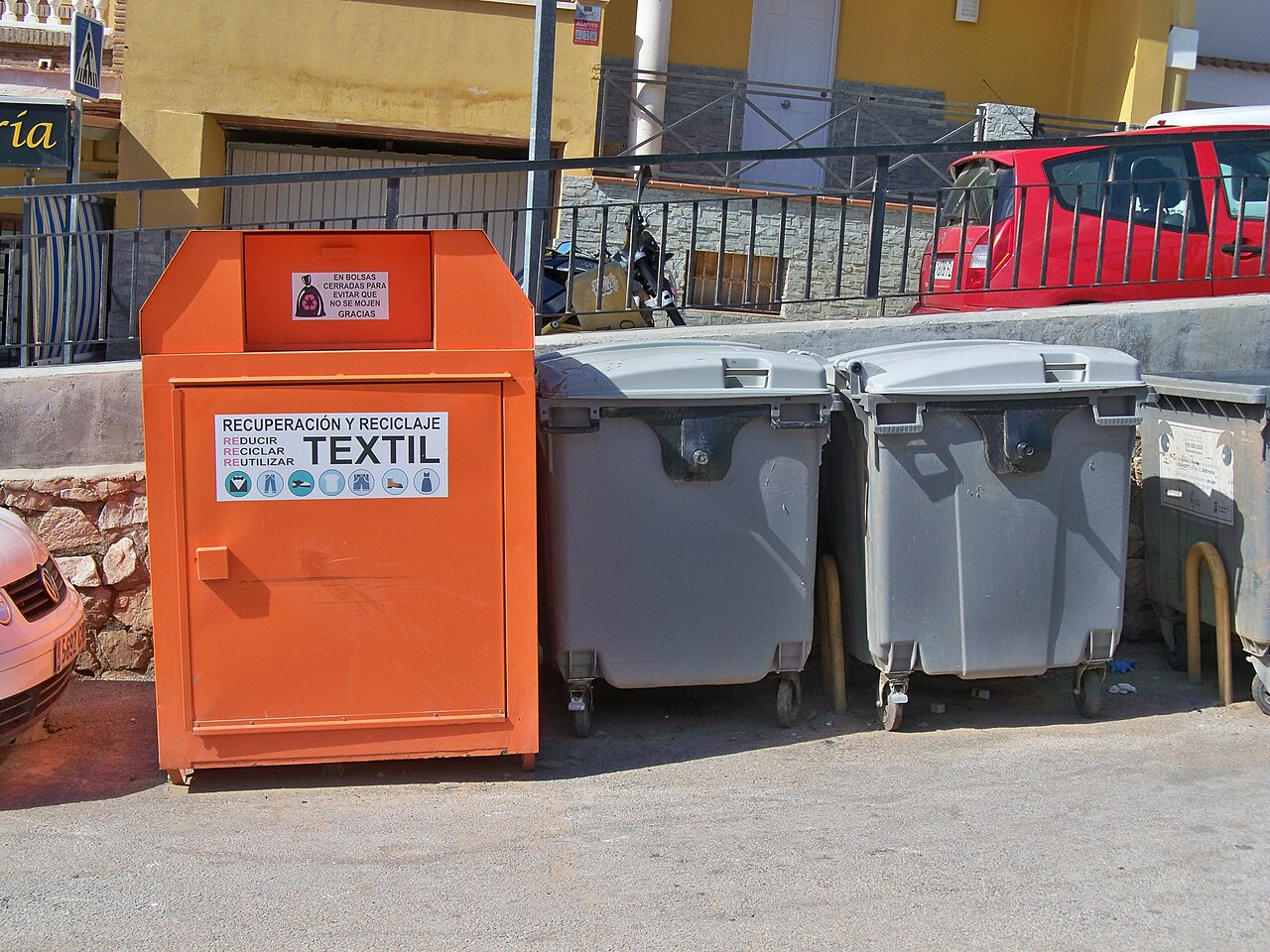
The third decade of the twenty-first century has forced the industry to confront its full bill: microplastic pollution, documented labor abuses in ultra-fast fashion, and growing consumer and regulatory pressure against disposable clothing. The textile economy is being contested in legislatures, courts, and laboratories.
The post-pandemic era has crystallized a reckoning two decades in the making. Ultra-fast-fashion platforms such as Shein, adding thousands of new styles to their sites each day, have drawn investigations into working hours, product safety, and copying, and have prompted legislative responses in Europe and the United States. The European Union adopted a strategy in 2022 for sustainable and circular textiles by 2030. In New York, a proposed Fashion Act that would require large brands to map and disclose their supply chains has been introduced in every session since 2022 but had not passed as of 2026. Resale platforms have grown rapidly, and industry forecasts project further gains. Biomaterials companies are experimenting with materials grown from mycelium and fermented proteins—though several high-profile ventures have stalled. The next chapter of the four-century American textile story is being written in real time.
Part 3Timeline
Students write one sentence on why each event mattered.
- 2021
The Shein Investigation
In November, the Swiss NGO Public Eye reports seventy-five-hour work weeks, no contracts, and missing emergency exits at workshops supplying Shein.
- 2022
The New York Fashion Act Introduced
In January, legislation is introduced in Albany to require large fashion companies to map at least half of their supply chains and set environmental targets; it is reintroduced in later sessions without passage.
- 2022
EU Strategy for Sustainable and Circular Textiles
On March 30, the European Commission adopts a strategy setting a 2030 vision of durable, repairable, recyclable textiles, to be pursued through binding measures such as ecodesign rules.
- 2023
Mylo Paused
Bolt Threads halts production of Mylo, its mycelium-based leather alternative backed by Stella McCartney, Adidas, Kering, and others, after failing to secure funding.
- 2026
Shein Lists in Hong Kong
After abandoning earlier listing plans in New York and London, Shein completes a Hong Kong IPO on September 1 at a valuation far below its 2022 private-market peak.
Part 4Key terms
- Fast fashion (answer B)
- A business model that rapidly copies trends and produces large amounts of cheap clothing meant to be worn briefly.
- Circular economy (answer A)
- An economic system designed to keep materials in use through repair, reuse, and recycling instead of throwing them away.
- Extended producer responsibility (answer D)
- Laws requiring manufacturers to pay for collecting, recycling, or disposing of their products after customers are done with them.
- Joint liability (answer E)
- A legal rule that makes a brand share responsibility for violations committed by the contractors it hires.
- Wage theft (answer C)
- When employers fail to pay workers wages they are legally owed, for example by paying below minimum wage or skipping overtime.
Part 5Primary source workshop
These excerpts are quoted word for word, including the spelling and language of their time.
Document A
Employment Injury Insurance in Bangladesh (statement)
International Labour Organization, January 29, 2024
On 24 April 2013, the collapse of the Rana Plaza building in Dhaka, Bangladesh, which housed five garment factories, killed at least 1,132 people and injured more than 2,500. ... These disasters, among the worst industrial accidents on record, awoke the world to the poor working conditions faced by workers in the ready-made garment sector in Bangladesh.
Context: The UN's labor agency reflects on the factory disasters that exposed the human cost of cheap clothing made for Western brands. After Rana Plaza, brands and unions signed the legally binding Bangladesh Accord on Fire and Building Safety.
Source: Employment injury insurance in Bangladesh: Bridging social security cases. International Labour Organization. 2024. https://www.ilo.org/resource/statement/employment-injury-insurance-bangladesh-bridging-social-security-cases
- Historical context
- What was happening when and where this was created?
- Intended audience
- Who was meant to read, hear, or see it?
- Purpose
- Why was it created? What did its creator want to happen?
- Point of view
- Whose perspective does it show, and whose is missing?
Document B
Senate Bill 62: Garment Worker Protection Act
California State Legislature, September 27, 2021
Adding to this problem is the peculiar way in which garment workers are paid—by the piece. Not only does utilizing the piece rate enable, and even justify, subminimum wage, but it also creates unsafe working conditions, as garment workers are forced to constantly work as quickly as possible to complete as many items as possible in a workday. ... To ensure that employees are paid for all hours worked, an employee engaged in the performance of garment manufacturing shall not be paid by the piece or unit, or by the piece rate.
Context: California, home to the largest garment manufacturing workforce in the United States, banned piece-rate pay in garment work and made brands jointly liable for wage theft by contractors. It was the first U.S. law of its kind.
Source: SB-62 Employment: garment manufacturing (2021–2022). California Legislative Information. 2021. https://leginfo.legislature.ca.gov/faces/billTextClient.xhtml?bill_id=202120220SB62
- Historical context
- What was happening when and where this was created?
- Intended audience
- Who was meant to read, hear, or see it?
- Purpose
- Why was it created? What did its creator want to happen?
- Point of view
- Whose perspective does it show, and whose is missing?
Corroborate
Compare "Employment Injury Insurance in Bangladesh (statement)" (International Labour Organization, January 29, 2024) with "Senate Bill 62: Garment Worker Protection Act" (California State Legislature, September 27, 2021). Where do they agree, where do they differ, and what might explain the differences?
Part 6Discuss
- According to the ILO, what happened at Rana Plaza and the Tazreen factory?
- California's legislature argues that piece rates are dangerous as well as unfair. What reasoning does SB 62 give for that claim?
- Compare SB 62's ban on piece rates with Clara Lemlich's 1909 complaints and Sarah Bagley's 1845 testimony. What has changed for garment workers, and what has not?
- New laws in several states make brands pay for collecting and recycling used textiles. Is it fairer to regulate brands, tax consumers, or rely on voluntary resale and recycling programs? Argue.
Part 7Write: claim, evidence, reasoning
Answer the guiding question in one paragraph, using the documents and the reading.
| Claim | Answers the guiding question directly in one or two sentences. |
|---|---|
| Evidence | Cites at least two primary sources by name and at least one fact from the reading. |
| Reasoning | Explains how each piece of evidence supports the claim. |
| Sourcing | Notes at least one limitation of a source: who made it, when, and why. |
Part 8Exit ticket
- In one sentence, how would you answer the guiding question now?
- What piece of evidence would most change your mind?
Keep exploring
- Tragedy
The Shein Reckoning
Inside the platform that adds thousands of new styles a day.
https://www.threadingamerica.com/topics/shein-reckoning
- Impact
The New York Fashion Act
A major U.S. attempt to legislate apparel supply chains—still unpassed.
https://www.threadingamerica.com/topics/ny-fashion-act
- Innovation
Mycelium, Brewed Protein, and the Next Fiber
Early attempts at cloth grown in trays and tanks rather than fields.
https://www.threadingamerica.com/topics/biomaterials-future
- Tragedy
Rana Plaza
The 2013 factory collapse in Bangladesh that exposed the hidden supply chains of American brands.
https://www.threadingamerica.com/topics/rana-plaza-collapse
- Labor
From El Monte to SB 62
Slavery in a Los Angeles suburb in 1995, and California's 2021 law making brands answer for their sweatshops.
https://www.threadingamerica.com/topics/el-monte-and-sb-62